What Is Overhead and Profit on a Water Mitigation Estimate?

BYSteve Jafari, General ManagerMIAMI-DADE & BROWARD

Overhead and profit on an estimate pays for coordinating separate trades, not for the drying itself. Your policy and the facts of your loss set what your insurer owes. Questions about coverage belong with your insurer, your agent, or a licensed public adjuster or attorney.
Call (786) 213-9489What does overhead and profit pay for on a water mitigation estimate?
On an estimate, overhead and profit is a line that pays a general contractor to coordinate separate trades. It is not a markup on the drying. Overhead means the fixed costs of running a contractor's business, such as salaries, rent, utilities and licenses. Profit is the amount the contractor expects to earn for his services.
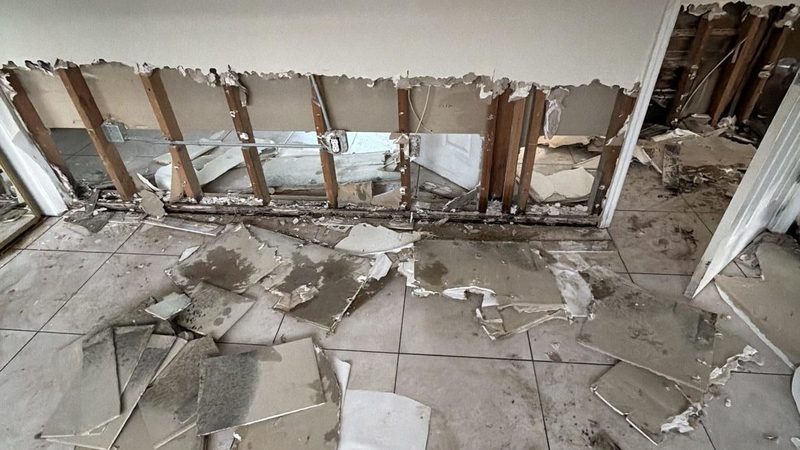
A water loss usually produces two pieces of work. The first is mitigation: extraction, controlled demolition, which means cutting out and removing wet materials, then equipment days and monitoring until the structure is dry. The second is putting the building back, which can reach drywall, paint, flooring, cabinetry and electrical work, and is done by licensed contractors. Coordination cost attaches to the second piece far more naturally than to the first. If your property needs repairs after drying, we can refer you to licensed contractors.
Your policy and the facts of your loss set what your insurer owes. Questions about coverage belong with your insurer, your agent, or a licensed public adjuster or attorney.
- Overhead: the fixed cost of keeping a contracting business running, which exists whether or not a given job is scheduled.
- Profit: what the contractor expects to earn for the service of managing the work.
- Neither one is a drying charge, and neither is the same thing as the unit prices on the mitigation lines.
What did the Florida Supreme Court decide in 2013?
The case is Trinidad v. Florida Peninsula Insurance Co., 121 So. 3d 433 (Fla. 2013), docket number SC11-1643, decided July 3, 2013. It concerned fire damage to a Miami home and a dispute about overhead and profit in a replacement cost payment. It was not a water mitigation case.
The court limited its analysis to the version of the statute in effect in 2008, so anyone quoting it should read the opinion itself and confirm the current statutory text. Your policy and the facts of your loss set what your insurer owes. Questions about coverage belong with your insurer, your agent, or a licensed public adjuster or attorney.

What is a general contractor in a reconstruction scope?
Reconstruction is a separate phase from mitigation, and a general contractor does the rebuild. South Florida building fabric often involves several trades, which is a fact about construction rather than about any insurance question.
The items below are physical facts about South Florida buildings that a floor plan and a photograph set can show.
- Slab-on-grade construction, so the floor, the base and any moisture in the slab sit in one plane that several trades work across.
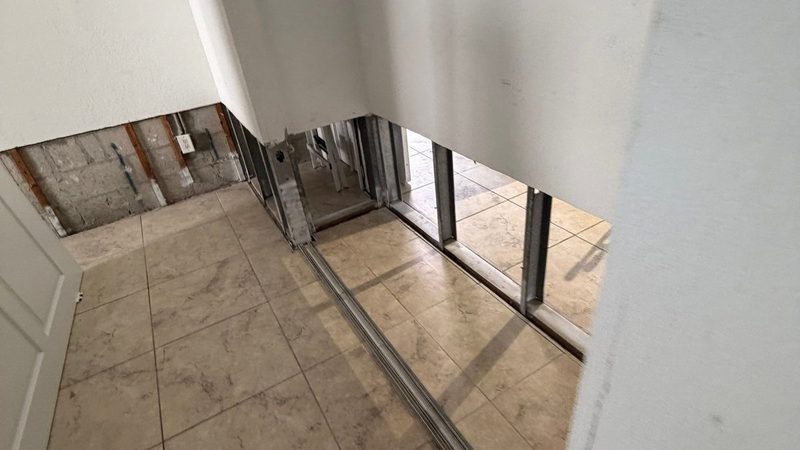
- Painted concrete block with furring strips and insulation behind the drywall, which turns one wall opening into more than one trade.
- Tile running unbroken from room to room, so a flooring scope crosses doorways and reaches rooms that were never wet.
- Cabinetry and countertops, with the plumbing and electrical connections behind them.
- Air handler closets and duct runs, where mechanical work has to finish before any finish goes back.
- A reconstruction scope that needs a permit and an inspection, which someone has to schedule.
Who decides whether overhead and profit is paid?
Your policy and the facts of your loss set what your insurer owes. Questions about coverage belong with your insurer, your agent, or a licensed public adjuster or attorney.
We give you our photos, moisture readings and invoice. They are yours to share with your insurer, or keep. We do not interpret your policy, negotiate with your insurer, or represent you in your claim. Your policy and the facts of your loss set what your insurer owes.
Does the Florida statute itself say overhead and profit?
Section 627.7011, Florida Statutes, addresses replacement cost policies. It does not contain the words overhead and profit in its text. Read the current text on the Legislature's website rather than relying on a summary.
Your policy and the facts of your loss set what your insurer owes. Questions about coverage belong with your insurer, your agent, or a licensed public adjuster or attorney.
| Question | Where it belongs |
|---|---|
| What your policy covers | Your insurer, your agent, or a licensed public adjuster or attorney |
| What the statute says today | The current text of the statute on the Legislature's website |
| What mitigation work was performed | Our photos, moisture readings and invoice |

Is there a three-trade rule in Florida?
We did not find a published Florida rule that sets a number of trades. Whether any rule applies to your situation is a coverage question, not a mitigation question. Your policy and the facts of your loss set what your insurer owes. Questions about coverage belong with your insurer, your agent, or a licensed public adjuster or attorney.

What does Florida require of an insurer in writing?
Section 627.70131, Florida Statutes, sets out insurer claim-handling duties, including deadlines and written explanations. Those duties belong to the insurer, and the current text is published by the Legislature.
Your policy and the facts of your loss set what your insurer owes. Questions about coverage belong with your insurer, your agent, or a licensed public adjuster or attorney.
What is a mitigation company allowed to do here, and what is off limits?
Section 489.147(2)(d), Florida Statutes, prohibits a contractor from interpreting policy provisions, advising an insured regarding coverages or duties under the insured's property insurance policy, or adjusting a property insurance claim on behalf of the insured, unless the contractor holds a license as a public adjuster.
Restoration Doctor is a water mitigation company, not a public adjuster and not a law firm. Nothing here is legal advice or insurance advice, and nothing here interprets your policy or predicts what an insurer will pay.
We give you our photos, moisture readings and invoice. They are yours to share with your insurer, or keep. We do not interpret your policy, negotiate with your insurer, or represent you in your claim. Your policy and the facts of your loss set what your insurer owes. We invoice the property owner. You are responsible for payment under your signed agreement, whether or not your insurer pays. Pricing and payment terms are set out in your written agreement.
Where can I read these authorities for myself?
Statutes get amended and opinions get distinguished. Confirm the current text before relying on any of it. The statute links below go to the Legislature's published edition rather than to a summary of it.
Restoration Doctor is a water mitigation company, not a public adjuster or a law firm. Your policy and the facts of your loss set what your insurer owes. Questions about coverage belong with your insurer, your agent, or a licensed public adjuster or attorney.
| Source | Where to read it |
|---|---|
| Fla. Stat. 627.7011, replacement cost policies | Fla. Stat. 627.7011 |
| Fla. Stat. 627.70131, insurer claim handling | Fla. Stat. 627.70131 |
| Fla. Stat. 489.147, prohibited acts by contractors on property insurance claims | Fla. Stat. 489.147 |
| Fla. Stat. 626.854, the public adjuster definition | Fla. Stat. 626.854 |
| Trinidad v. Florida Peninsula Insurance Co., 121 So. 3d 433 (Fla. 2013), No. SC11-1643, decided July 3, 2013 | Read from the official reporter text of 121 So. 3d 433. No link: the court's own online archive for its 2013 opinions no longer returns this file. |
| The 2013 Florida appellate decision reversing summary judgment on general contractor overhead, reported at 124 So. 3d 976 | Read from the official reporter text of 124 So. 3d 976. No link, for the same reason. |
| Sister sites in other markets | restorationdoctors.com and restorationdoctordc.com |