
Water Damage Restoration in Miami Beach, FL
Water damage restoration Miami Beach projects start with a fact no mainland city has to live with: the whole city is a barrier island, and the ocean is on its calendar. King tides push saltwater up through storm drains onto streets in low sections of the island several times a year — flooding that arrives under sunny skies, with no storm anywhere in sight. When that water, or a burst riser in a Collins Avenue tower, or a roof leak in a 1938 Art Deco walk-up puts water where it should not be, Restoration Doctor of South Florida crosses the causeway around the clock. Call (786) 213-9489 and a live dispatcher answers.
Groundwater under Miami Beach sits just below the surface — in low areas, barely below the slab — and that changes the physics of every drying job on the island. A wet floor assembly here is not just drying out; it is drying out while the ground beneath it stays saturated and the ocean air above it stays humid. Drying on Miami Beach is a numbers game played with commercial dehumidification and daily instrument readings, and we run it to the IICRC S500 standard until the readings, not the calendar, say the structure is dry.
From the historic Flamingo Park district to the North Beach towers, here is how water actually behaves on the island — and how we respond to it.
How water damage behaves in Miami Beach
King tides, sunny-day flooding, and salt water in the streets
Every fall, the highest tides of the year lift the water table and push seawater backward through storm drains onto Miami Beach streets — the sunny-day flooding the city is known for. When tidal water reaches a ground-floor lobby, a garage, or a street-level apartment, it arrives as contaminated Category 3 water with a complication mainland floods do not have: salt. Chlorides left behind in masonry, slab, and metal fixtures keep attracting moisture and corroding long after the visible water is gone, so a tidal loss that gets only a squeegee treatment quietly continues damaging the building for months.
Our tidal-flood protocol accounts for that: full extraction, removal of porous materials that took on seawater, low-pressure rinse-down of affected hard surfaces, and monitored structural drying — not a fast mop-out that leaves salt in the walls.
Drying a building that sits on saturated ground
Elevated groundwater is the quiet variable in every Miami Beach loss. Slabs on the island sit close above the water table, ground-floor walls wick moisture upward from grade, and the ocean air rarely drops below sticky. In practice that means evaporation — the engine of all structural drying — has to be forced. We create it with sealed drying chambers where needed, commercial low-grain refrigerant and desiccant dehumidifiers, and airflow set to the actual wet footprint, then verify progress daily against dry-standard targets. On this island, a fan pointed at a wet wall is not a drying plan.
The same conditions make mold aggressive. Wet organic material in a Miami Beach interior can show growth within days, which is why our first hours on site are spent extracting and stabilizing humidity. Where growth already exists, we remediate under the IICRC S520 standard with containment, HEPA filtration, and proper removal.
Tower losses on Collins Avenue and the condo corridor
In the high-rises that line Collins Avenue and the mid-beach corridor, the recurring loss is internal: a failed supply line, water heater, or HVAC condensate backup on an upper floor sending water down through the stack. Oceanfront exposure adds wind-driven rain through sliders and curtain-wall joints during storms. Either way, a tower loss is a coordination problem as much as a drying problem — access, elevator scheduling, association notification, and per-unit documentation all have to run in parallel with the mitigation itself.
We work these losses unit by unit with a single shared moisture map, keep building management informed at every step, and produce the per-unit photo and reading records that let each owner's insurer and the association's master policy sort out their respective shares on documented facts.
Miami Beach homes and how they fail
Miami Beach holds one of the largest concentrations of Art Deco, Streamline Moderne, and MiMo architecture in the world, and most of it is masonry construction from the 1930s through the 1950s. These buildings are durable, but their age shows in the systems: original embedded plumbing, flat roofs with decades of patching, and stucco-over-block walls that absorb and hold moisture once water gets in. A leak in an Art Deco building rarely stays where it started — water travels inside masonry and shows up as bubbling paint or efflorescence a room away from the source. We trace it with moisture meters and thermal imaging rather than guessing from the visible symptom, and in contributing structures within the city's historic districts we keep any removal as surgical as possible, because original fabric in these buildings is not replaceable.
The other Miami Beach is vertical: the condo canyon along Collins Avenue and the mid-beach and North Beach towers, plus the low-rise co-ops of the west-side avenues. In the towers, unit-to-unit water migration through risers and slab penetrations is the dominant loss pattern, and mitigation runs through building management as much as through the affected unit. In the older low-rise co-ops, shared cast-iron drains and aging roof membranes drive the calls.
Miami Beach neighborhoods we serve
Real Miami-Dade County communities — and the water losses we most often see in each.
The historic Art Deco core — 1930s masonry walk-ups where water travels inside block walls and surgical drying protects original fabric.
Oceanfront condo towers where upper-floor supply-line failures migrate down through multiple units.
Low-lying bayfront blocks that see some of the island's most frequent king-tide street flooding.
MiMo-era hotels and co-ops with aging flat roofs and embedded plumbing from the 1950s.
1950s-60s low-rise co-ops and newer towers; shared cast-iron drains drive recurring backup losses in the older stock.
Bay-level single-family homes with seawall exposure and ground floors close to the water table.
Documented Miami Beach projects
Real CompanyCam-documented restoration work in this city — every project photographed with date and time stamps.
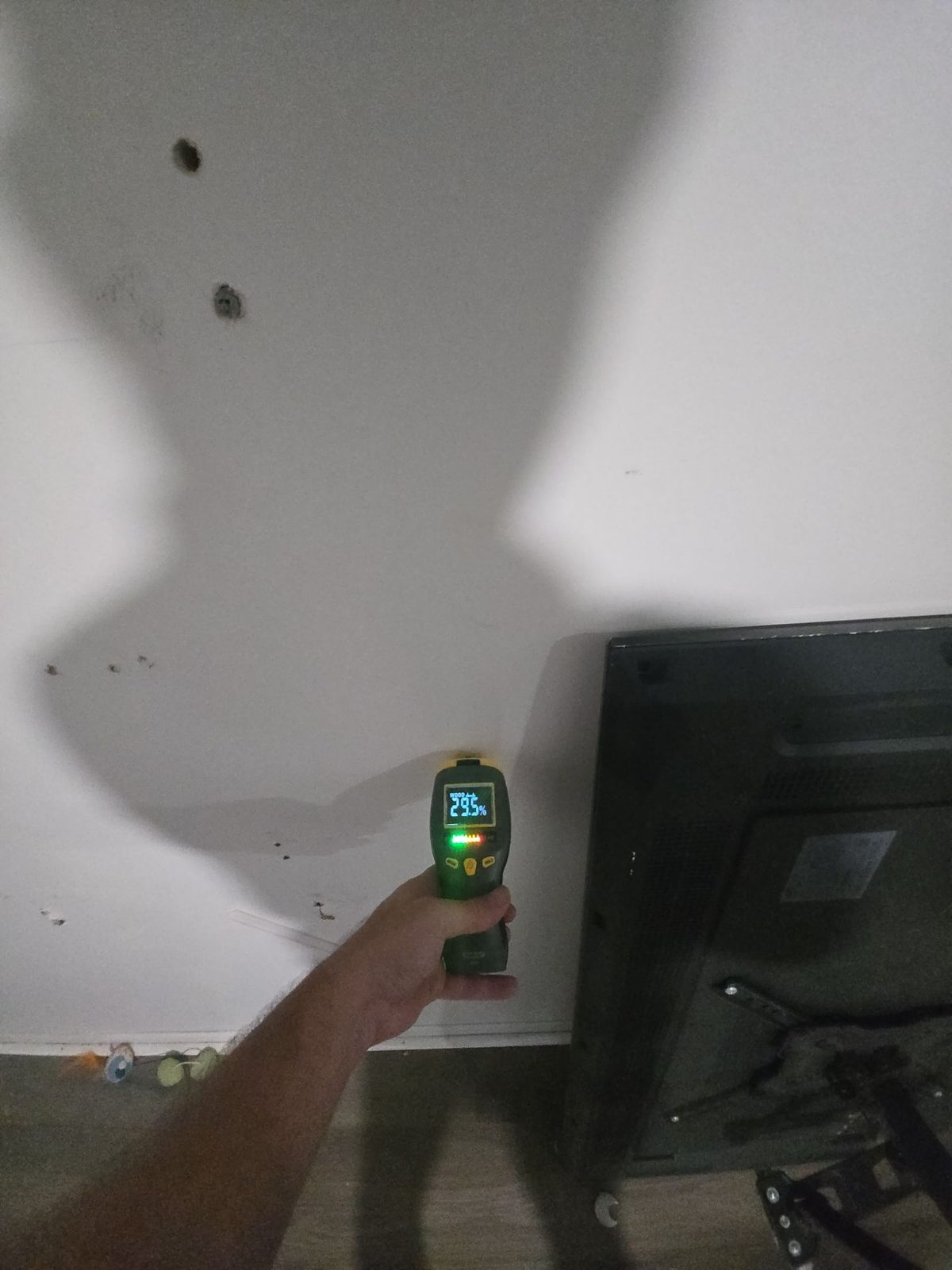
Condo unit wet drywall drying — Miami Beach
A documented Miami Beach condo water loss, where arrival readings put a moisture meter at 29.5% on wet drywall. The 1,084-photo CompanyCam file follows the drying through to the final walkthrough with the walls dry and every piece of equipment removed.
Full restoration services in Miami Beach
One operation covers every category — from emergency mitigation to full reconstruction.
Water Damage Restoration
Extraction, structural drying, and moisture verification for supply-line failures, drain-stack leaks, and unit-to-unit water migration in South Florida buildings.
Storm & Hurricane Damage Restoration
Emergency board-up, tarping, storm-water extraction, and post-hurricane structural drying for homes and buildings across Miami-Dade, Broward, and Palm Beach.
Mold Remediation
S520-based mold remediation: containment, HEPA-filtered removal, moisture-source correction, and post-remediation verification for South Florida homes and condos.
Sewage Cleanup
Category 3 water mitigation: sewage extraction, contaminated material removal, disinfection, and structural drying for backups and drain failures.
Fire & Smoke Damage Restoration
Structure securing, soot and smoke residue removal, odor treatment, and combined fire-and-water mitigation for South Florida properties.
Contents Restoration & Pack-Out
Full-chain contents handling: barcode-tracked inventory, pack-out, restoration cleaning, climate-controlled storage, and organized pack-back.
What Miami Beach homeowners look for
On an island full of seasonal residents and investor-owned condos, a lot of Miami Beach mitigation decisions get made from out of state, sight unseen — which makes verifiable reputation matter more here, not less. Our customer reviews live on a dedicated, source-linked hub at restorationdoctorsreviews.com rather than as numbers typed onto this page; read them there, then reach the local crew at (786) 213-9489.
Restoration Doctor of South Florida is the Florida arm of the multi-state Restoration Doctor operation headquartered in Vienna, Virginia, with our Miami office on Brickell Avenue minutes over the causeway from the island.
Frequently asked
Active water, mold, fire, or sewage event?
Connect directly with the Restoration Doctor team for your region. Crews are on standby 24/7 with documented response protocols.