
Sewage Cleanup & Category 3 Water Removal in Miami
Category 3 contamination handled to IICRC S500 protocol — containment, removal, disinfection, and verification for sewage backups in South Florida homes, condos, and businesses.
Sewage is a contamination event, not a water event
Sewage cleanup belongs in a different category from ordinary water damage — literally. Under the IICRC S500 standard, sewage is Category 3 water: grossly contaminated, carrying bacteria, viruses, parasites, and whatever chemistry the drain system collected on the way to your floor. The rules that make Category 3 different are strict for a reason. Porous materials the water touched — carpet and pad, drywall, insulation, particleboard cabinetry — are removed and disposed of, not dried and kept, because no drying process removes biological contamination from inside a porous material. Everything that remains is cleaned, disinfected, and verified.
This is also the loss type where do-it-yourself help hurts most. Shop-vacuuming sewage aerosolizes contamination. Running a household fan across it distributes that aerosol through the home. Walking between the contaminated area and clean rooms tracks it on shoe soles. The correct homeowner move after a sewage backup is containment by inaction: stop water use in the house, keep people and pets out of the affected area, shut off HVAC serving the space so ducts do not circulate contaminated air, and call for professional mitigation. Restoration Doctor of South Florida dispatches for sewage emergencies 24/7 across Miami-Dade, Broward, and Palm Beach at (786) 213-9489.
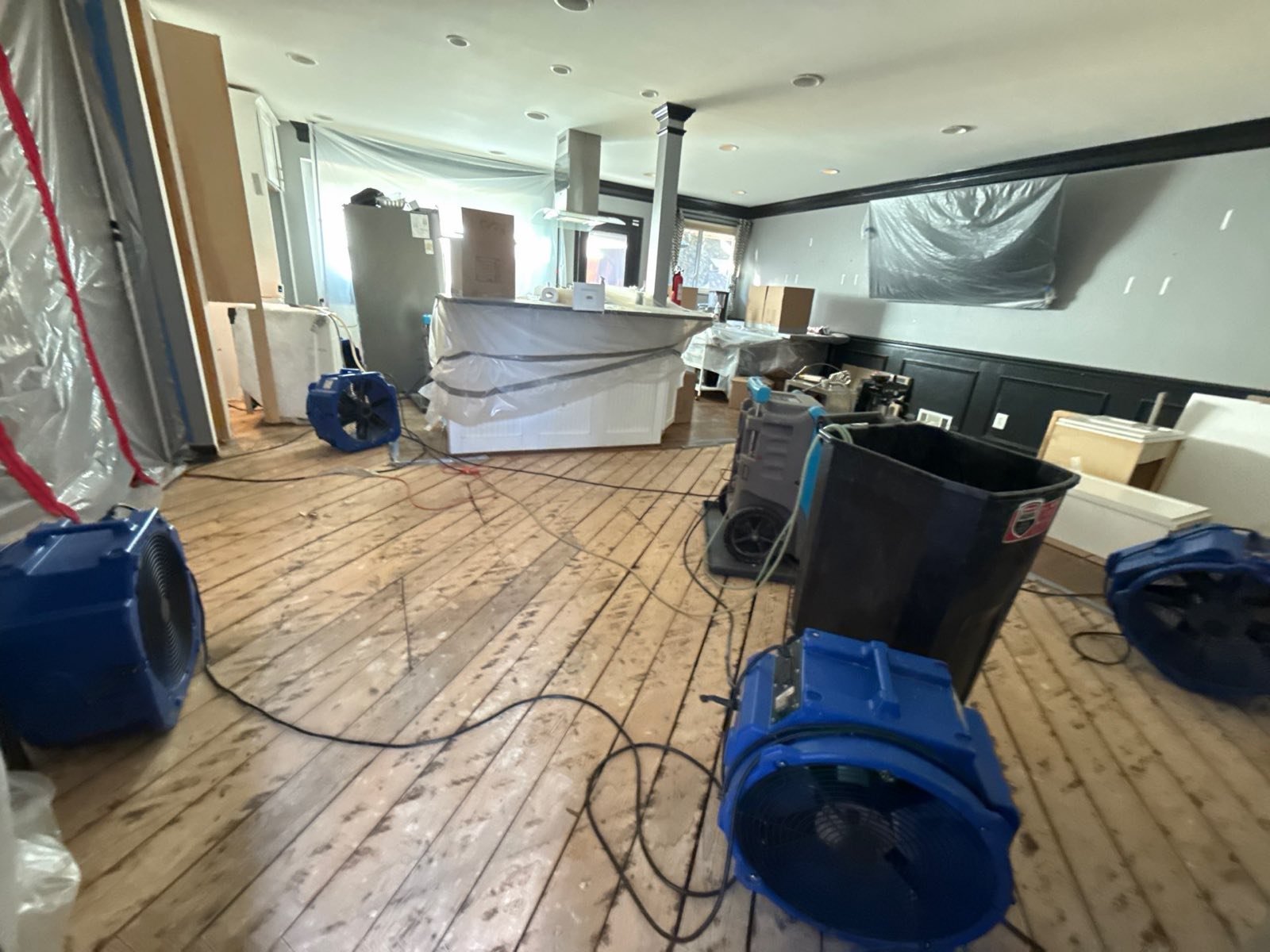
Our crews work sewage losses in full personal protective equipment under controlled procedures: contain the affected area, extract bulk sewage, remove contaminated porous materials in sealed bags, clean and apply EPA-registered disinfectants to remaining structure, then establish drying — in that order, because drying contaminated material in place simply bakes the problem into the building.
Why older Miami buildings back up: the cast-iron problem
A large share of the sewage losses we handle trace to one aging component: original cast-iron drain piping. Homes and buildings constructed across Miami-Dade and Broward in the postwar decades — Miami Springs, Westchester, Hialeah, Hollywood, and most pre-1975 construction generally — still drain through cast iron that has been corroding in South Florida's aggressive conditions for fifty to seventy years. The failure sequence is predictable: internal scaling narrows the pipe, the rough corroded surface catches grease and solids, the pipe bottom channels and eventually cracks or collapses, and flow that once passed cleanly now backs up into the lowest fixtures in the building — showers, tubs, and floor drains first.
In multi-story buildings the stakes multiply. A blocked or collapsed section of a shared cast-iron stack can push the drainage of every unit above the blockage into one unlucky unit at or below it. We see this pattern repeatedly in older condo buildings: the owner with sewage in the shower is not the owner who caused the backup, and the failed pipe is often a common element rather than anyone's unit plumbing. Our role is the contamination side — containment, removal, disinfection, documentation of what was affected in which unit — while the pipe repair itself is performed by the plumbing contractor engaged for that work. The two efforts have to be coordinated: mitigation without the pipe repair invites a repeat, and we sequence our work with the repair so the building is fixed once.
If your building or home is of cast-iron vintage and has had more than one backup, treat the backups as symptoms. A camera inspection of the drain system costs little compared to a third sewage loss, and documented pipe condition also builds the factual record if the failures become an insurance or association matter.
King tides, heavy rain, and backups that start outside your house
South Florida adds failure modes that have nothing to do with your own plumbing. During seasonal king tides and major rain events, the region's drainage and sewer infrastructure operates at or beyond capacity. Municipal sewer surcharging can push flow backward into the lowest connected fixtures of homes near capacity-stressed lines, and in coastal neighborhoods, extreme tides raise groundwater enough to infiltrate aging sewer laterals and load the system further. The result reaches you the same way a blocked stack does — sewage rising in tubs and floor drains — but the cause sits in the street, not in your walls.
The cleanup protocol is identical either way; contaminated water is contaminated water. The cause, however, matters enormously for prevention and for any claim, so our documentation records the event context: what was happening with weather and tide at the time of loss, which fixtures backed up in what order, and whether the drainage failure pattern points inside or outside the property line. For chronically exposed properties, a backwater valve — a one-way check valve on the building's sewer lateral installed by a plumbing contractor — is the standard engineering answer, and it is dramatically cheaper than a second Category 3 mitigation.
One more South Florida note: sewage backups that coincide with storm flooding compound each other. Floodwater that has mixed with sewage is Category 3 from the start, and homes that took storm surge should be treated as contaminated losses even where no drain visibly backed up. Our storm-response and sewage protocols merge in those events.
What professional Category 3 mitigation looks like, step by step
First, containment and safety: the affected area is isolated, HVAC serving it is shut down, and crews work in PPE. Second, bulk extraction: sewage and solids are removed with equipment dedicated to contaminated losses. Third, controlled demolition: porous materials in the contamination zone are removed — flood-cutting drywall above the visible affected height, pulling carpet and pad, removing saturated base cabinetry — with all debris bagged and disposed of properly. The S500 logic is unsentimental: if it is porous and sewage touched it, it goes.
Fourth, cleaning and disinfection: remaining hard surfaces — slab, block, framing, tile — are cleaned of residue, then treated with EPA-registered disinfectants applied at labeled dwell times. Fifth, drying: only after contamination is removed does the loss become a drying project, with air movement and dehumidification run to documented dry standards and daily moisture logging like any water loss. Sixth, verification and documentation: photographs from arrival through completion, a record of what was removed and why, the products used, and the final dry readings — a file built so your adjuster, your association, or your own records show exactly what a proper Category 3 response looked like.
On cost, honesty requires a range: a contained single-bathroom backup mitigated promptly may run in the low four figures, while a multi-room or multi-unit contamination with significant demolition can reach five figures before reconstruction. Scope drives cost; anyone quoting a flat price sight-unseen is guessing. We put the scope in writing after inspection and flag in writing anything the mitigation uncovers that changes it.
Sewage cleanup in Fort Lauderdale and Broward
Postwar homes across Broward, from Fort Lauderdale's river neighborhoods to Hollywood's numbered streets, can still drain through original cast-iron lines, and heavy rain or a king-tide week can push water back up through low drains. Who pays depends on where the break is; our guide to sewer laterals in Miami-Dade and Broward walks through who owns what.
Frequently asked
Active water, mold, fire, or sewage event?
Connect directly with the Restoration Doctor team for your region. Crews are on standby 24/7 with documented response protocols.