
Water Damage Restoration in Hollywood, FL
Water damage restoration Hollywood homeowners need spans two very different waterfronts a mile apart. On one side sits Hollywood Lakes, the city's historic heart, where 1920s-era streets curve around man-made lakes and low-lying yards hold water after every serious rain. On the other runs the A1A beachfront, a wall of condo towers facing the Atlantic where salt air, aging risers, and storm-driven rain work on buildings year-round. Restoration Doctor of South Florida covers both — and everything between — with 24/7 dispatch at (786) 213-9489.
Restoration Doctor of South Florida serves Hollywood, from Hollywood Lakes to the A1A beachfront, 24 hours a day at (786) 213-9489.
Between the lakes and the beach, Hollywood's residential core is classic postwar South Florida: block after block of concrete-masonry single-story homes built from the 1940s through the 1970s, sitting on slabs, floored in tile and terrazzo, and carrying the original-era plumbing that generates a steady stream of supply-line and drain failures. Each of these three Hollywoods floods differently, and we scope each one for what it is.
Our South Florida office is at 1200 Brickell Ave Suite 1950 #1007, Miami, FL 33131. A crew is typically on-site within 60 minutes in Miami-Dade. Broward and Palm Beach dispatches take somewhat longer. Here is how water behaves in Hollywood, district by district.
How water damage behaves in Hollywood
Emergency water extraction and flood cleanup in Hollywood
When water is standing on tile in a Hollywood home, extraction comes first, and the line is answered 24/7 at (786) 213-9489. A crew is typically on-site within 60 minutes in Miami-Dade. Broward and Palm Beach dispatches take somewhat longer.
Flood damage from yard, street or lake water is Category 3 water under IICRC S500: we extract, remove the porous materials it reached, clean, apply antimicrobial and dry to a measured standard. Storm water that came through a roof or slider is dried and documented as its own intrusion path, so the flood-versus-wind question is answered from evidence.
The Lakes: beautiful, historic, and low
The Hollywood Lakes sections sit low, and their namesake lakes connect to the Intracoastal — which means heavy rain and high tides can work together against the neighborhood's grade. Streets and yards in the lowest blocks pond in serious rain events, and water that reaches a threshold enters across the slab and starts wicking into wall bases and cabinetry within hours. Water that has crossed a yard or street arrives contaminated and is handled under IICRC S500 contaminated-water protocols, not treated like a clean supply-line break.
In the district's older homes we bring an additional discipline: preservation-minded drying. Original plaster, hardwood trim, and historic doors are metered, dried in place with targeted equipment where salvageable, and only removed when genuinely unsalvageable — with everything documented so the insurance record reflects the real value of what was affected.
The beachfront: towers, salt, and storm-driven rain
Along A1A and the Hollywood Beach Broadwalk corridor, condo losses dominate. Tropical systems drive rain horizontally into balcony door tracks, sliders, and window frames; older buildings fight corroded risers and stacks; and a single upper-floor failure can wet a column of units before maintenance can close a valve. We extract and dry unit stacks, set containment where demolition is needed, and produce per-unit documentation for owners, associations, and carriers — each of whom needs their own clean record.
Salt air accelerates everything on the barrier island. Corroding valves, fittings, and appliance connections fail earlier than their inland counterparts, which is part of why beachfront buildings generate so many mid-rise water calls. When a storm loss and a plumbing loss overlap, we document each intrusion path separately — in Florida's post-hurricane claims environment, wind-versus-water questions between homeowner and flood coverage are common, and the record we build from day one is the homeowner's best answer.
Mid-century masonry and the slow leak problem
In Hollywood's postwar neighborhoods, the recurring quiet catastrophe is the slow leak: a corroded galvanized line weeping inside a masonry wall, a cast-iron drain under the slab leaking into the soil, a water heater rusting out in a garage. Tile and terrazzo floors hide the spread, and homeowners often discover the loss through a musty smell or a swollen baseboard weeks in. By then, drying alone is rarely the whole answer — established microbial growth is remediated under the IICRC S520 standard with containment and controlled removal.
Our response to any Hollywood loss follows the same spine: find the true wet footprint with thermal imaging and moisture meters, extract and stabilize immediately, dry to verified moisture targets with daily logged readings, and hand the owner documentation their carrier can work from. Speed determines cost more than any other variable, which is why the phone is answered around the clock.
Hollywood homes and how they fail
Hollywood Lakes is one of Broward's most distinctive historic districts — Joseph Young's 1920s city plan, with older Mediterranean-revival and mission-style homes alongside decades of later infill, wrapped around North and South Lakes. The older housing here can include original plaster walls, wood windows and trim, and layered renovations, all of which change how a water loss is dried: plaster and historic millwork are dried in place and saved wherever possible rather than demolished by default, because in a Lakes home the finishes are part of the property's value.
The city's broad middle — Hollywood Hills, Emerald Hills, Boulevard Heights, and the numbered streets off Hollywood Boulevard — is dominated by mid-century concrete-block-and-stucco homes on slab. Masonry walls resist water structurally but hold moisture in their cells and in the furring and drywall attached to them, so a loss that looks minor on tile can leave saturated wall assemblies that only meters reveal. On the barrier island, A1A's condo towers — from 1960s-70s buildings to new luxury construction — bring vertical-loss dynamics: riser failures, balcony-door intrusion in storms, and unit-to-unit migration through slab penetrations.
Hollywood neighborhoods we serve
Real Broward County communities — and the water losses we most often see in each.
Historic 1920s-plan district around North and South Lakes — low-lying blocks that pond in heavy rain, with plaster-era homes that deserve preservation-minded drying.
Beachfront condo towers where storm-driven rain, salt-aged plumbing, and unit-to-unit migration drive most losses.
Mid-century concrete-block homes on slab where slow supply-line leaks hide inside masonry walls.
Larger 1960s-80s single-family homes with long slab footprints and renovated interiors raising the stakes on any leak.
Mixed condos, rentals, and commercial space where losses often involve multiple tenants and one drying plan.
Documented Hollywood projects
Real CompanyCam-documented restoration work in this city — every project photographed with date and time stamps.
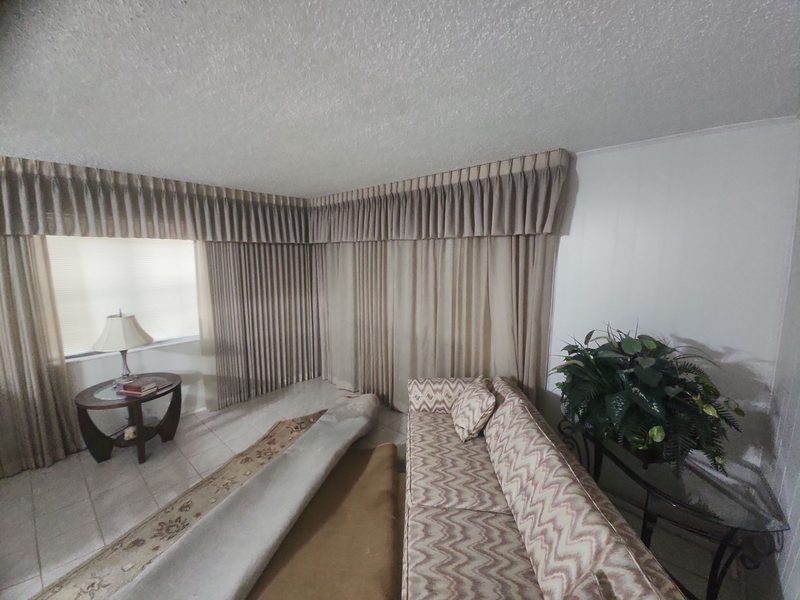
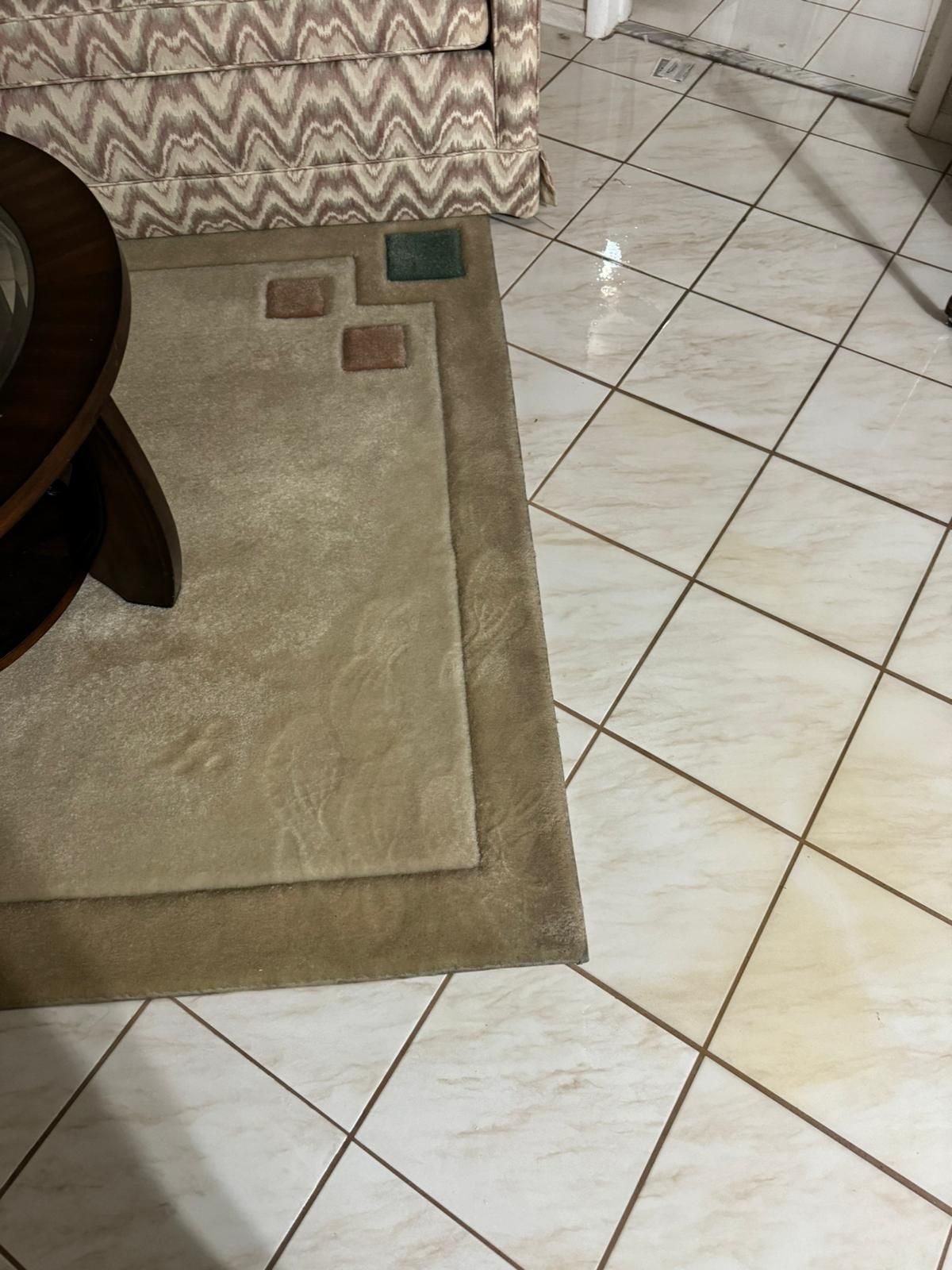
Hollywood Living Room Tile & Rug Dry-Out
On day one the cream tile in this Hollywood living room carried a wet sheen and the area rug showed saturated patches. The 259-photo CompanyCam file, closed in October 2024, shows the same room six days later, dried, with the rug rolled up on the tile and no water or equipment in view.
Full restoration services in Hollywood
One operation covers every category — from emergency mitigation to full reconstruction.
Water Damage Restoration
Extraction, structural drying, and moisture verification for supply-line failures, drain-stack leaks, and unit-to-unit water migration in South Florida buildings.
Storm & Hurricane Damage Restoration
Emergency board-up, tarping, storm-water extraction, and post-hurricane structural drying for homes and buildings across Miami-Dade, Broward, and Palm Beach.
Mold Remediation
S520-based mold remediation: containment, HEPA-filtered removal, moisture-source correction, and post-remediation verification for South Florida homes and condos.
Sewage Cleanup
Category 3 water mitigation: sewage extraction, contaminated material removal, disinfection, and structural drying for backups and drain failures.
Fire & Smoke Damage Restoration
Structure securing, soot and smoke residue removal, odor treatment, and combined fire-and-water mitigation for South Florida properties.
Contents Restoration & Pack-Out
Full-chain contents handling: barcode-tracked inventory, pack-out, restoration cleaning, climate-controlled storage, and organized pack-back.
What Hollywood homeowners look for
Hollywood is a neighborly city — Lakes residents and beach-building managers alike ask around before hiring anyone. Rather than printing our own scorecard here, we keep verified customer reviews for the Restoration Doctor operation on an independent, source-linked hub: RestorationDoctorsReviews.com, where the Google aggregate is the genuine article rather than marketing copy.
Read the reviews there first if you like — then call (786) 213-9489 when you need us at the door.
Frequently asked
Active water, mold, fire, or sewage event?
Connect directly with the Restoration Doctor team for your region. Crews are on standby 24/7 with documented response protocols.