
Mold Remediation in Miami & South Florida
Containment-first mold remediation built for the fastest mold climate in the continental U.S. — IICRC S520 protocols, HVAC-aware scoping, and condo association coordination.
South Florida runs on a faster mold clock
Mold needs three things: spores, organic material, and moisture. In South Florida, the first two are everywhere and the third is the ambient condition. Mold remediation in Miami operates against the most favorable growth environment in the continental United States — year-round warmth, relative humidity that rarely drops below 60 percent outdoors, and building interiors kept comfortable at exactly the temperatures common molds prefer. The commonly cited rule that mold can establish on wet materials within 24 to 48 hours is a national average; here it is closer to a floor than a ceiling. A weekend leak discovered on Monday is frequently already a colonization event, not just a water event.
This is why we treat every water loss in the region as a mold-prevention project and every mold project as a moisture investigation. Visible growth is the symptom; the moisture source is the disease. Killing or removing mold without eliminating the water that fed it guarantees recurrence, usually within weeks. Every remediation we perform includes identifying and documenting the moisture source — a leak, condensation, humidity infiltration, or a drying job someone else abandoned early — so the fix is permanent rather than cosmetic.
A South Florida peculiarity worth naming: a large fraction of the mold we remediate was never caused by a leak at all. It was caused by air conditioning — or the lack of it.
When the AC is the problem: condensation-driven growth
Air conditioning in South Florida is not a comfort system; it is the building's primary dehumidifier. When it underperforms, mold follows. The patterns are recognizable. Oversized AC units cool the air quickly but cycle off before removing enough humidity, leaving cool, damp interiors where mold blooms on closet contents, furniture backs, and ceiling corners. Thermostats set too warm — or systems shut off entirely in vacant units and seasonal homes — let interior humidity climb past 70 percent, at which point mold grows on surfaces that were never wet from any leak. Snowbird condos left closed up from May to November are a classic presentation: owners return to a unit furred with growth on leather, clothing, and walls, with no plumbing failure anywhere.
The mechanical system itself is also a growth site and a distribution network. Condensate drain lines clog with algae and overflow into closets and ceilings. Air handler coils and interior insulation accumulate biofilm. Supply ducts sweating in hot attics drip onto ceiling drywall. And critically, a contaminated air handler broadcasts spores to every room it serves — which is why remediating a bedroom while ignoring the AC system that feeds it is half a job. Our remediation scope always includes the HVAC system: we inspect handlers, condensate paths, and accessible ductwork, and when the system is implicated we scope its cleaning or component replacement into the project and keep it offline during remediation so it cannot re-seed cleaned areas.
Prevention guidance we give every client: keep interior humidity below 60 percent (a $15 hygrometer verifies this), never shut the AC fully off in an unoccupied South Florida property — use a humidistat or set the thermostat no higher than the high 70s — and treat condensate lines to yearly maintenance. These habits are cheaper than any remediation.
How S520-based remediation actually works
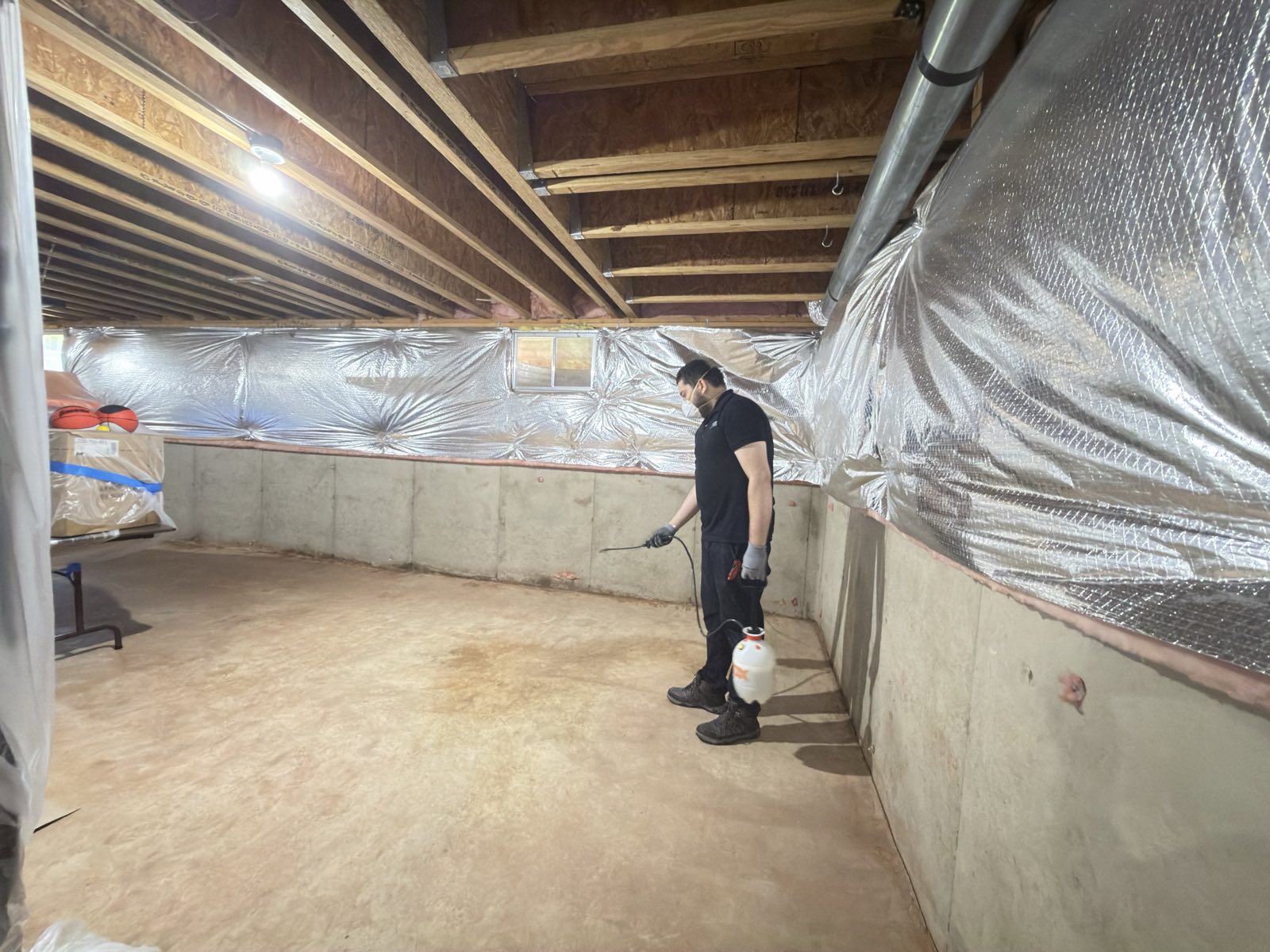
Our protocols follow the IICRC S520 Standard for Professional Mold Remediation, and the sequence is deliberate. Containment comes first: polyethylene barriers isolate the work area, and negative air machines with HEPA filtration place it under negative pressure so that disturbed spores flow into filters rather than into the rest of the home. Skipping containment — the hallmark of handyman-grade mold work — converts a localized problem into a whole-house one the moment demolition starts.
Inside containment, remediation is physical removal, not chemical fogging. Porous materials with established growth — drywall, insulation, carpet, ceiling tile — are removed, bagged, and disposed of; spraying a biocide over colonized drywall leaves dead growth and allergenic material in place and is not remediation under S520. Semi-porous structural wood is cleaned by HEPA vacuuming, damp wiping, and where warranted abrasive methods such as sanding or media blasting, then treated. Non-porous surfaces are cleaned and verified. Air scrubbing runs throughout, and the moisture source correction is completed before containment comes down.
The final step is verification. Drying and cleaning are confirmed by moisture readings and visual inspection, and for larger or sensitive projects, post-remediation verification by an independent third-party assessor — with air or surface sampling — provides documented clearance before rebuild. Florida regulates mold assessment and mold remediation as separate licensed activities precisely to keep the party verifying the work independent from the party performing it, and we support that separation: on projects that warrant clearance testing, you are better served when we do not grade our own homework.
Condos, associations, and shared-wall mold problems
Mold in a Miami condo is rarely confined by a property line. Growth in a wall cavity can originate from a neighbor's shower pan, a common-element riser, or roof-level intrusion three floors up, and the remediation scope may cross the legal boundary between unit property and association property. We work these projects routinely: coordinating access and approvals with association managers, providing certificates of insurance and scopes of work to boards before mobilization, documenting which affected materials belong to the unit and which to the common elements, and sequencing containment so corridors and neighboring units are protected.
Documentation discipline matters double in association settings because multiple insurance policies and multiple responsible parties may be involved. Every project file includes moisture mapping, photographs from discovery through clearance, the identified moisture source, and a line-item scope — organized so a unit owner, a board, and any involved adjuster can each see plainly what was found and what was done. We do not arbitrate responsibility between owners and associations; we make the physical facts unambiguous so the responsible parties can resolve it on evidence.
On cost: a small, contained closet remediation and a multi-room project with HVAC involvement are different animals, and pricing runs from modest four figures to well beyond depending on scope, containment complexity, and reconstruction. Any fixed number quoted before an inspection is fiction. We inspect, then put a scope and price range in writing.
Mold remediation in Fort Lauderdale and Broward
Broward's humidity drives the same AC-related growth as Miami-Dade. Beach-condo units closed for the summer and canal-front homes after a tidal intrusion are two common presentations. Florida licenses mold assessment and mold remediation separately; clearance testing is done by an independent licensed mold assessor you engage. Restoration Doctor of South Florida handles mold remediation across Fort Lauderdale and Broward at (786) 213-9489.
Frequently asked
Active water, mold, fire, or sewage event?
Connect directly with the Restoration Doctor team for your region. Crews are on standby 24/7 with documented response protocols.