About Restoration Doctor of South Florida
The South Florida arm of the multi-state Restoration Doctor operation — water, storm, mold, sewage, and fire losses handled from Brickell with national-standard discipline.
National standards, South Florida address
Restoration Doctor of South Florida is the Florida market of Restoration Doctor, a multi-state property restoration operation headquartered in Vienna, Virginia, with sister markets including Washington, D.C. and an independent verified-reviews hub. What the network brings to South Florida is not a franchise logo — it is an operating discipline: respond around the clock, work every loss to the recognized IICRC standard, and document it thoroughly enough that the file needs no explanation.
Restoration Doctor of South Florida is the same operation formerly known as Restoration Doctor of Miami: the same (786) 213-9489 line, the same Brickell office and the same Google reviews. The name changed in September 2026 to match the area we serve, from Fort Lauderdale and the rest of Broward to Miami-Dade and Palm Beach.
Our field guides are written by Steve Jafari, General Manager of Restoration Doctor and an IICRC Certified Technician with 17 years of restoration experience.
That discipline matters more here than almost anywhere. A hurricane market produces surges of damage all at once, and when a storm passes through, homeowners and associations face a flood of out-of-state operators working from a truck and an invoice pad. An established multi-state operation is the opposite of that: a fixed local address on Brickell Avenue, a permanent phone number, a documentation system refined across thousands of losses in other markets, and a parent operation whose reputation rides on every South Florida job.
The work itself is climate-specific. Concrete towers, slab-on-grade homes, CMU block construction, tile floors, and relentless humidity make South Florida drying a different engineering problem from the wood-framed markets most restoration playbooks assume. Our crews scope for storm surge versus wind-driven rain intrusion, trace water through shared walls and risers, and build drying plans around how these specific assemblies hold and release moisture.
Restoration Doctor of Miami · 1200 Brickell Ave Suite 1950 #1007, Miami, FL 33131 · (786) 213-9489 · office@restorationdoctors.com
The evidence stack on every loss
The same documentation runs on every project, whether the reader is a homeowner, a condo board, or a claims adjuster.
Date- and time-stamped photos from first arrival through final walk-through, organized by room and phase.
Moisture readings, temperature and humidity records, and equipment placement logged daily against a recorded baseline.
Estimates written line by line in the industry-standard format, with notes explaining what was done and why.
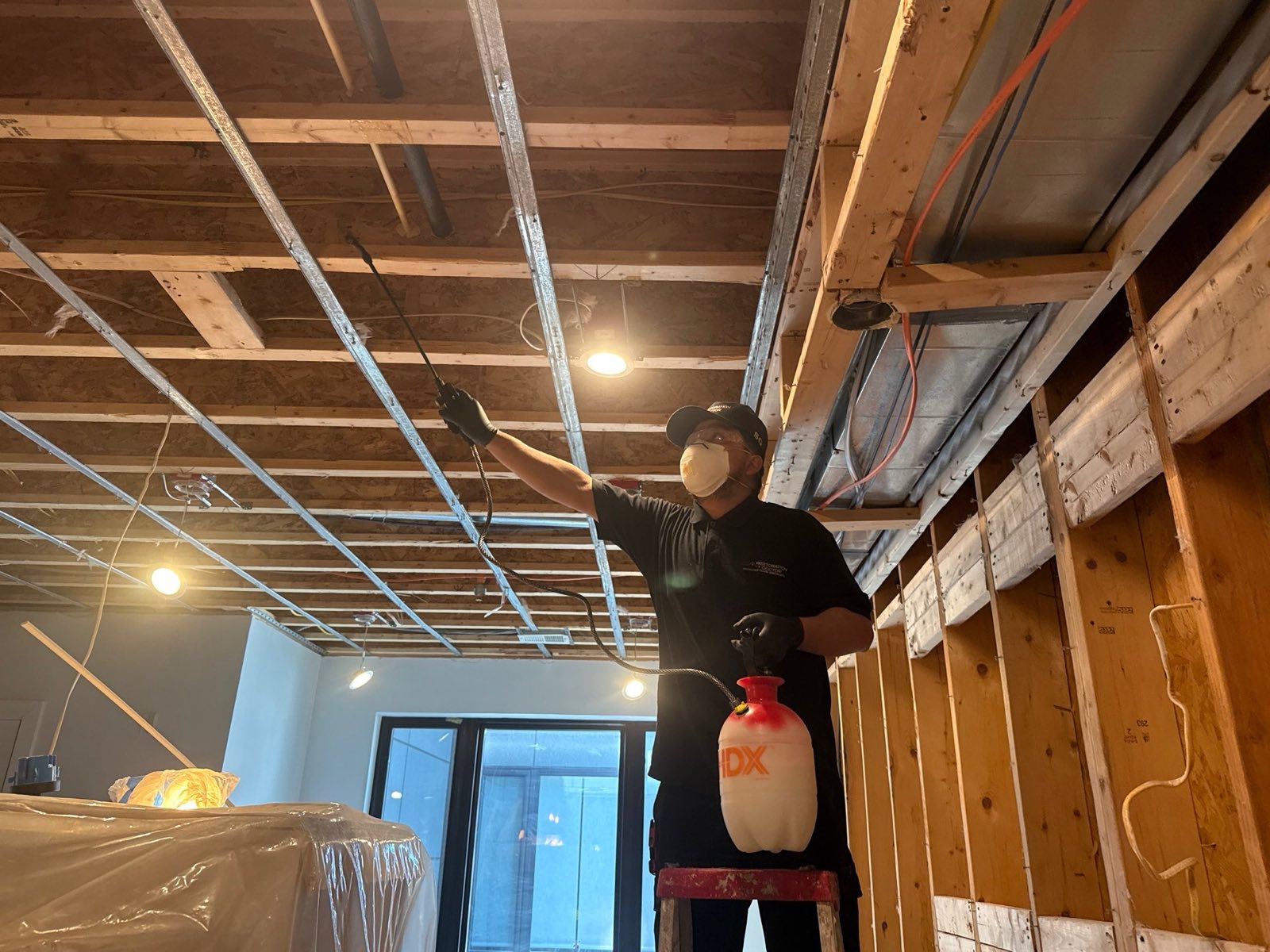
Thermal imaging and meters trace hidden water through slab, block, and shared assemblies so drying goes where the moisture actually is.
Six commitments on every project
What the Restoration Doctor operating discipline looks like on the ground in South Florida.
In South Florida humidity, a wet assembly starts working against you within a day. Dispatch runs 24/7 and drying begins the same visit as extraction — because here, waiting until morning is a scope-of-loss decision.
Tile over concrete slab, CMU block walls, and wood framing all release moisture at different rates. We take daily meter readings against a recorded baseline and call a structure dry only when materials verify — never on a fixed day count.
Time-stamped photos from arrival through completion, moisture maps, psychrometric logs, and a line-item scope in industry-standard format. Whether the reader is a homeowner, an association board, or an adjuster, the file speaks for itself.
Tower work means access rules, shared risers, unit-to-unit migration, and multiple interested parties. We coordinate with building management and associations and keep unit-level records separated so each stakeholder gets a clean file.
Controlled demolition is a last resort, not a default. Equipment-led drying preserves material that older methods would have torn out, which keeps costs down and gets the property back faster.
Scope questions and disputes get written, evidence-backed answers that can be filed and forwarded. A documented position outlasts a phone call.
Standards we work to, network we answer to
Water losses are worked to the ANSI/IICRC S500 standard — category and class determination, drying goals, and daily monitoring recorded against it. Mold remediation follows ANSI/IICRC S520 with containment, HEPA filtration, negative air, and post-remediation verification, which South Florida's humidity makes non-negotiable. Category 3 sewage is handled under full biohazard protocols with documented PPE use and disposal.
Miami operates alongside the Virginia headquarters and the Washington, D.C. market, with verified customer reviews published on the network's independent reviews hub. Standards, training, and documentation practices are shared across markets — so the discipline behind a Miami loss file is the same one refined across the operation.
What we restore, and where
Miami, FL · Miami Beach, FL · Brickell, FL · Coral Gables, FL · Coconut Grove, FL · Key Biscayne, FL · Pinecrest, FL · Aventura, FL · Fort Lauderdale, FL · Hollywood, FL · Boca Raton, FL · West Palm Beach, FL
Losses north of here are handled by the Vienna, VA headquarters operation, which trained the crews and wrote the documentation standards this office works to.
Active water, mold, fire, or sewage event?
Connect directly with the Restoration Doctor team for your region. Crews are on standby 24/7 with documented response protocols.