
Why Your First Insurance Check Is Smaller Than the Estimate (Florida ACV vs RCV)

BYSteve Jafari, General ManagerMIAMI-DADE, BROWARD & PALM BEACH
Your first check is usually actual cash value: the approved scope minus depreciation the carrier holds back until the work is finished and invoiced. Carriers generally release that recoverable depreciation once you submit completed-work invoices, so the shortfall is normally a timing problem rather than a coverage cut.
Call (786) 213-9489What is the difference between ACV and RCV on a Florida water damage claim?
ACV vs RCV on a Florida insurance claim is a question about timing, not about whether you are covered. Actual cash value (ACV) is what the damaged property was worth in the moment before the loss, after age and condition come off the price. Replacement cost value (RCV) is what it costs to put the same thing back today, at current South Florida labor and material prices.
If your policy is written on a replacement cost basis, the carrier still issues the first payment at ACV. It keeps the gap between the two numbers, called depreciation, until you can show the work was actually performed. That is why the estimate you were sent and the check you deposited carry two different totals even though nobody cut your claim.
You can see the whole mechanism on the summary page of the adjuster's estimate. It runs down the page in a fixed order: replacement cost value, less depreciation, actual cash value, less deductible, net claim payment. The net claim line is your first check. The depreciation line is the money still sitting with the carrier.
Why is my first insurance check less than the approved estimate?
Three things normally come off an approved estimate before a check is cut, and only one of them is permanent. The carrier subtracts depreciation, then your deductible, then anything it has already advanced to you or paid out on the claim. Depreciation is the piece most people mistake for a denial, and it is the piece you can usually get back. Two more categories can make the total look short without anything being subtracted at all, and they are worth ruling out before you argue about the math.
Read the summary page with a pen. If the replacement cost total matches the scope you agreed on, the scope was approved in full and the reduction is arithmetic, not judgment. If the replacement cost total itself is lower than what you expected, that is a different problem: the scope is short, and the fix is a supplement with supporting documentation rather than a depreciation release.
- Depreciation: age and condition subtracted from the materials and, on many estimates, the labor tied to replacing them.
- Deductible: applied once against the claim. Many Florida policies carry a separate hurricane or wind deductible set as a percentage of the dwelling limit rather than as a flat dollar amount, and your declarations page is where it is named.
- Prior payments: an emergency advance, a mitigation payment, or an additional living expense payment already issued on the same claim.
- Excluded or sublimited items: anything the adjuster listed for reference but did not include in the covered scope, and any category capped by a sublimit such as mold or contents.
- Ordinance or law work: upgrades required by current building code are often handled under a separate coverage part with its own limit.
What is recoverable depreciation, and who is holding it?
Recoverable depreciation is the withheld portion you can still collect after the repairs are complete. The carrier is holding it. Not your contractor, not your adjuster, and not your mortgage servicer, although the servicer may end up holding the check itself once it is issued.
Non-recoverable depreciation is the version you cannot collect, and it is a function of the policy you bought rather than the job you are having done. A policy written on an actual cash value basis, or an endorsement that puts roof surfacing or certain contents on an ACV schedule, produces depreciation that never comes back. Your declarations page and the policy form name which basis applies to the dwelling, to other structures, and to contents, and those three can differ inside one policy.
This is worth checking before you sign anything. If the depreciation on your loss is non-recoverable, the gap between ACV and RCV is money you pay out of pocket no matter how well the repairs are documented. That changes how you plan the work and the payment schedule.
Which water mitigation line items actually depreciate, and which do not?
Mitigation and reconstruction are treated differently, and that surprises people. Mitigation is the emergency phase: extraction, containment, equipment, antimicrobial application, monitored drying to a verified dry standard. Those lines are services and rental time, so there is no aged material being replaced and there is usually nothing to depreciate. Reconstruction is where depreciation lives, because that is where materials with a service life get put back.
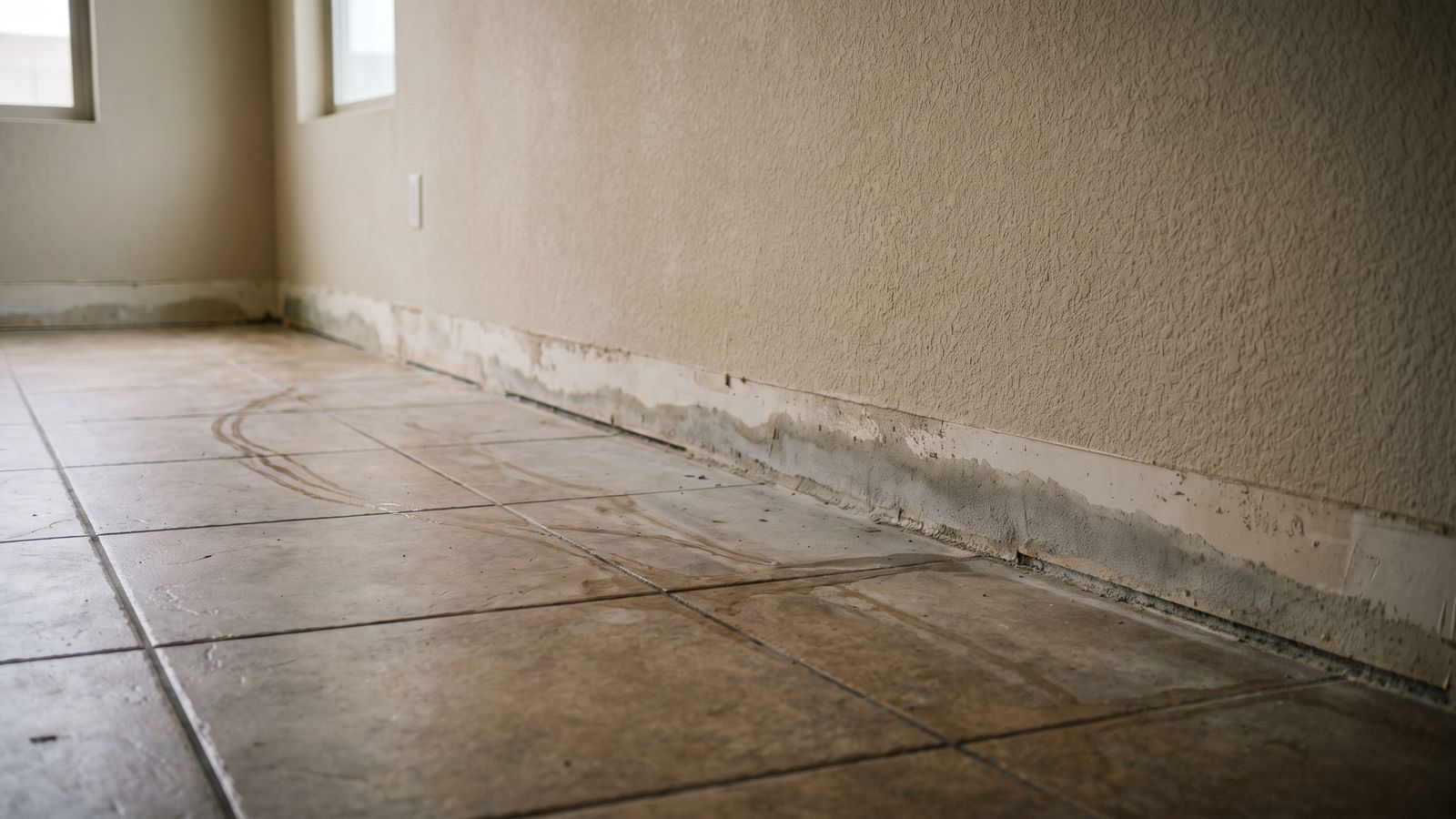
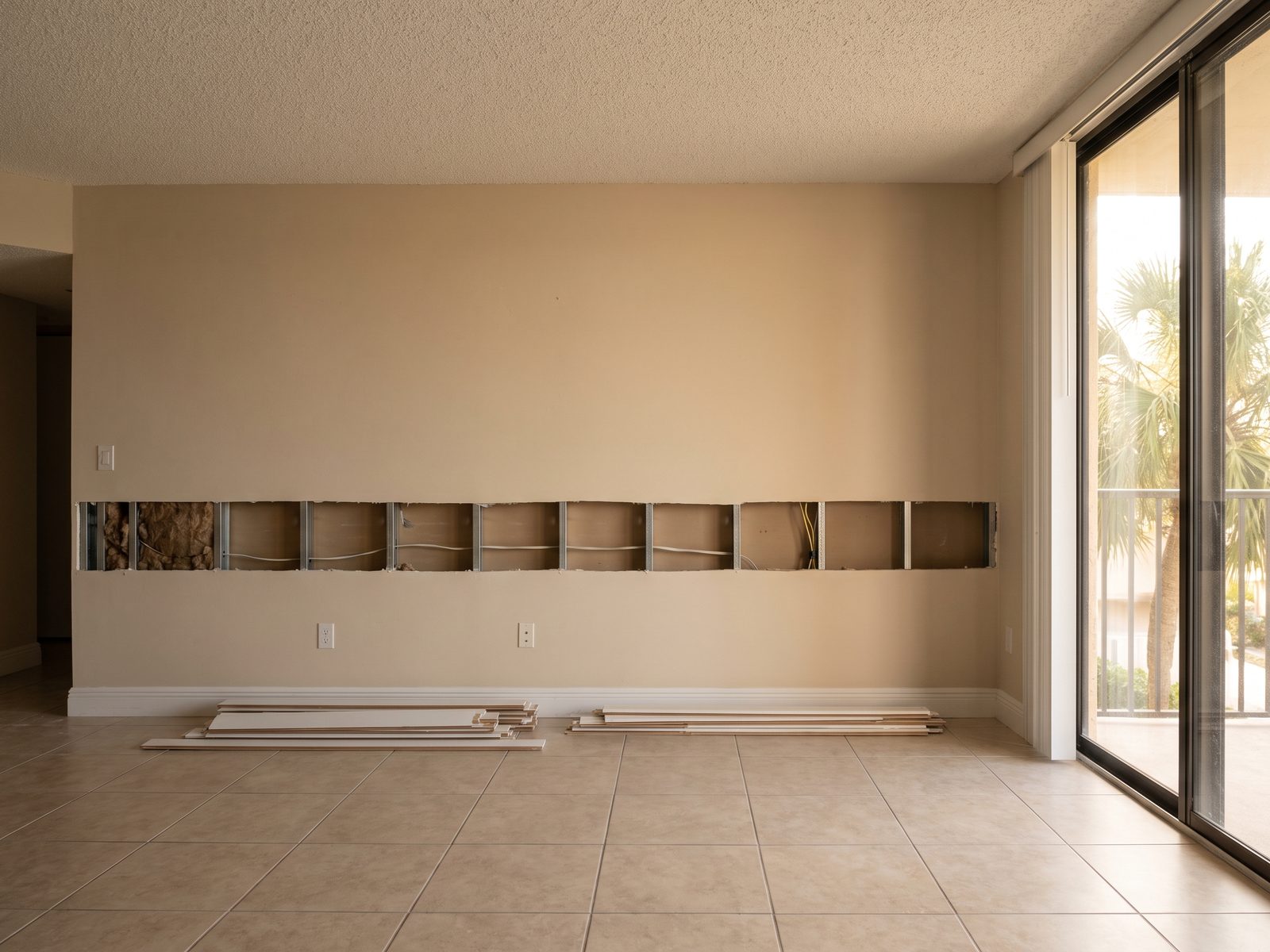
You can see the split on site. We pull the baseboard first and read the bottom of the drywall with a moisture meter. When it still reads wet above the cut line, more material comes out, and more of the job moves into the reconstruction scope where depreciation applies. That is also why the mitigation invoice and the rebuild estimate are two separate documents on the same claim.
The table below is the general mechanic, not a promise about your file. Every carrier runs its own estimating platform with its own depreciation schedules, and a single adjuster's condition notes can move a line either way.
| Line item | Usually depreciated? | What drives the treatment |
|---|---|---|
| Emergency water extraction | No | A service performed once, with no aged material being replaced. |
| Equipment days: air movers, dehumidifiers, air scrubbers | No | Billed as rental time on the job, not as a durable good you owned. |
| Antimicrobial application and cleaning labor | No | Labor and consumables used up during the work itself. |
| Controlled demolition, such as a flood cut or baseboard removal | No | Removal labor and disposal, priced as work rather than as material. |
| Drywall, insulation and baseboard replacement | Yes | Age and condition of the material coming out, on a typical service life. |
| Carpet and pad | Yes, often steeply | Short expected service life, so age moves the number quickly. |
| Paint and finish work | Yes | Coatings carry a short service life and are scheduled accordingly. |
| Cabinetry, vanities and millwork | Yes, usually slowly | Long service life, so condition notes matter more than age alone. |
| Tile and stone flooring on slab | Yes, usually slowly | Long-lived assembly where condition and installation quality drive it. |
| Contents cleaning and pack-out | Mixed | Cleaning labor generally holds; replaced contents are scheduled by item age. |
How do I get the depreciation released after repairs are done?
The release is a documentation transaction. You are proving one thing to the carrier: the work in the approved scope was actually performed, and here is what it cost. Carriers generally release recoverable depreciation up to what you actually spent, so an invoice that comes in under the approved RCV usually pulls back less than the full holdback.
Work the sequence in order, because sending a partial package restarts the clock more often than it speeds it up.
- 1. Complete the covered repairs in the approved scope, and keep any change in scope documented in writing as it happens.
- 2. Collect final invoices from every trade, itemized to match the estimate line by line wherever possible.
- 3. Photograph the finished work in the same rooms and the same angles as the loss photos, so the before and after read as one set.
- 4. Submit the package as a single supplement request that names the claim number and asks specifically for release of recoverable depreciation.
- 5. If the final cost exceeded the approved RCV, submit the overage as a supplement with its own backup rather than burying it in the release request.
- 6. Follow up in writing and keep every reply. A dated email trail is the only version of events that survives an adjuster reassignment.
What paperwork does the carrier need before it releases the holdback?
The strongest release packages are assembled during the job, not reconstructed after it. That means the mitigation file and the reconstruction file both have to exist in a form a desk adjuster can read without calling you. That record is the S500 drying documentation set: moisture logs with daily readings, a psychrometric record, equipment placement and removal dates, photographs of affected assemblies before they were opened, and a line-item scope that matches the invoice.
This is the part homeowners underestimate. A carrier is not refusing to release depreciation when it asks for a certificate of completion or a signed contract; it is closing the file, and the file has to stand on its own. Restoration Doctor builds that record as the job runs: we bill you, the homeowner, and hand you a carrier-ready claim file you submit yourself. The Restoration Doctor network publishes how the insurance claim process is documented, and the same file structure is what we hand over here in South Florida.
- Final itemized invoices from each trade, totaled to a single figure.
- A signed contract or work authorization showing the scope you agreed to.
- Certificate of completion or a dated statement that the covered work is finished.
- Completion photographs keyed to the same rooms and elevations as the loss photographs.
- Daily moisture logs and equipment records from the mitigation phase, if the drying scope is part of the claim.
- Proof of payment or a payable balance, depending on what your carrier asks for.
- Any permit, inspection sign-off or association approval the work required.
What happens to the holdback if I decide not to repair?
If you never do the work, the recoverable depreciation generally stays with the carrier and your settlement ends at actual cash value. That is the trade the replacement cost provision makes: the higher number is available because the property is being restored, and the proof of restoration is the trigger. Taking the ACV payment and walking away is a choice policies contemplate, but it is a smaller settlement.
Most policies also put a time limit on the recoverable portion, usually counted from the date of loss, and some require you to notify the carrier of your intent to repair before that window closes. The number is in your policy form, not in an industry rule of thumb, so read the loss settlement section rather than asking a contractor what the deadline is.
There is a second cost to waiting in this climate. Materials left wet or reinstalled over damp substrates keep feeding a problem, and the EPA's household mold guidance is blunt about moisture being the thing you have to fix first. A repair delayed long enough can turn into a second claim, and the carrier will look hard at whether the additional damage was preventable.
How does a condo association claim change the ACV and RCV split?
In a South Florida condominium there are usually two policies in play and two separate settlements. The association's master policy responds to the building and, depending on the declarations, to some portion of what sits inside the unit. The unit owner's policy responds to the rest, commonly the interior finishes, improvements, personal property and loss assessment. Each one runs its own ACV to RCV mechanic, with its own deductible and its own holdback.
The practical squeeze for condo owners is cash flow rather than coverage. Buildings frequently require a vendor from an approved list, a certificate of insurance on file, elevator reservations and restricted work hours, and those vendors expect to be paid on their own schedule. That schedule almost never lines up with a depreciation release that is waiting on a certificate of completion. Plan the payment sequence before the crew mobilizes, not after the first invoice lands.
One more wrinkle specific to shared walls and stacked units. When water travels from one unit into another, the responsible party question and the coverage question are answered separately, and a delay in settling the first does not pause the drying clock on the second. Get the mitigation documented per unit from day one, because the depreciation release later is unit by unit too.
What should I do if the depreciation release is being delayed?
Start by confirming the package was complete and that you know who has it. Claims move between adjusters, and a supplement request sitting in a closed file is the most common reason a release goes quiet. Resend the full package in one message, reference the claim number and the date of the original submission, and ask for written confirmation of receipt and a review timeline.
If the carrier disputes the amount rather than the completion, the argument is almost always about scope or pricing on specific lines, so ask for the revised estimate and compare it against yours line by line. When the file stops moving on the merits, a licensed public adjuster or an attorney is the right next call. Restoration Doctor does not negotiate claims or act as a public adjuster; we document the loss and the work, which is the evidence either of those professionals will need. Policyholders in Florida can also raise a complaint with the Florida Department of Financial Services, Division of Consumer Services.
The most useful habit through all of it is boring and effective. Put every request in writing, keep the responses, and keep the mitigation and reconstruction records together in one file rather than scattered across phone photos and text threads.
Sources for the standards named above:
- IICRC standards, including the ANSI/IICRC S500 Standard for Professional Water Damage Restoration.
- EPA guidance on mold cleanup and moisture control in homes.


