Fire & Smoke Damage Restoration in Miami & South Florida
Board-up, soot and smoke remediation, odor elimination, and the water damage nobody warns you about — one operation from the night of the fire through rebuild.
After the fire trucks leave, the loss keeps moving
A structure fire does its most obvious damage in minutes, but the loss keeps compounding for days afterward if nothing intervenes. Acidic soot residues begin etching metal fixtures, discoloring stone and grout, and yellowing painted surfaces within hours. Smoke odor migrates into every porous material in the building and sets deeper with each humid day — and in South Florida, every day is a humid day. Meanwhile the water or suppression agents that killed the fire soak into floors and walls on their own destructive schedule. Fire damage restoration is therefore a race on three fronts at once: residues, odor, and water.
The first physical step is securing the structure. Fire departments breach roofs for ventilation and force doors and windows for access; what they leave is a building open to weather, animals, and intrusion. Our crews board up openings, tarp roof breaches, install temporary fencing or door security where needed, and stabilize anything structurally suspect — same-day, because an unsecured fire loss in Miami is one afternoon thunderstorm away from being a larger loss. We dispatch across Miami-Dade, Broward, and Palm Beach at (786) 213-9489.
Before anything is moved or cleaned, we document: room-by-room photography of fire, smoke, and water effects, an inventory of visibly damaged contents, and notes on burn patterns and residue types. That record supports your insurance claim and also drives our own scope, because as the next section explains, not all smoke damage cleans the same way.
Soot is chemistry: why cleaning method depends on what burned
Smoke residue is not one substance. A fast, hot fire burning wood and paper leaves a dry, powdery soot that responds well to dry-sponge cleaning and HEPA vacuuming. A slow, smoldering fire — or one that consumed plastics, foam, and synthetic furnishings, which is most modern living rooms — leaves a greasy, smeary residue that dry methods only spread; it demands degreasing agents and wet cleaning. Protein residue from kitchen fires is nearly invisible but coats surfaces with a film that carries a stubborn odor and discolors finishes over time. Using the wrong method on the wrong residue sets stains permanently, which is why professional fire cleaning starts with identifying the residue type surface by surface, not with a bucket and optimism.
Cleaning proceeds from that assessment: dry soot removal before any wet method, test-cleaning in inconspicuous areas, and surface-appropriate techniques for stone, metals, glass, cabinetry, and electronics. Some materials are honest losses — melted or charred items, and porous materials saturated with residue beyond economic cleaning — and we scope replacement rather than billing hours against an unwinnable cleaning job. HVAC systems get particular attention: a running air handler during a fire inhales smoke and redistributes residue and odor through every duct, so duct and handler assessment is part of every significant smoke loss.
Odor elimination is its own discipline, because smoke odor is molecular — particles lodged in porous materials and microscopic crevices, off-gassing for months if merely masked. Real odor work removes the source residues first, then treats what remains: thermal fogging that drives deodorizing agents into the same pathways smoke traveled, hydroxyl or ozone treatment of unoccupied spaces to break down odor compounds, and sealing of surfaces — like structural charring left in place after cleaning — that would otherwise keep off-gassing. South Florida humidity amplifies dormant smoke odor; a house that smells faintly smoky in January will announce itself in August unless the source was actually removed.
The second loss inside every fire loss: suppression water
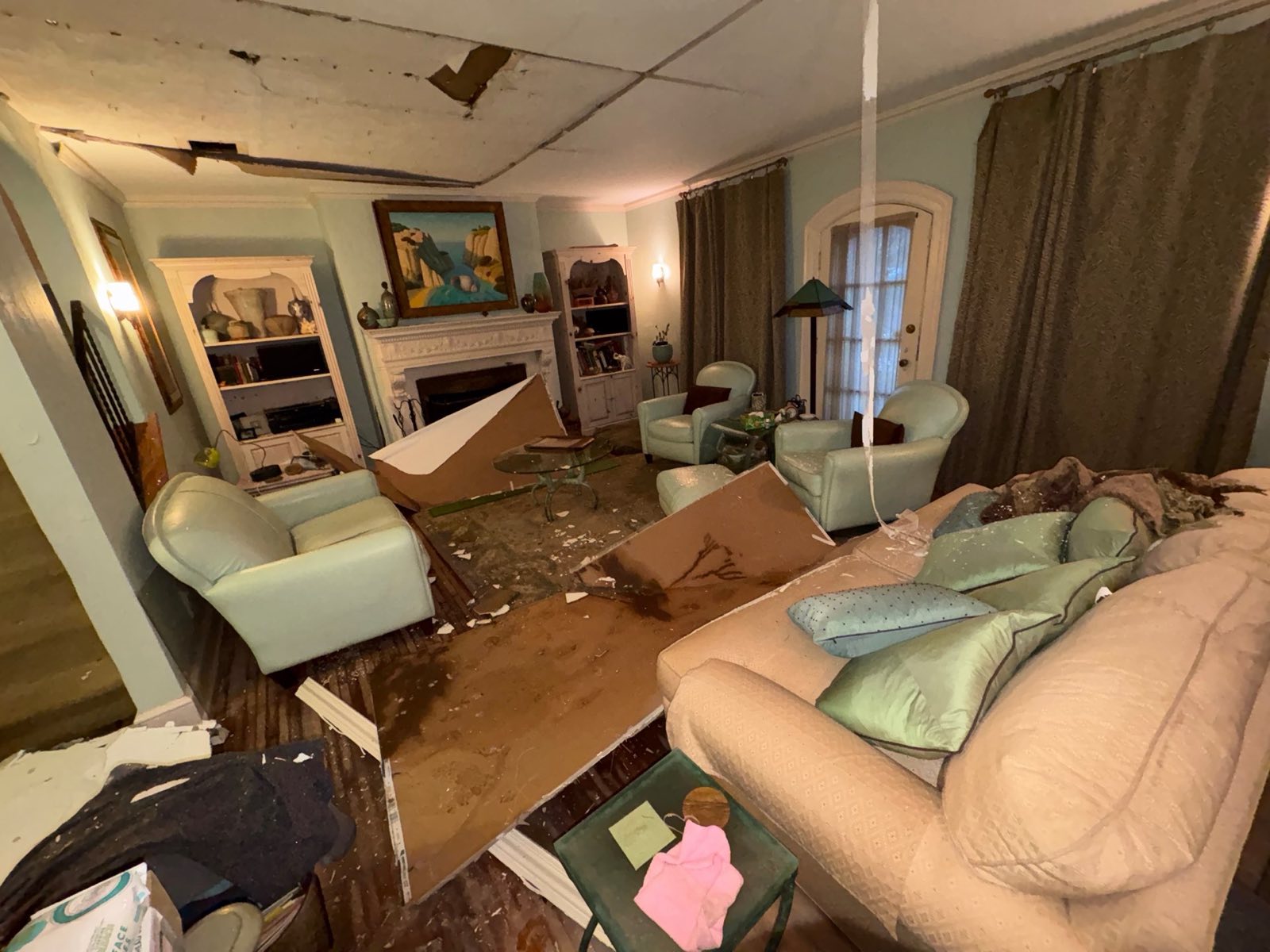
Nearly every significant structure fire is also a water loss. Fire hoses deliver hundreds of gallons a minute; sprinkler heads flow until shut down; and everything below the fire floor gets soaked even if flame never touched it. It is entirely routine for a fire's water damage to rival or exceed its burn damage — a kitchen fire upstairs, four flooded ceilings downstairs. That water follows the ordinary physics of any flood: saturating drywall, wicking into cavities, and — on the South Florida clock — feeding mold within days if drying does not begin immediately.
This is where hiring a combined operation earns its keep. A fire-only contractor cleans soot while the structure quietly molds; a water-only contractor dries a building while acidic residues set into finishes. Our crews run both scopes concurrently under IICRC standards — S500 governing the water and drying work, ANSI/IICRC S700 — the Standard for Professional Fire and Smoke Damage Restoration — governing residues and odor: extraction and dehumidification proceed in parallel with residue stabilization, sequenced so neither effort undoes the other. One project file, one schedule, no gap between trades for the loss to grow in.
Fire scenes also involve safety scopes homeowners should not touch: possible asbestos in older building materials disturbed by fire or overhaul, compromised electrical systems, and structural members whose capacity is uncertain. We coordinate the required assessments and keep the site controlled until it is safe to work and, eventually, to reoccupy.
From mitigation through rebuild — and what it costs
Fire recovery runs in phases: securing and stabilization, mitigation of water and residues, odor treatment, contents handling (see our contents restoration service for the pack-out, cleaning, and storage chain), and finally reconstruction — replacing what the fire took, from drywall and flooring to full room rebuilds. We carry the project through all of them, so the crew that documented the loss on night one is the same operation handing you keys at the end, and the schedule has no handoff gaps where a half-restored house sits waiting for a second contractor to mobilize.
Documentation runs the length of the project: time-stamped photographs at every phase, moisture logs for the water scope, contents inventories, and a line-item estimate prepared in Xactimate, the format most adjusters evaluate natively. Our role with your insurer is documentary — we make the loss legible and the work verifiable. We do not negotiate or represent you with your carrier; your policy defines what is covered, and the choice of restoration contractor belongs to you, not to anyone else in the process.
Costs span the widest range of any loss type we handle, honestly stated: limited smoke-and-odor projects can resolve in the low-to-mid four figures, while a structure fire with significant burn, water, and contents scope routinely runs five figures and, for major losses, well beyond. The estimate you receive is line-item and written, the changes to it are written, and nothing about the number is a phone-quote guess.
Fire and smoke restoration in Fort Lauderdale and Broward
A Broward fire loss is usually two losses: smoke residue and the suppression water used to put it out. In the beach towers from Fort Lauderdale to Hallandale Beach, smoke also travels through shared corridors and HVAC, so neighboring units need their own documentation.
Frequently asked
Active water, mold, fire, or sewage event?
Connect directly with the Restoration Doctor team for your region. Crews are on standby 24/7 with documented response protocols.