
What Is a Supplemental Claim in Florida, and What Is the 18-Month Deadline?

BYSteve Jafari, General ManagerMIAMI-DADE & BROWARD
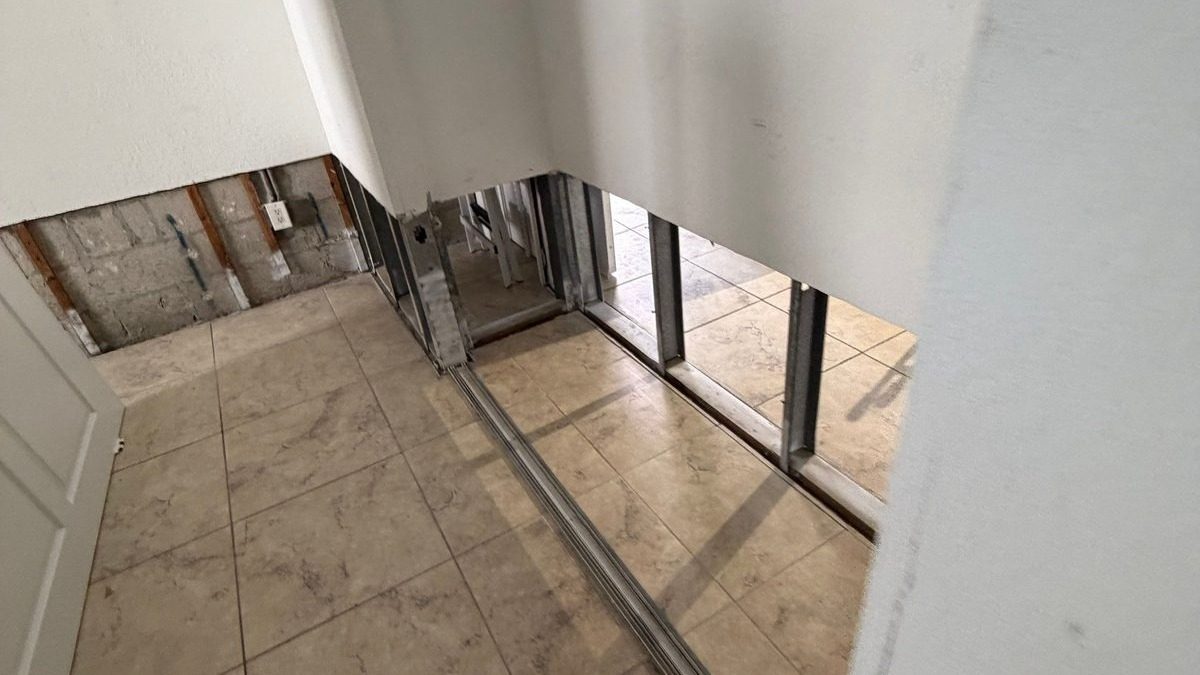
A supplemental claim is additional money you request on an already-reported loss when new or underscoped damage appears. Under the current version of Fla. Stat. 627.70132, Florida's supplemental claim 18-month deadline generally requires you to notify your insurer within 18 months of the date of loss — not 18 months from when the damage was discovered. Initial claims face an even shorter one-year notice deadline. If hidden water, delayed mold, or an underpaid repair surfaces after your claim closed in South Florida, document it fast and act well before that window shuts.
Call (786) 213-9489What is a supplemental claim in Florida, and what is the 18-month deadline?
A supplemental claim is a request for additional payment on a loss you already reported, filed when the original settlement did not cover the full scope of damage. The Florida supplemental claim 18-month deadline comes from Fla. Stat. 627.70132, which — in its current form — generally bars a supplemental or reopened property-insurance claim unless you give the insurer notice within 18 months after the date of loss. That clock runs from the date the damage happened — the hurricane, the pipe burst, the roof breach — not from the day you discovered the extra damage.
This matters enormously in South Florida. In Miami-Dade and Broward, outdoor relative humidity routinely sits between 60% and 80%, which means water that was never fully dried continues to feed hidden deterioration long after an adjuster closes the file. A claim that felt resolved in the summer can resurface months later as buckled flooring, stained drywall, or a musty smell behind a baseboard — and the 18-month window may already be partway gone.
It is also worth knowing that the statute has been amended more than once. The one-year initial and 18-month supplemental deadlines apply to recent dates of loss; losses that occurred before Florida's December 2022 insurance reforms may be governed by an earlier version of the law with longer windows. If your loss is older, confirm which version of the statute applies to your date of loss before you assume the door has closed — or assume it is still open.
The practical takeaway: a supplemental claim is your legal remedy when the first payment fell short, but it is a time-limited remedy. Knowing exactly when your clock started, and getting the new damage documented to carrier standards, is the difference between a covered recovery and a denial for late notice.
When would you need to reopen a water damage claim in Florida?
You would reopen a water damage claim in Florida whenever the true extent of the loss turns out to be larger than what your original settlement paid for. In the real world, that happens constantly, because water travels further and dries more slowly than most initial inspections assume — especially inside South Florida's humid building envelopes, where CBS block walls and slab-on-grade construction can hold moisture out of sight for weeks.
A supplemental claim for water damage is appropriate when damage was always present but went unseen, when drying was incomplete and secondary damage developed, or when the repair scope itself was written too thin. The event is the same; what changed is your knowledge of its size. Insurers understand this distinction, and the statute exists precisely because hidden damage is a normal feature of water losses, not an exception.
If you are asking whether you can reopen a closed file, the answer is usually yes — provided you are still inside the statutory window and you can tie the new damage to the original loss with credible documentation.
- Hidden saturation: water wicked into wall cavities, subfloor, or insulation that nobody opened up during the first inspection.
- Delayed mold: growth that can begin within 24–48 hours of a loss under S500/S520 guidance, but only becomes visible or smell-detectable weeks later.
- Underscoped repairs: the original estimate missed materials, left out proper structural drying, or paid for a patch instead of a full replacement.
- Matching and code issues: flooring or cabinetry that cannot reasonably be partially replaced, or repairs that trigger current building-code upgrades.
- Failed repairs: work that was completed but did not hold because the underlying moisture was never brought to its drying goal.
What if additional damage is found after a claim is closed in Broward?
If additional damage is found after a claim is closed in Broward — or anywhere in South Florida — you are not stuck with the original payout, as long as you are still within the 18-month supplemental window and the new damage stems from the same reported loss. A closed claim is not a permanently closed door; it is an invitation to supplement when the facts change.
The key is proving the connection. Insurers evaluate supplemental claims by asking whether the new damage is a continuation of the original peril or a brand-new, separately caused loss. That is why documentation of the original event — and of the new discovery — carries so much weight. A moisture map that traces wet material back to the reported source is far more persuasive than a letter that simply says more damage appeared.
Start by stopping any ongoing damage and photographing everything before you touch it. Then get a professional moisture inspection that measures what is actually wet and traces it back to the reported source. A written scope with moisture readings, photos, and a line-item breakdown is what transforms a vague 'we found more' into a carrier-ready supplemental demand. Our team builds exactly that kind of file — you can start through our /contact page or read how we handle /services/water-damage-restoration.
When does the 18-month clock actually start — and can it be shorter?
The 18-month supplemental deadline starts on your date of loss, which is the date the damaging event occurred — not the date you noticed the problem and not the date your claim closed. For hurricane losses, that date is tied to the storm itself. This is the single most misunderstood part of the rule, and it costs homeowners money every year.
Because the clock runs from the event, discovering damage late does not reset or extend your window. A hurricane that struck in the fall gives you roughly 18 months from that storm date to get a supplemental claim on file — even if the hidden damage only surfaces a year later. Procrastination quietly eats the time you have left.
The deadline can also be shorter in practice. Your own policy may contain notice provisions, cooperation requirements, and proof-of-loss deadlines that operate alongside the statute, and some endorsements carry their own tighter timelines. Always read your policy's duties-after-loss section and treat the statutory 18 months as the outer limit, not a comfortable cushion. And remember that initial claims face a one-year notice deadline — if you never reported the loss at all, the supplemental window cannot save you.
| Claim type | General notice deadline | Clock starts on |
|---|---|---|
| Initial claim | Within 1 year | Date of loss |
| Reopened claim | Within 18 months | Date of loss |
| Supplemental claim | Within 18 months | Date of loss |
Why do supplemental claims surface months after the storm in South Florida?
Supplemental claims tend to surface months after the original event not because homeowners are slow, but because the claims process and the building physics both run on a delay. The gap between a storm and the discovery of its full damage is built into how water losses behave in a humid climate.
Here is the typical sequence. A storm, wind-driven rain event, or plumbing failure hits; the homeowner reports the loss; and the insurer works through inspection, estimation, and payment over the following weeks and months. By the time repairs actually begin, hidden saturation and delayed mold have had an entire humid South Florida season to develop behind drywall and under flooring. Only when a contractor opens the walls — often months after the date of loss — does anyone see that the original scope was too small.
That is exactly the gap the supplemental claim exists to close. The damage was always connected to the original event; it just took time, moisture, and a real repair to reveal it. If you are in that position now, the instinct to 'wait and see' is exactly backward — the 18-month clock has been running since the date of loss, not since your discovery, and every month of waiting is a month of window spent.
Is a supplemental claim the same as disputing your settlement?
No — and the distinction matters for strategy. A supplemental claim presents new or additional damage on the same reported loss and asks the carrier to pay for scope the first settlement missed. A dispute, by contrast, challenges the carrier's valuation of damage both sides already know about. Florida gives you separate tools for disputes: state-sponsored mediation through the Department of Financial Services and, under many policies, the appraisal process for valuation disagreements. We break those down in our guide to /blog/florida-mediation-vs-appraisal-claim-dispute.
In practice, many South Florida homeowners end up needing both. The first check may have been calculated on an actual-cash-value basis with depreciation held back, and the scope may also have missed hidden saturation entirely. The supplemental claim addresses the missing scope; the valuation tools address the pricing of scope the carrier already accepted. Knowing which lane your shortfall falls into keeps your notice timely and your demand clean.
Whichever path applies, the supplemental notice itself still has to land inside the statutory window. Mediation or appraisal over the original payment does not pause the 18-month clock on newly discovered damage, so get the supplemental notice filed in writing even while other parts of the claim are being negotiated.
How do you document a supplemental water damage claim that gets paid?
You document a supplemental water damage claim by proving three things: that the new damage exists, that it connects to your original reported loss, and that the original payment did not cover it. Strong supplemental claims win on evidence, not argument.
The most persuasive files pair the original claim record with fresh, measured documentation of the new damage. Moisture-meter and thermal-imaging readings show where water actually sits; daily drying logs show that materials stayed wet; photographs show the progression; and a line-item scope shows precisely what work and materials the first settlement missed. Done properly, the work follows the ANSI/IICRC S500 standard for water damage restoration and the ANSI/IICRC S520 standard for any mold remediation, which gives your carrier a professional framework it already recognizes.
Restoration Doctor of South Florida bills the homeowner directly and hands you a carrier-ready claim file — an Xactimate line-item scope, CompanyCam photo documentation, and daily moisture logs. We work for you, not your insurance company, so the file is built to withstand adjuster scrutiny rather than to please a carrier program.
- Keep every document from the original claim: the estimate, payment records, adjuster correspondence, and the confirmed date of loss.
- Photograph and video the newly discovered damage before any demolition or cleanup.
- Get professional moisture mapping that ties the wet materials back to the original source.
- Request a written, line-item supplemental scope rather than a lump-sum guess.
- Document any mold along with the containment and remediation it requires under S520.
- File the supplemental notice in writing and keep proof of the date you sent it.
What does a supplemental claim cost, and who pays for the work?
Supplemental repair work in South Florida typically runs into the thousands, but the honest answer is that no responsible company can quote your number without an on-site inspection. The real figure depends on how much water intruded, how far it spread, how much saturated material has to be removed, and how many days of controlled drying the structure needs.
A small area of delayed staining is a very different project from whole-room subfloor replacement with mold remediation and code-driven upgrades. Those variables — scope, spread, materials, and drying time — are exactly what drive the price, which is why the number comes after an inspector measures the actual damage rather than before.
On billing: Restoration Doctor of South Florida invoices the homeowner, not the carrier. We build the documentation that supports what you are owed on your supplemental claim, and that file goes to your insurer as part of your demand. The only dollar figures that belong in a claim conversation are insurance terms — your deductible and your policy limits — and those are set by your policy, not by us.
What should you do right now if you've found new damage?
If you have just discovered new damage tied to an old loss, act today — the 18-month supplemental clock has been running since your date of loss, and in humid South Florida every week of delay lets hidden moisture spread further. Speed protects both your property and your legal window.
Begin by preventing further damage, which your policy's duties-after-loss provisions require of you anyway. Stop active leaks, document everything with photos and video before you clean up, and locate your original claim paperwork so you know your exact date of loss. Then get a professional inspection that measures the moisture and writes a scope your carrier can act on.
Restoration Doctor of South Florida responds 24/7 across Miami-Dade and Broward. You can reach us at (786) 213-9489 or through our /contact page, and you can learn how we approach /services/mold-remediation if a musty smell or visible growth has appeared. The sooner the damage is measured and documented, the stronger — and more timely — your supplemental claim will be.
- Stop ongoing damage and take safety precautions.
- Photograph and video the damage before cleanup.
- Find your original claim file and confirm your date of loss.
- Schedule a professional moisture inspection and written scope.
- File your written supplemental notice well before the 18-month mark.


