
Water Damage Restoration in Miami, FL
Water damage restoration Miami calls come in two very different shapes, and we plan for both. The first is the high-rise loss: a failed supply line or water heater on the 30th floor of a downtown or Edgewater tower sending water down through the units below it. The second is the ground-level loss: a summer downpour overwhelming the streets of Little Havana or Shenandoah and pushing water toward the doorstep of a 1940s bungalow. Restoration Doctor of South Florida answers both around the clock from our office at 1200 Brickell Avenue, and the phone that reaches a live dispatcher is (786) 213-9489.
Miami's urban core is one of the flattest, lowest-elevation major downtowns in the country. Much of the city sits only a handful of feet above sea level on porous limestone, which means the ground offers water very little resistance in either direction — rain ponds fast during the wet season, and groundwater sits close beneath the slab year-round. That geography shapes how a Miami water loss behaves: standing water does not drain away on its own schedule, ambient humidity fights the drying effort, and any plan that would work in a drier market has to be run harder and monitored more closely here.
Our crews extract, dry to verified moisture targets under the IICRC S500 standard, and document every reading so your insurance file is built correctly from day one — whether the loss is a condo stack downtown or a wood-floored bungalow off Calle Ocho.
How water damage behaves in Miami
Rainy-season street flooding on a city with no elevation to spare
From roughly May through October, Miami's convective downpours can drop several inches of rain in an hour, and on flat streets a few feet above sea level that water has nowhere to go quickly. Low blocks in Little Havana, Shenandoah, and parts of Allapattah pond routinely, and when ponded street water crosses a threshold or wicks under a door it enters the home as contaminated Category 3 water — it has crossed pavement, soil, and storm drains on the way in. That classification matters: porous materials that took on street water generally have to be removed rather than dried, and we scope those losses honestly under IICRC S500 rather than pretending a mop and a fan will make them sanitary.
Because the water table under Miami sits so close to the surface, slabs and crawl-height floor assemblies here also stay damp longer after any flood event. We verify drying with instrument readings against dry-standard targets, not by look or feel, and we keep dehumidification running until the numbers say the structure is actually dry.
Cast-iron drains and the plumbing of pre-1960 Miami
If your Miami home predates the 1960s, odds are good that some or all of its drain system is original cast iron. A century of Miami's warm, wet conditions is hard on that pipe, and the failure modes — pinhole leaks under slabs, cracked hub joints inside walls, root-intruded and bellied lines under the yard — all produce water losses that start hidden and announce themselves late. By the time a stain appears on a plaster wall in a Shenandoah bungalow, the wet footprint behind it is usually much larger. We use thermal imaging and penetrating moisture meters to find the true edge of the damage, open only what has to be opened, and document the plumbing origin clearly so the cause of loss is established for your claim.
When a cast-iron failure involves sewage, the job becomes a Category 3 cleanup with containment, removal of contaminated porous materials, and antimicrobial application — protocols we follow to the letter because shortcuts on sewage losses become mold and health problems later.
High-rise losses and vertical water migration downtown
In Miami's condo towers, water damage is a vertical event. A burst angle stop, a failed HVAC condensate line, or an overflowed tub on an upper floor sends water down riser chases and through slab penetrations, and units several floors below can be wet before anyone above knows there is a problem. Our high-rise protocol is built for that reality: identify and stop the source, trace the full vertical footprint unit by unit, set containment and drying in each affected space, and keep the association, the management company, and every affected owner working from the same moisture map and the same documentation.
Miami's humidity makes closed-in tower units especially quick to grow mold when moisture lingers, so where we find growth we remediate under the IICRC S520 standard, and where we catch the water fast the whole point of verified drying is that remediation never becomes necessary.
Miami homes and how they fail
The neighborhoods ringing the urban core — Little Havana, Shenandoah, Silver Bluff, and The Roads — are filled with masonry bungalows and small Mediterranean and mission-style homes built from the 1920s through the 1950s. These houses were plumbed with cast-iron drain lines that are now seventy to a hundred years old, and deteriorated cast iron is one of the most common origins of a Miami residential water and sewage loss we see: the pipe scales, channels, and finally cracks or bellies, and a backup arrives with no warning. Many of these homes also carry original wood floors over sleepers on a low slab, a floor assembly that traps moisture underneath and demands careful, monitored drying rather than a quick surface pass.
Downtown, Edgewater, and the Arts & Entertainment District are the other Miami: residential towers where thousands of units share risers, valves, and mechanical systems. In a tower, one failed washing-machine hose is rarely one unit's problem — water follows chases and slab penetrations downward, and the real footprint of the loss is often two, three, or five floors deep. We map that migration with moisture meters and thermal imaging before opening anything, and we coordinate directly with building management so access, elevators, and equipment staging do not slow the mitigation down.
Miami neighborhoods we serve
Real Miami-Dade County communities — and the water losses we most often see in each.
1920s-40s masonry bungalows with original cast-iron drains — hidden slab and in-wall plumbing failures are the classic loss here.
Historic bungalow blocks on low, flat streets that pond during rainy-season downpours; street water entering homes is Category 3.
Larger 1920s Mediterranean homes with plaster walls and wood floors that demand careful, monitored in-place drying.
Residential towers where a single upper-floor supply-line failure migrates through multiple units below.
Bayfront condo corridor with storm exposure and shared building systems — losses are coordinated through association management.
Mixed older housing and warehouses on some of the city's lowest-lying blocks, prone to street flooding in heavy rain.
Documented Miami projects
Real CompanyCam-documented restoration work in this city — every project photographed with date and time stamps.
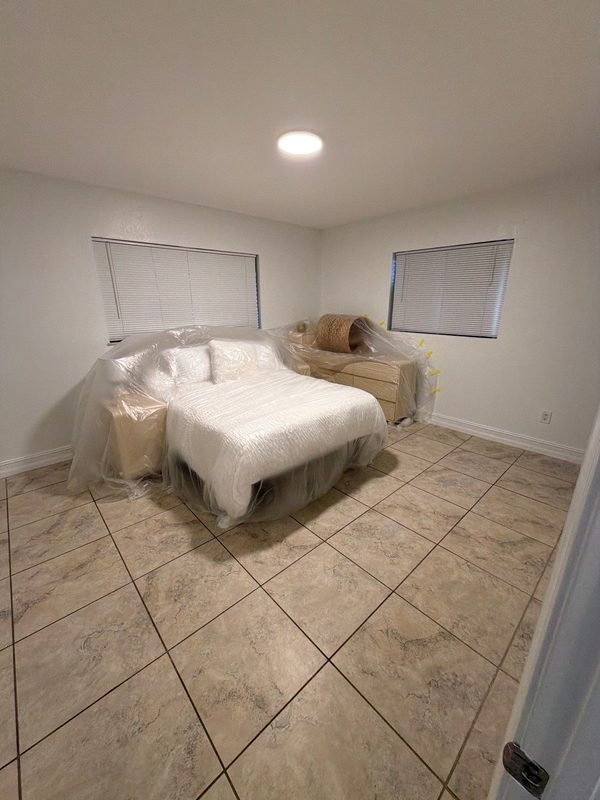
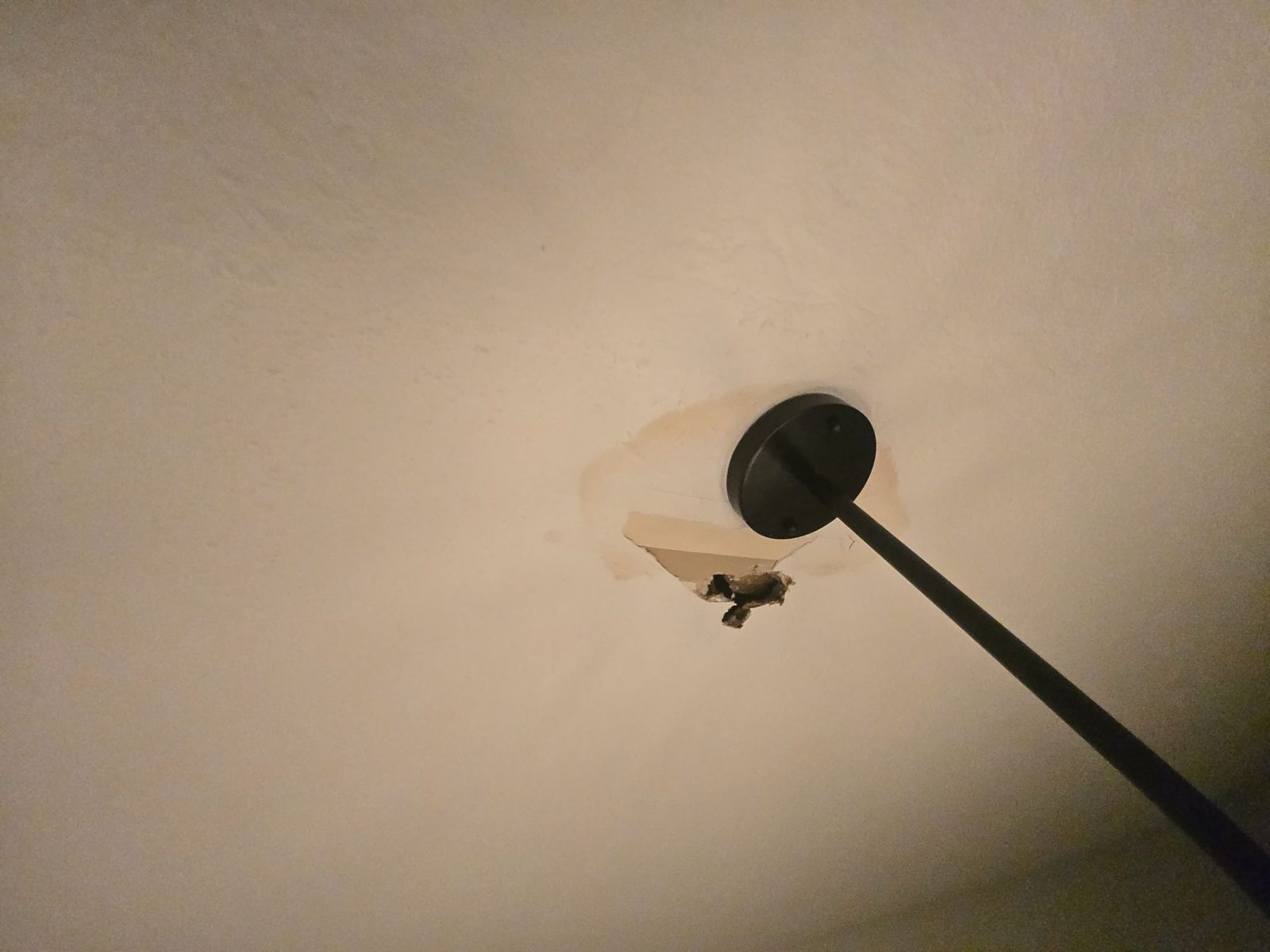
Condo ceiling leak water damage mitigation — Miami
A documented Miami condo loss where a ceiling leak left a stain ring around the chandelier canopy and broke the drywall open where the water came through. The 425-photo CompanyCam file documents the dry-out, ending with the bedroom's ceramic-tile floor clean and dry and the furniture protected under plastic sheeting.
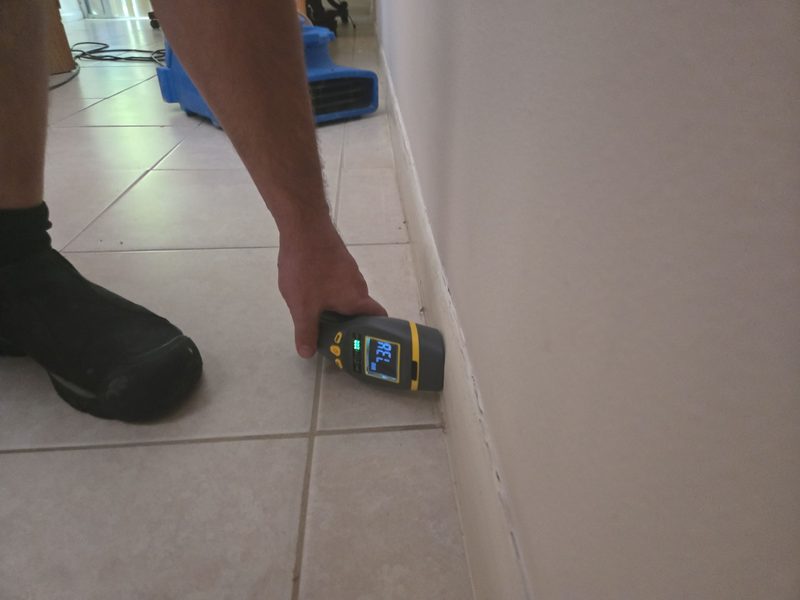
Tile floor water extraction & drying — Miami
Standing water pulled off the white tile floor of a Miami home with an extraction wand, then dried under monitored equipment. The 317-photo CompanyCam file runs to the final moisture checks on the baseboards.
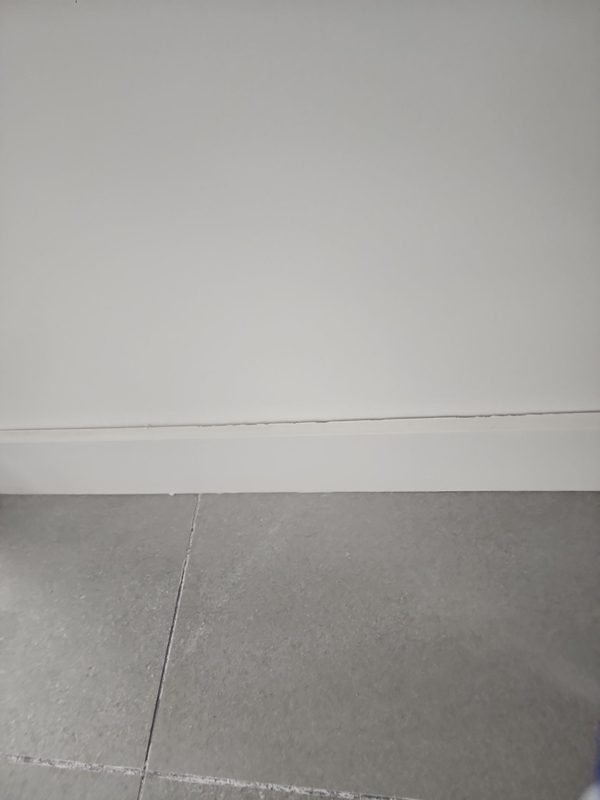
Office tile floor water extraction — Miami
Commercial water extraction in a Miami office where water had pooled across the large-format gray porcelain tile between the workstations. The 251-photo CompanyCam file documents the drying down to the walls and baseboards, clean and intact at completion.
Full restoration services in Miami
One operation covers every category — from emergency mitigation to full reconstruction.
Water Damage Restoration
Extraction, structural drying, and moisture verification for supply-line failures, drain-stack leaks, and unit-to-unit water migration in South Florida buildings.
Storm & Hurricane Damage Restoration
Emergency board-up, tarping, storm-water extraction, and post-hurricane structural drying for homes and buildings across Miami-Dade, Broward, and Palm Beach.
Mold Remediation
S520-based mold remediation: containment, HEPA-filtered removal, moisture-source correction, and post-remediation verification for South Florida homes and condos.
Sewage Cleanup
Category 3 water mitigation: sewage extraction, contaminated material removal, disinfection, and structural drying for backups and drain failures.
Fire & Smoke Damage Restoration
Structure securing, soot and smoke residue removal, odor treatment, and combined fire-and-water mitigation for South Florida properties.
Contents Restoration & Pack-Out
Full-chain contents handling: barcode-tracked inventory, pack-out, restoration cleaning, climate-controlled storage, and organized pack-back.
What Miami homeowners look for
Miami has no shortage of restoration companies chasing storm work, and homeowners here have learned to check who a contractor really is before letting them open walls. We make that easy: our verified customer reviews live on a dedicated hub at restorationdoctorsreviews.com, where the feedback and the Google aggregate are shown from the source rather than typed onto a marketing page. Read what real customers say, then call us at (786) 213-9489.
Restoration Doctor of South Florida is part of the multi-state Restoration Doctor operation headquartered in Vienna, Virginia — an established company standing behind the local crew, not a truck that appeared after the last storm.
Frequently asked
Active water, mold, fire, or sewage event?
Connect directly with the Restoration Doctor team for your region. Crews are on standby 24/7 with documented response protocols.