
What Drives Water Damage Restoration Cost in Miami

BYSteve Jafari, General ManagerMIAMI-DADE & BROWARD
The cost of water damage restoration in Miami depends on how much of the building got wet, which materials hold the water, how many days the readings take to reach the dry standard and the equipment the drying needs. A flat price quoted over the phone is a guess. You receive a written line-item scope with the photos and moisture readings behind each line. Pricing and payment terms are set out in your written agreement. Contents, plumbing or air-conditioning repair and reconstruction are separate from mitigation.
Call (786) 213-9489Why is there no single price for water damage restoration in Miami?
It depends on the loss, and anyone who names one number without seeing the property is guessing. A caught-early supply-line leak in one room and a riser failure that wets several floors of a tower are different jobs with different totals, even though both are called water damage.
This guide gives no price, because the total depends on the property. It shows what moves the total, so you can read an estimate from any company, ours included, and ask the right questions. The sections below follow the invoice from the first call to the final readings.
What are the parts of a water mitigation invoice?
A mitigation invoice is built from four parts: getting a crew and a truck to the property, the hours the technicians work, the equipment that stays behind, and the materials and disposal the job consumes. Only the labor part is sensitive to the hour of the day. Equipment rents per unit per day whether it was set at midnight or at noon.
That is why the days matter more than the clock. Our guide to after-hours pricing walks through which lines carry a night or weekend labor rate and which do not. In short, a delay in starting adds days of wet materials and days of equipment, and that costs more than any premium.
- Mobilization and the first assessment: the crew, the truck, the moisture survey and photographs.
- Labor: extraction, demolition of material that cannot be saved, setup, monitoring visits and cleanup.
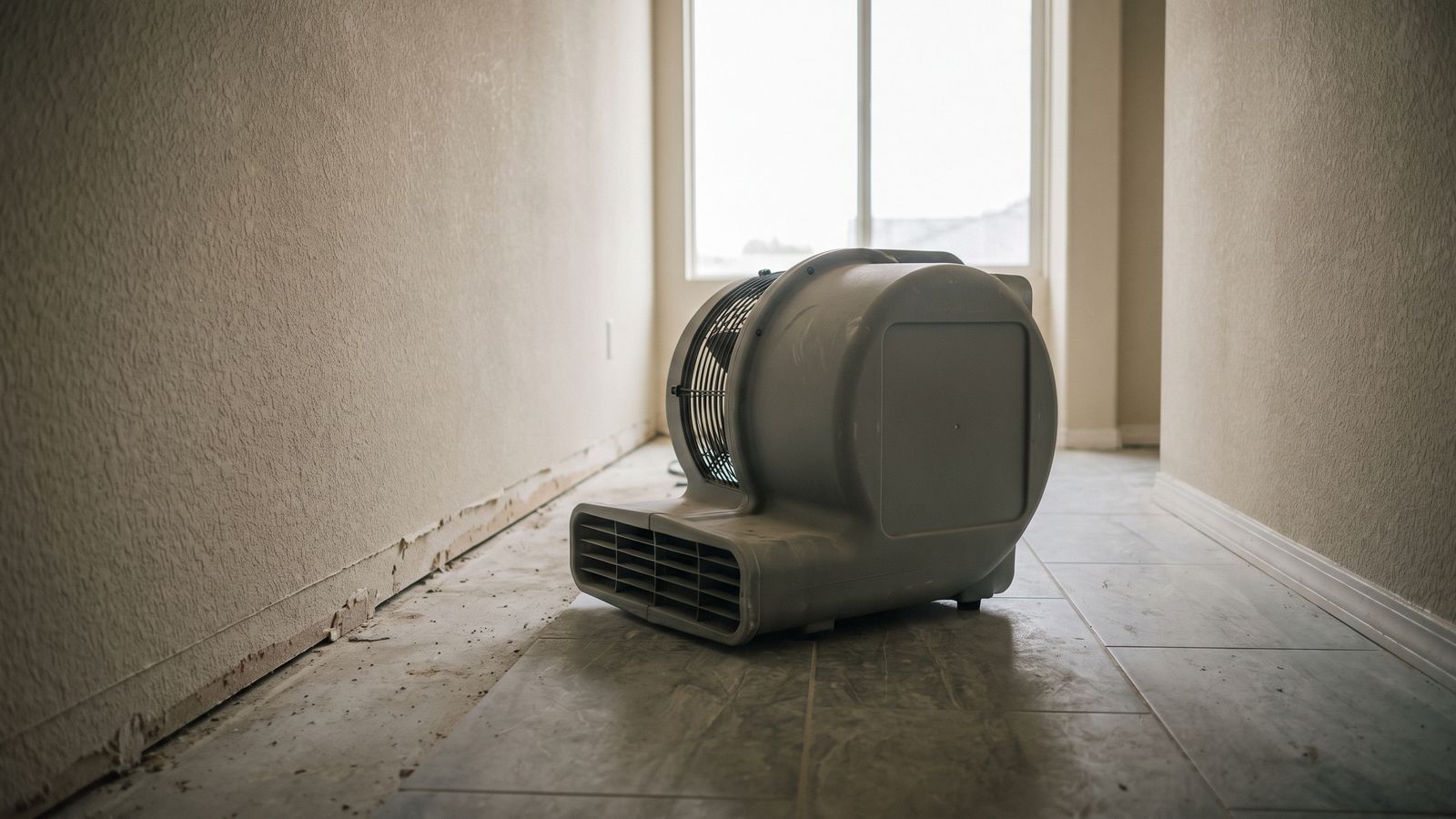
- Equipment days: air movers, dehumidifiers and other equipment, billed per unit per day.
- Materials and disposal: antimicrobial, containment, debris removal.
Which Miami factors make one loss larger than another?
Several things about South Florida buildings change the scope. The table lists the ones that most often move the total, and what to ask for in each case.
| Driver | Why it moves the cost | What to ask for |
|---|---|---|
| Size of the wet footprint | More wet area means more extraction labor, more equipment and more readings. | A moisture map with the measured area, not the stained area. |
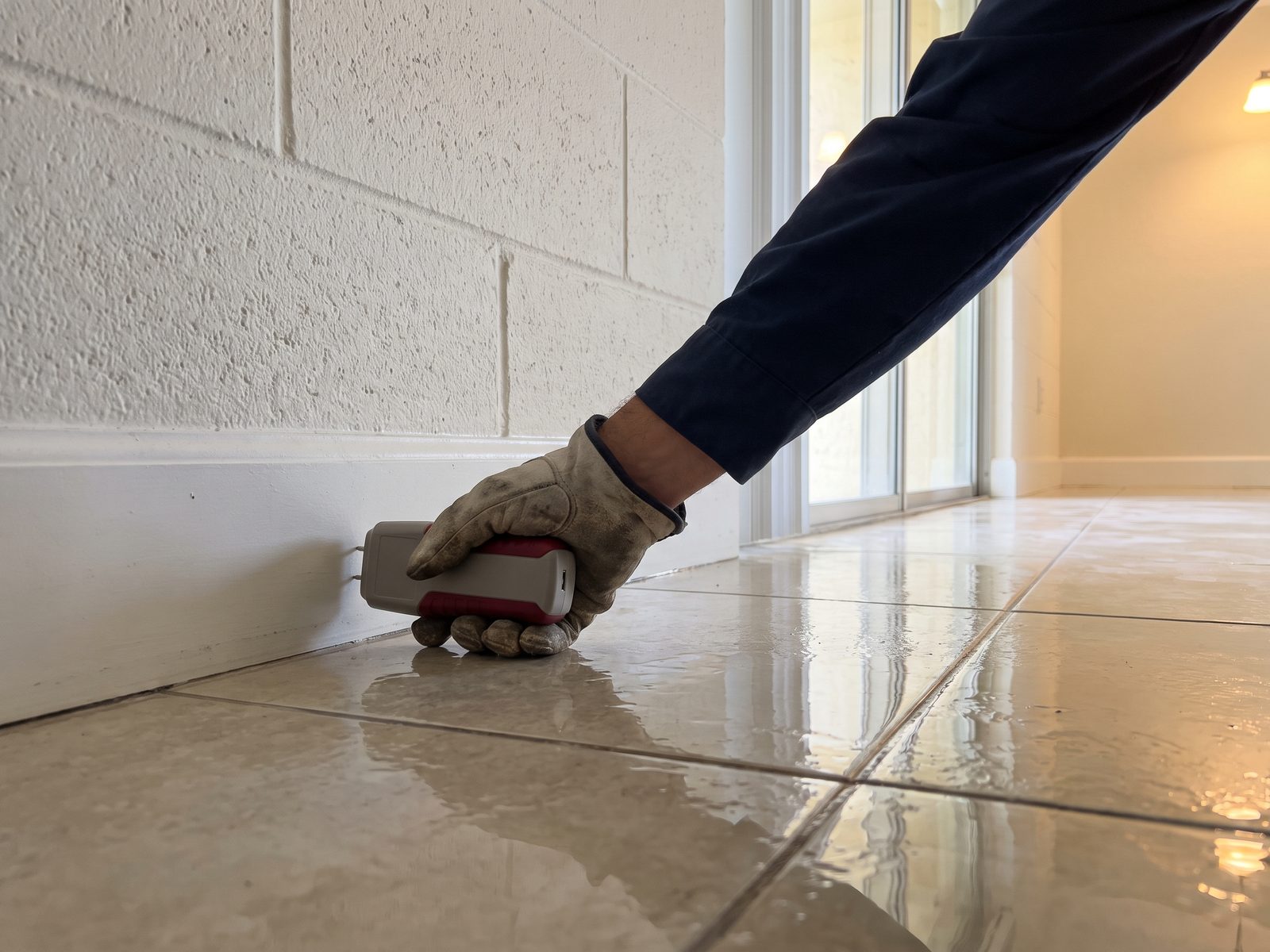
| Tile over a concrete slab | Water travels sideways under the tile and wicks into wall bases, so the wet area is larger than the puddle. | Readings along wall bases and toe-kicks, with a thermal image where possible. |
| Concrete block and stucco walls | Block releases water slowly, and the furring cavity holds still air, so walls take more days than wood framing. | The drying goal, taken from unaffected material in the same building. |
| High-rise and multi-unit buildings | Water crosses unit lines through risers and slabs, and each affected unit needs its own record and access. | A separate set of photos and readings for each unit and common area. |
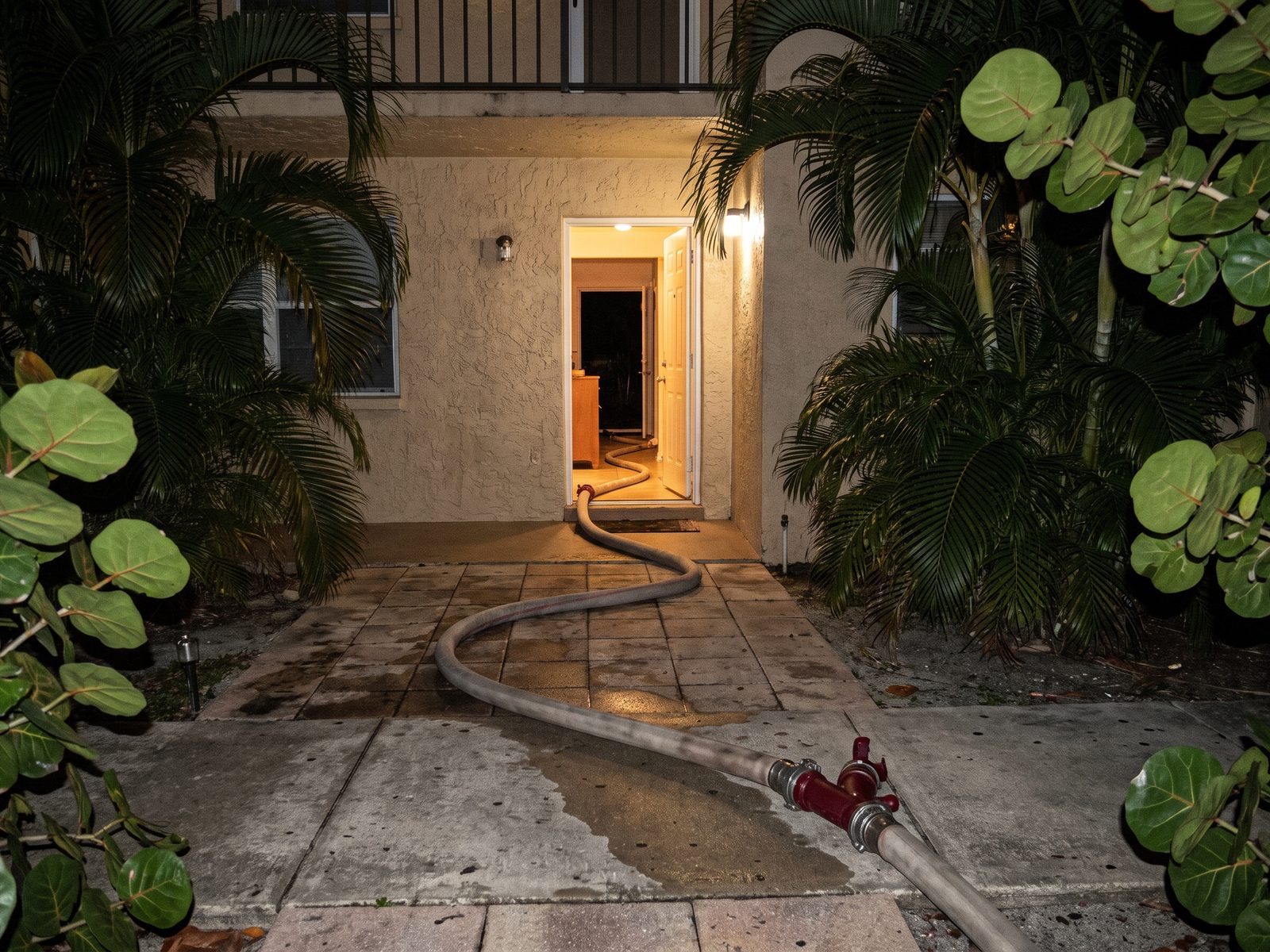
| Water category | Water that crossed a yard or street, or came from a drain, is contaminated, and porous materials are removed. | The category call and the reason for it, written on the scope. |
| Days to reach the dry standard | Equipment is billed per unit per day, and humidity slows drying here. | Daily readings, and the final readings that end the equipment days. |
| Time before the call | Water that sits migrates further, and clean water can become contaminated. | A call at any hour: a person answers at the number below. |
What is billed separately from mitigation?
Mitigation stops the damage and dries the building. Three other things are common after a loss, and they are separate from it. Contents pack-out, cleaning and storage are a separate scope. Fixing the source, whether that is a pipe, a water heater or an air-conditioning condensate line, belongs to a plumber or an air-conditioning technician. And repairs after drying, such as flooring, drywall, paint and trim, are done by licensed contractors.
We do not repair or rebuild. If your property needs repairs after drying, we can refer you to licensed contractors. Keeping these scopes apart is what lets you compare quotes, because a mitigation line and a reconstruction line are not the same work.
How do I get a quote for water restoration in Miami?
Call us, or send the address and what happened. A technician comes to the property for an on-site assessment: they find where the water went with a moisture meter and a thermal camera, photograph the affected rooms and set out what the job involves. A price quoted over the phone before anyone has seen the building is a guess, which is why we do not give one.
After the assessment you receive a written line-item scope, with the photos and moisture readings behind each line, and your written agreement sets out pricing and payment terms. Read it before you sign, and ask the questions in the list below.
How does an estimate and a written agreement work?
You receive a written line-item scope, with the photos and moisture readings behind each line. We invoice the customer who signs the agreement, and that customer is responsible for payment under it. Pricing and payment terms are set out in your written agreement, so read it before you sign.
We do not interpret your policy or represent you with an insurer. Questions about coverage belong with your insurer, your agent, or a licensed public adjuster or attorney. Our photos, readings and invoice are provided to you and, at your request, to your insurer.
What should you ask before you sign?
A short list protects you whichever company you call.
- What is in scope, and what is billed separately: contents, source repair, reconstruction.
- How equipment is billed, and how the end of the equipment days is decided.
- What the dry standard is and where it was measured.
- Whether each affected unit gets its own record, in a condo or multi-unit building.
- What documentation you will receive, and when.


