Lithium and E-Bike Battery Fires in Miami Condos: Who Pays

BYSteve Jafari, General ManagerMIAMI-DADE, BROWARD & PALM BEACH
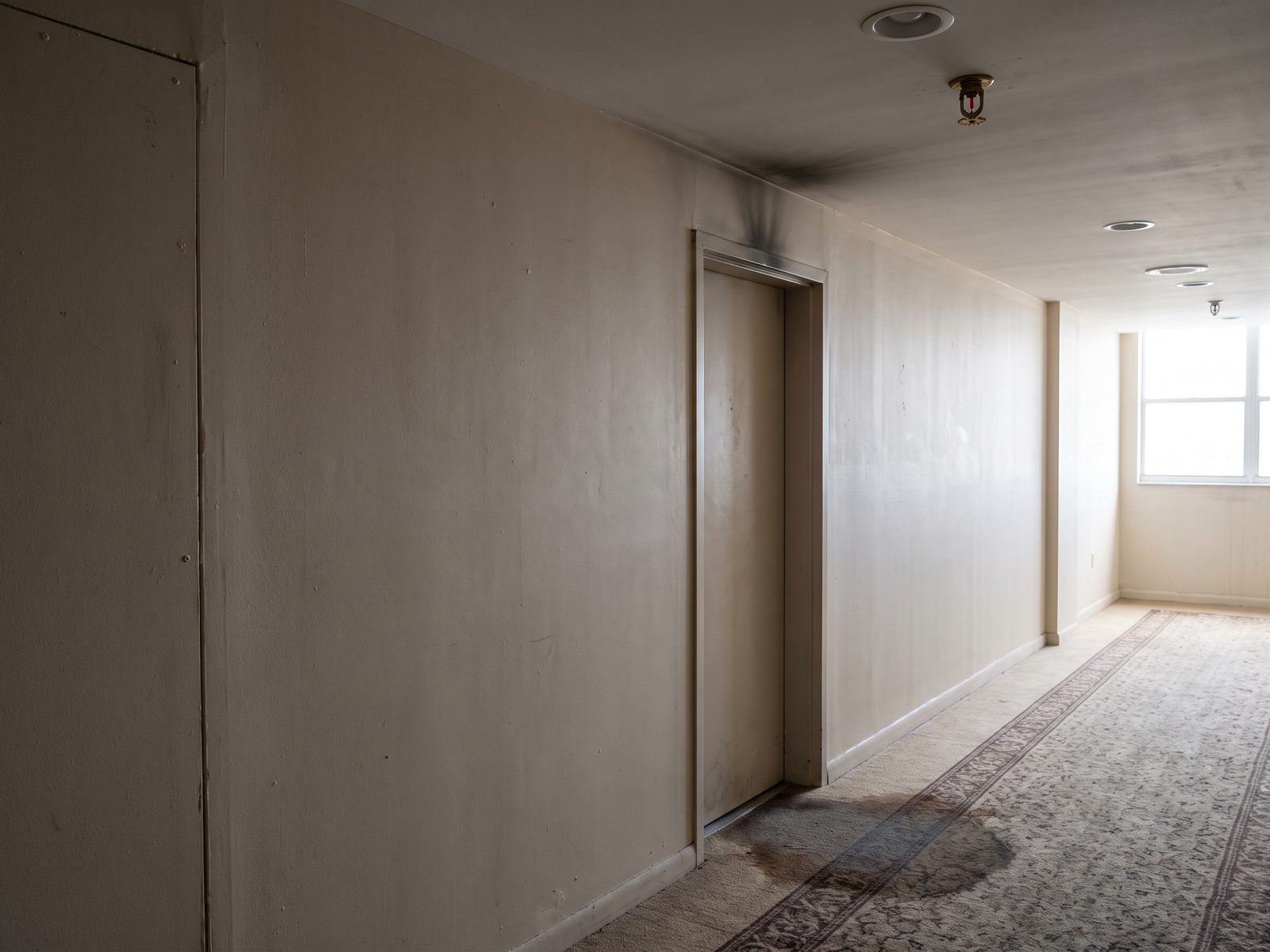
A lithium battery fire in a tower creates three overlapping losses at once: fire, corridor smoke and sprinkler water, each of which can fall to a different policy and a different party. The smoke residue is chemically aggressive and spreads far beyond the unit of origin, so the cleaning scope is usually much larger than the fire damage suggests.
Call (786) 213-9489What happens when a lithium battery fails in a condominium?
An e-bike or scooter lithium battery fire in a condo is not one loss. It is three at once: fire inside the unit of origin, smoke that pushes into the corridor and up the building's vertical shafts, then sprinkler water running down through the floors below. Those three are cleaned by different trades and very often paid by different policies.
The failure itself is fast. A damaged or defective cell can go into thermal runaway, a self-feeding reaction that drives the pack's temperature up and vents hot flammable gas before anything burns in the ordinary sense. The pack can flare, settle, then flare again. Residents see none of that chemistry. They see a bright fire that started with no cooking and no candle.
Miami towers concentrate the risk in a way most housing stock does not. Delivery riders work the Brickell and Miami Beach corridors year round, personal scooters live in studios with nowhere else to park, and packs get charged overnight in bedrooms. Boards here are only now writing charging rules, so the number of packs on a residential floor is often well beyond anything the building's fire plan was drawn around.
Why is lithium battery smoke different from kitchen or wood smoke?
Smoke is not one thing. What it leaves behind depends on what burned, and residue from a battery pack behaves unlike residue from a pan of oil. That difference drives the whole cleaning scope, so it is worth understanding before anyone starts wiping surfaces.
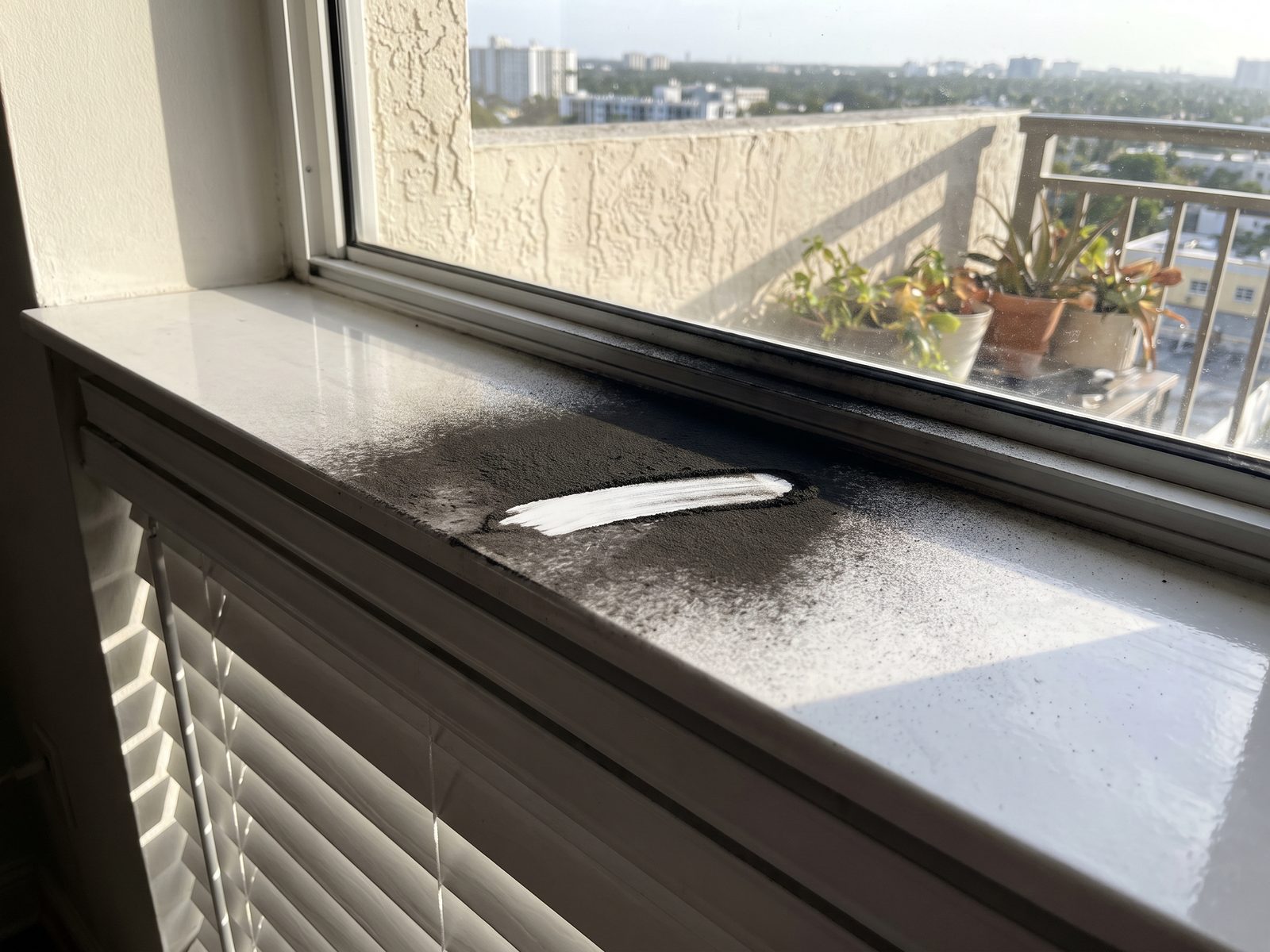
Kitchen smoke is largely protein and grease: nearly invisible, with an odor that outlasts its visible mark. Wood smoke leaves dry carbon soot that vacuums and dry-sponges off most hard surfaces. Battery and plastics smoke is the difficult one. A failing pack burns its own casing, its wiring insulation and the plastics around it, which produces a fine, dark, slightly oily residue with an acidic character.
Acidic residue does not just sit there. Left on metal it etches. Left on aluminum window frames, appliance faces or light-colored grout it keeps working, so a surface that still looks salvageable when we first walk it can be permanently marked by the time the cleaning crew reaches it. The particles are also small and light enough to stay airborne, then settle inside cabinets and on top of the contents of closed drawers.
How does smoke travel through a high-rise corridor and stack?
A tower is a chimney with rooms attached. Warm smoke rises, cool make-up air falls, and the pressure difference between the bottom and the top of the building pushes air through every gap it can find. Crews call the result a stack effect, and it explains why the unit that smells worst is frequently not the unit next door.
The first path is the corridor. Smoke leaves the unit of origin at the top of the door, banks along the corridor ceiling, then pushes toward the stair and elevator lobbies. Corridor carpet, wall covering and ceiling tile hold it. Every time a resident opens a door onto that corridor, a little of it enters a clean unit.
The second path is vertical: stairwells, elevator hoistways, trash chutes and plumbing chases connect floors that share nothing else. Smoke can surface several floors above the fire with clean floors in between. The third path is mechanical. If the building's air handling was still running, the system may have pulled residue into the ductwork, which is why a restorer asks the engineer what was running and when it was shut down.
Why does the sprinkler water often cause more damage than the fire?
Sprinklers work. A single head opening over a burning pack will usually hold the fire to the room it started in. The trade is water, and the volume surprises people who have never seen it. One head runs continuously until someone closes the zone valve, and it does not stop when the fire does.
In a tower that can mean a long discharge while staff locate the valve, confirm the fire is out and start a fire watch. All of that water lands on a floor assembly designed to shed rain rather than hold a pond, so it leaves by the shortest route down. That means the slab perimeter, the plumbing penetrations, and the gap where the floor meets the corridor wall.
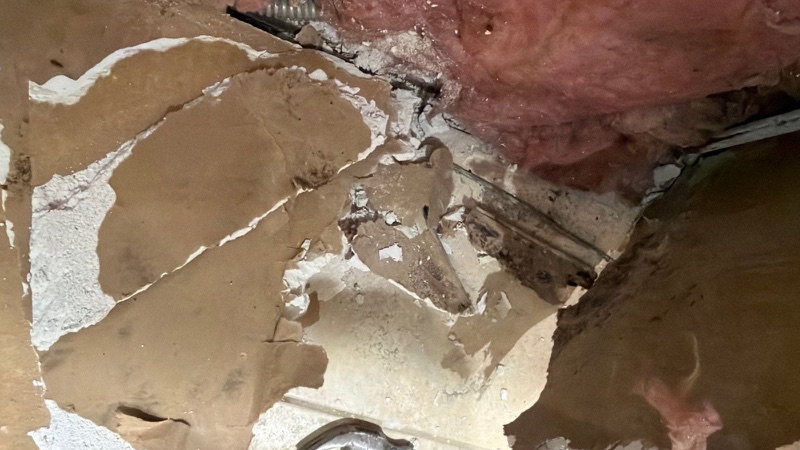
Water reaches the unit below within minutes, then the one below that. It travels sideways through the top plate of a demising wall and pools above a ceiling until the drywall lets go. Outdoor humidity here runs high all year, so a wet building does not dry on its own once the doors are opened. On most of these events, water damage restoration is the largest single line in the whole job.
Who pays for damage to a neighbor's unit?
No general rule decides this, and anyone who states one confidently is guessing. In a Florida condominium the answer is assembled from three documents: the declaration and bylaws, the association's policy, then the individual unit owner policies in force on the day of the loss. Read those before you allocate anything.
Fault is a separate question from coverage, and the two get confused constantly. A resident whose battery failed may or may not carry liability coverage that responds, and whether that liability is pursued is a decision for counsel and the carriers rather than for a restoration contractor. Bring in a licensed public adjuster or an attorney who works on Florida community association claims before the allocation is settled.
| Loss | Where it shows up | Who usually arranges the work | What decides who bears the cost |
|---|---|---|---|
| Fire damage | The unit of origin, sometimes the unit directly above | The unit owner, with the association involved for any common element | The declaration's unit-versus-common-element line, plus the owner's policy |
| Corridor and stack smoke | Corridors, stairs, lobbies, elevator landings, unaffected units | The association for common areas, unit owners for interiors | The declaration, the association policy and its deductible |
| Sprinkler water | The unit of origin and every floor below it | Usually the association, because the sprinkler system is typically drawn as a common element in the declaration | Association policy terms, the deductible, any loss assessment coverage |
| Contents and personal property | Furniture, clothing, electronics, stored items in each unit | Each unit owner or their tenant | The unit owner or renter policy, contents limits and any sublimits |
Where does the association's master policy take over?
Most of the confusion comes from one gap. The master policy covers the building as the statute and the declaration define the building, and that definition rarely matches what a resident thinks of as home. Cabinetry, flooring, wall coverings and built-ins frequently sit on the unit owner's side of the line even though they are physically attached to the structure.
The deductible is the second surprise. Association deductibles on coastal Florida buildings are often large enough that a smoke and water event confined to a few floors sits entirely underneath them. When that happens the carrier writes nothing, the association funds repairs from reserves or from an assessment, and owners feel the loss through that assessment rather than through a claim. That is what loss assessment coverage exists for, and it is worth checking your declarations page now rather than after an event.
The practical move for a board is to get one written coverage position early, from the association's own agent and carrier, then circulate it to residents in writing. Most of the anger in these buildings comes from people guessing in a group chat for a week while nobody says anything official.
What can and cannot be cleaned after this kind of smoke event?
More can be saved than most residents expect, and the deciding factor is usually how quickly the residue is removed rather than how close the item sat to the fire. Hard, sealed, non-porous surfaces clean well. Porous materials that absorbed both residue and odor are the ones that get argued about.
Sequence matters as much as product. Soot is lifted dry first, with HEPA vacuuming and dry chemical sponges, because introducing moisture to an oily acidic residue drives it into the finish. Only after the dry pass does anything wet touch the surface. Fine art, electronics, documents and soft goods normally leave the building for specialist contents restoration rather than being cleaned in place.
Odor is its own project and the one residents judge the job by. Source removal comes first, then cleaning of every surface the smoke touched, then sealing of whatever cannot be cleaned, and only then any air treatment. Our sister site in the Restoration Doctor network covers getting smoke odor out afterwards, and that method is chemistry rather than geography, so it applies here without change.
The sequence is not improvised. Dry removal before wet cleaning, documented drying of the water-affected assemblies under IICRC S500, and mold remediation under IICRC S520 if wet materials sat long enough in this humidity to grow something. The EPA's home mold cleanup guidance covers the same ground for a homeowner.
- Usually cleanable in place: painted and sealed drywall, tile, stone, glass, metal fixtures reached before etching sets in, hardwood with an intact finish, cabinetry faces.
- Usually cleanable off-site: clothing, linens, rugs, most electronics, framed art, books, documents and window treatments, handled at a contents facility rather than in the unit.
- Usually replaced: carpet pad, fiberglass insulation, HVAC filters, open-cell foam in upholstery and mattresses, ceiling tile, and any porous material that held both residue and water.
- Judgment calls: upholstered furniture, unsealed wood, laminate flooring swollen at the seams, anything with a strong residual odor after a full cleaning pass.
- Never salvage: food, medication, cosmetics or pet food that was open or unsealed anywhere residue reached.
What should a resident do in the first hour?
The only fire instruction that belongs in an article is the simple one: get out and call 911, and do not go back in for belongings. Everything below assumes the fire service has cleared the building and released your floor. The first hour after that is about evidence and about stopping secondary damage, because in this climate both clocks start immediately.
- Photograph and video everything before you move an item: wide shots of each room, then close shots of residue on sills and cabinet tops, water lines on baseboards and ceilings.
- Report the loss to the property manager in writing. Ask for the incident report number, the time the alarm sounded and the time the sprinkler zone was closed.
- Open your own claim with your unit owner or renter carrier the same day, even if you expect the association to handle the building side. A late notice helps nobody.
- Leave the residue alone, and do not run the air conditioning if residue reached the return. Wiping with a household cleaner drives residue into the finish and turns a cleanable surface into a replacement.
- Get wet materials moving. Standing water, soaked pad and saturated contents need extraction and controlled drying quickly, and a fire crew and a water crew are often on the same job together.
- Keep a running log of every call and every name, plus receipts for anything you buy or for temporary housing. That file is what an adjuster works from.
What charging rules are boards adopting, and why?
Boards across Miami-Dade, Broward and Palm Beach are writing micromobility rules for the first time, and the useful ones share a shape. They accept that residents will own these devices, they move charging away from sleeping areas, and they give the front desk something enforceable rather than a suggestion.
A rule only works if it is adopted the way your declaration and state law require, which is a question for association counsel. What a restorer can say is which rules correlate with smaller losses. None of them prevents a defective cell from failing. What they do is decide where it fails, how fast it is noticed, and how many units sit downstream when it does.
- A designated charging location outside the residential stack, such as a ventilated area of the garage or a dedicated room, rather than inside units.
- A written registration of resident-owned devices, so the building knows what is in it and can reach owners about a recall.
- A prohibition on charging in corridors, stairwells and anywhere that would block egress.
- A requirement that devices and replacement batteries be listed by a recognized testing laboratory, plus a bar on visibly damaged or repaired packs.
- Smoke detection and a monitored alarm in whatever room becomes the charging room, plus a clear instruction that staff evacuate and call 911 rather than fight a pack fire.
- A review of the building's insurance with the association's agent once the rule is in place, so the policy and the practice describe the same building.
Where can you read the primary sources?
The pages below are the public references behind this article. Read them alongside your own declaration, your association's current declarations page and your unit owner policy, because those documents govern your building and no general page can.
- U.S. Fire Administration guidance on preventing home fires
- Ready.gov on home fires
- EPA introduction to indoor air quality, which covers combustion sources
- EPA guidance on mold cleanup in the home, which matters once sprinkler water is involved
- IICRC standards library, including S500 for water damage restoration and S520 for mold remediation
- Florida Statutes section 718.111, the association, including what it must insure
- Florida Division of Emergency Management