Why South Florida Homes Grow Mold So Fast — and How to Stop It

BYSteve Jafari, General ManagerMIAMI-DADE, BROWARD & PALM BEACH

South Florida homes grow mold quickly because the three things mold needs — moisture, warmth, and an organic food source — are present nearly year-round here. Outdoor humidity routinely sits at 60–80%, temperatures stay in mold's ideal range, and after any water event mold can begin colonizing wet materials within 24 to 48 hours. The only reliable defense is controlling indoor humidity below about 60% and drying any water intrusion to a verified dry standard fast — not just until it looks dry. Restoration Doctor of Miami handles water drying and S520 mold remediation across South Florida — call (786) 213-9489.
Call (786) 213-9489Why does mold grow so fast in South Florida?
Mold needs only three things to thrive: moisture, an organic surface to feed on, and temperatures roughly between 40°F and 100°F. South Florida hands it all three, nearly every day of the year. Outdoor relative humidity here routinely sits in the 60–80% range, temperatures stay comfortably inside mold's ideal band, and homes are full of organic food sources — drywall paper, wood, carpet, and the dust and organic film that settle on every surface. In much of the country mold is a summer problem; here it is a January problem too.
That constant baseline is why a water event escalates so quickly in our climate. Elsewhere, a homeowner might get a few days of grace before mold becomes a concern. In South Florida, mold can begin germinating on wet materials within 24 to 48 hours, and warm, humid conditions push everything toward the fast end of that range. The ambient air is already primed for growth before the leak even happens, so the window to prevent mold after water intrusion is narrower here than almost anywhere in the United States.
How humidity alone can cause mold — without any leak
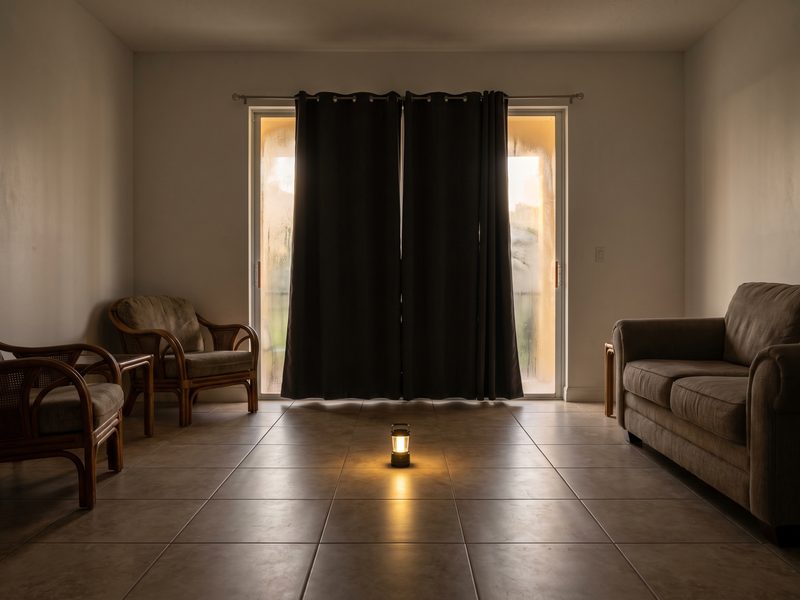
One thing that surprises many South Florida homeowners: you do not need a leak to get mold. When indoor relative humidity stays above about 60% for extended periods, mold can grow on surfaces from ambient moisture alone — on closet walls, behind furniture pushed against exterior walls, around window frames where warm humid air meets cool AC-chilled glass, and inside rooms that get closed off with the air conditioning turned down. This is why a second home or a unit left vacant with the AC set high can develop mold with no water event at all.
Air conditioning is your primary humidity-control tool here, and how you run it matters. An oversized or short-cycling AC cools the air quickly but does not run long enough to remove much moisture, so the room feels cold but stays damp — ideal for mold. Setting the thermostat very high while away to save energy lets indoor humidity climb into the danger zone. The goal is to keep indoor humidity below roughly 60% consistently, which sometimes means a properly sized system, a dedicated dehumidifier, or leaving the AC low enough to keep dehumidifying even when no one is home.

Where does mold hide in a Florida home?
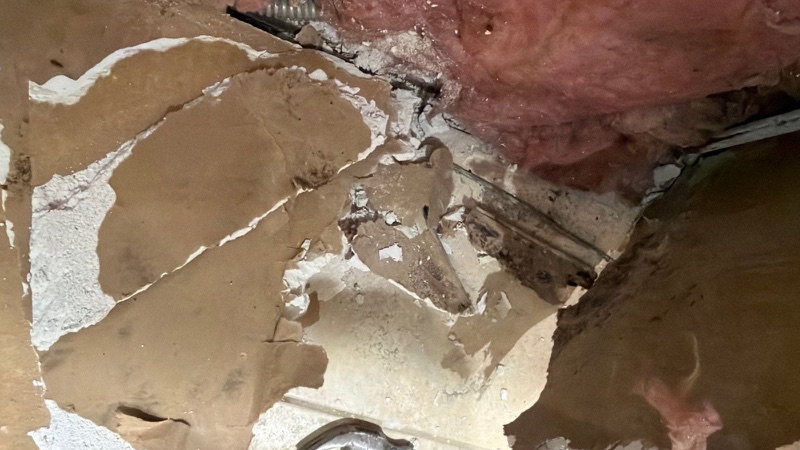
The mold you can see is rarely the whole problem — growth starts wherever moisture lingers, and that is usually out of sight. In South Florida homes the most common hidden locations are inside wall cavities behind drywall, under and inside carpet padding, beneath tile and flooring, around and inside HVAC ducts and the air handler, behind baseboards and trim, in closets on exterior walls, and inside insulation that soaked up moisture and holds it like a sponge. AC systems deserve special attention here: they run constantly, create cool damp surfaces, and can distribute spores through the whole home if mold takes hold at the air handler.
This is why 'it looks dry' is not the same as 'it is dry.' Surfaces can feel dry to the touch while the material behind them stays wet for days, and that trapped moisture is exactly where colonies establish first. Professionals rely on tools rather than appearances — moisture meters read the actual moisture content inside materials, and thermal imaging reveals the cool signature of evaporating water behind walls and under floors. Skipping that step is how a water loss that seemed handled turns into a mold discovery weeks later, when the smell comes back.
- Inside wall cavities and behind drywall where water wicked upward.
- Under carpet pad, tile, and flooring, and on the subfloor.
- Around HVAC ducts and the air handler — cool, damp, and constantly running.
- Behind baseboards, in exterior-wall closets, and behind furniture on outside walls.
- Inside insulation that absorbed moisture and holds it.

How do I stop mold after a water event?
The whole game is winning the race to dry. After any water intrusion, the goal is to get every affected material back below the moisture content that supports mold — and to do it inside that first 24 to 48 hours. That means removing standing water immediately, pulling out unsalvageable saturated porous materials like soaked carpet pad and wet insulation, and running commercial dehumidifiers and air movers sized to the space until moisture meters confirm the structure has reached a verified dry standard.
Household equipment usually cannot do this fast enough here. A box fan moves air but removes no humidity, and in our climate the air it is blowing may already be 70% relative humidity — so it can spread moisture rather than remove it. This is the core reason professional drying in South Florida leans so heavily on dehumidification. Crews measure the moisture content of the actual materials, find the hidden water behind walls and under floors, and document the drop day by day until targets are hit. The drying phase is precisely where mold is prevented or created.

When does it become a mold remediation project?
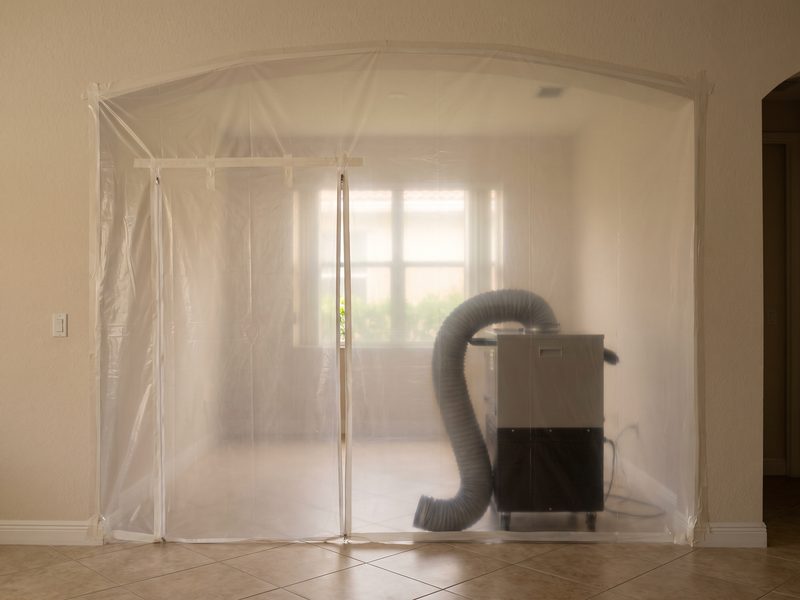
Once mold has visibly colonized more than a small area, drying alone is no longer enough — the growth itself has to be removed under controlled conditions. Professional mold remediation follows the ANSI/IICRC S520 standard: the work area is contained with sheeting and negative air pressure so spores cannot spread, air is filtered through HEPA scrubbers, non-salvageable contaminated materials are removed and bagged, surfaces are HEPA-vacuumed and treated, and the area is dried and then verified before containment comes down.
The rule of thumb: small, isolated surface mold (roughly under about 10 square feet) on a hard, non-porous surface can sometimes be cleaned carefully by a homeowner, but anything larger, anything inside wall cavities or the HVAC system, and anything tied to contaminated water calls for professional remediation. Bleaching established mold on porous materials usually just hides it while it keeps growing underneath. If you are already smelling that musty, earthy odor or seeing discoloration spread, treat it as remediation, not cleanup — and in South Florida, that transition happens fast.