Saltwater Flood Damage in South Florida: Why Tidal Flooding Hurts a Home Differently Than Rain

BYSteve Jafari, General ManagerMIAMI-DADE, BROWARD & PALM BEACH
Saltwater flood damage to a home is worse than rainwater damage because the chlorides stay after the water evaporates, keep pulling moisture out of South Florida air, and keep corroding wiring, fasteners, HVAC components and rebar. Seawater is classified as Category 3 water under ANSI/IICRC S500, so porous materials are generally removed, and the salvageable structure must be cleaned, flushed with fresh water and verified before drying is considered finished. Salt begins absorbing moisture from the air at roughly 75 percent relative humidity, a level South Florida regularly reaches. Standard homeowners policies generally exclude flood, so a separate flood policy is usually what responds to tidal or surge water. If tidal or surge water entered your home, start a professional assessment quickly, because corrosion and mold both begin within the first day or two.
Call (786) 213-9489Why is saltwater flood damage to a home different from rainwater damage in South Florida?
Saltwater flood damage to a home is different because the water leaves but the salt does not. Rain or a burst supply line deposits water that eventually dries out. Seawater deposits dissolved chlorides into drywall, concrete, wood, insulation, wiring and metal, and those chlorides keep working long after the floor looks dry.
South Florida is especially exposed to this kind of loss. King tides push seawater up through storm drains and over low seawalls in neighborhoods across Miami Beach, Fort Lauderdale, Aventura and the barrier islands, sometimes on perfectly sunny days. Hurricane storm surge does the same thing at a much larger scale. In both cases the home is exposed to a conductive, corrosive fluid that carries contaminants, not clean rainfall.
There are three practical differences a homeowner should understand. First, seawater is classified as grossly contaminated, so many materials that would be dried in place after a clean-water leak must be removed. Second, residual salt is hygroscopic, meaning it attracts moisture, and outdoor humidity here often sits in the 60 to 80 percent range and regularly climbs higher overnight. Third, chlorides attack metals at a chemical level, so the damage you cannot see inside walls, panels and concrete is often the most expensive.
That is why a saltwater loss is handled as a cleaning and decontamination problem first and a drying problem second. Drying alone, which is the right answer for many clean-water losses, simply leaves the salt in place. If you want the neighborhood-level view of how tidal intrusion behaves, our guide to why tidal flooding is different from other flooding covers the street-side mechanics.
Is seawater flooding considered Category 3 water, and what does that change?
Yes. Under the ANSI/IICRC S500 water damage standard, flooding from seawater is classified as Category 3, meaning grossly contaminated, regardless of how clear it looks. Tidal and surge water travels through streets, storm drains, canals and sometimes overwhelmed sewer and septic systems before it reaches your property, so it can carry bacteria, fuel, oil, sewage and debris on top of the dissolved salt.
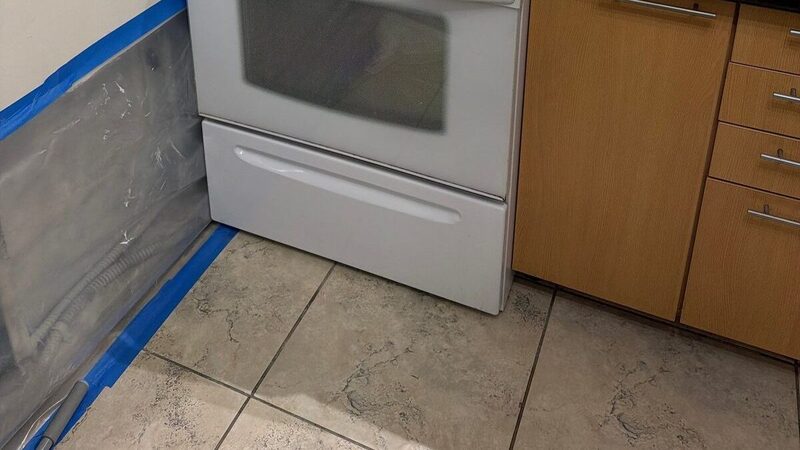
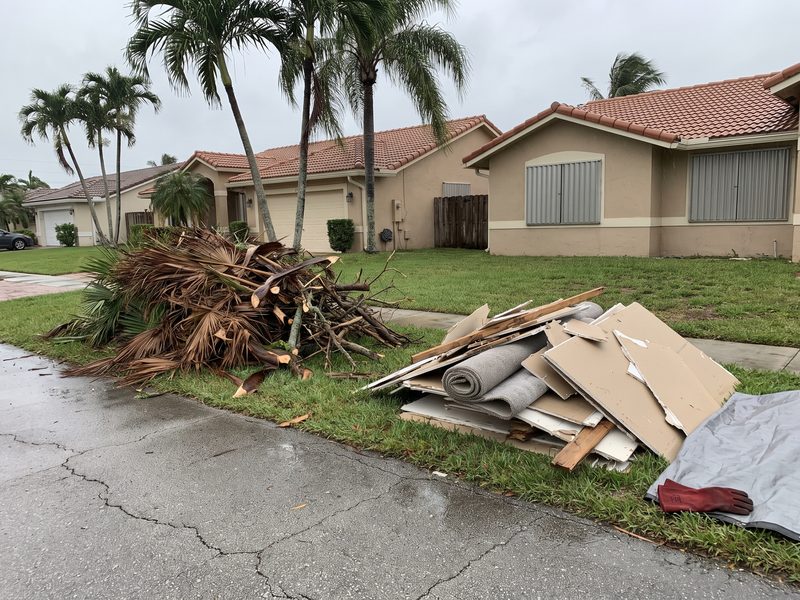
That classification changes the scope of work. Porous and semi-porous materials that have been wetted by Category 3 water, such as carpet, pad, drywall, insulation and unsealed particleboard cabinetry, are generally removed rather than dried in place. Hard, non-porous or semi-porous structural materials such as sealed tile, concrete and framing lumber can often be saved, but only after cleaning, antimicrobial treatment and flushing.
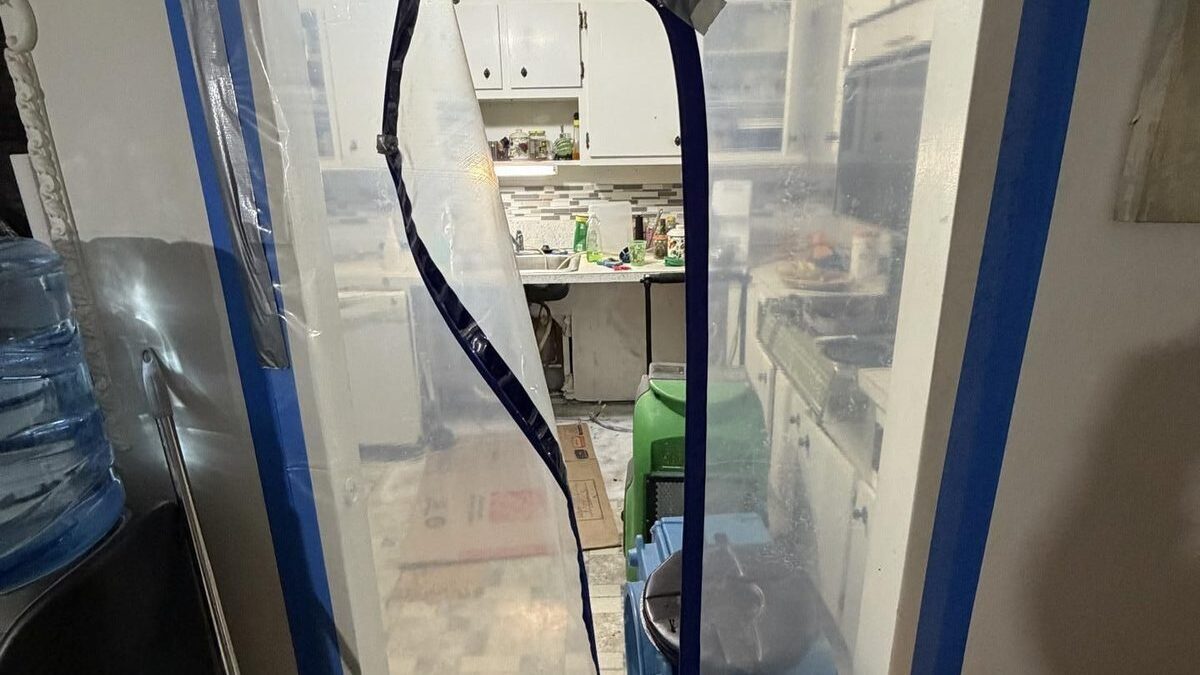
Category 3 work also calls for protective equipment, containment where needed, controlled demolition and careful disposal. Crews should keep the contaminated zone separate from unaffected living areas so that foot traffic and air movement do not carry contamination into dry rooms.
Water conditions can also worsen over time. Warm South Florida temperatures accelerate bacterial growth, so even a tidal intrusion that begins as a few inches of water in a garage or ground-floor unit should be treated as a contaminated loss from the start. If the water appears to have mixed with sewage, our sewage cleanup protocols apply on top of the flood response.
Why does salt keep corroding a home after the floodwater has dried?
Salt keeps corroding because chloride ions remain in the material and re-dissolve whenever moisture is available. Table salt, which is sodium chloride, begins absorbing water vapor from the air at roughly 75 percent relative humidity. South Florida's climate regularly reaches or exceeds that level, so salt left in drywall, wood, concrete or on metal surfaces can turn damp again overnight even if no new water ever enters the home.
This creates a cycle that homeowners often misread. A room is dried, the readings look acceptable, and a few weeks later baseboards feel clammy, metal surfaces show rust blooms, and a white powdery residue called efflorescence appears on concrete and block. The structure has not leaked again; the salt is simply pulling moisture back out of the air. Efflorescence can have other causes too, which is why it helps to read our comparison of mold and efflorescence on Florida block walls before assuming what you are looking at.
Chlorides are especially destructive to metal because they break down the thin protective oxide layer that normally slows corrosion. Once that layer is compromised, iron and steel rust faster, aluminum pits, and copper and brass develop green or white corrosion products. In reinforced concrete, chlorides that migrate to the steel can corrode rebar, and because rust occupies more volume than the original steel, it can crack and spall the concrete from the inside.
Residual salt also complicates the moisture picture. Pin-type resistance moisture meters respond to electrical conductivity, and salt makes materials more conductive, so readings can appear higher than the true moisture content. A competent technician accounts for that by using several measurement methods, comparing against unaffected reference materials, and in some cases testing for chloride contamination directly instead of trusting a single meter reading. For more on how a drying goal is set and confirmed, see our article on what dry actually means.
- Salt is hygroscopic and begins pulling moisture from air at around 75 percent relative humidity.
- South Florida outdoor humidity commonly runs 60 to 80 percent and often higher at night, so re-wetting of salt deposits is routine.
- Chlorides strip protective oxide layers from metal and accelerate rust and pitting.
- Chloride in concrete can corrode embedded rebar and cause cracking and spalling over time.
- Conductive salt can skew moisture meter readings, so verification needs more than one method.
What parts of a home does saltwater damage first and most severely?
Electrical systems, HVAC equipment, metal fasteners and ground-level finishes are usually hit first and hardest. Anything low to the ground, anything made of unprotected metal, and anything porous that absorbed the water is at risk.
Electrical components are the highest-priority safety concern. Seawater is highly conductive and leaves behind corrosive residue inside receptacles, switches, junction boxes, breaker panels, GFCI devices and wire connections. Corroded connections can overheat, trip unpredictably or fail months later. Submerged electrical equipment should be evaluated by a licensed electrician, and in many cases breakers, outlets and controllers must be replaced rather than cleaned.
HVAC equipment is next. Air handlers installed in garages or low closets, ductwork, return plenums, condensing units and their coils are vulnerable because aluminum fins and copper tubing corrode quickly and duct insulation traps contaminated water. Appliances, garage door openers, water heaters and low-mounted motors face the same problem.
Structural and finish materials follow. Drywall, insulation, baseboards, cabinet bases and subfloor layers wick contaminated water upward. Steel studs, nail plates, hurricane straps, screws and anchors can corrode, and connectors that are not hot-dip galvanized or stainless are especially vulnerable. Concrete slabs, block walls and stem walls absorb chloride into their pores, which is why flushing and sometimes chloride testing matter. Our guide to drying concrete block walls in South Florida explains why masonry holds moisture longer than most owners expect.
- Electrical panels, breakers, outlets, GFCIs and low wiring runs
- Air handlers, ductwork, coils, condensers and mini-split components
- Appliances, garage door openers, water heaters and pumps
- Drywall, insulation, baseboards and cabinet bases
- Fasteners, connectors, steel studs, anchors and rebar
- Vehicles, tools and stored items in garages and ground-level storage
What happens to a garage after saltwater floods it in Aventura?
A saltwater-flooded garage in Aventura typically suffers the most visible and fastest corrosion in the home, because garages are low, often open to the street, and full of metal. Saltwater damage in a garage commonly involves the slab, the walls, the garage door hardware, the electrical panel or subpanel, the water heater, the air handler and everything stored on the floor.
Garages are usually the first place tidal and surge water enters because they sit at or near grade, and many coastal Aventura, Broward and Miami-Dade garages share walls with living space or house mechanical equipment. When seawater enters, it soaks the bottom of drywall, saturates cardboard and fabric storage, and sits on the slab long enough to drive chlorides into the concrete surface.
Concrete slabs are often salvageable, but they need more than a rinse. Standing water should be removed, the slab flushed with fresh water, and the contaminated runoff managed properly. Cleaning, antimicrobial application and drying follow, and then the surface is checked again once humidity has had a chance to reveal any residual salt blooming.
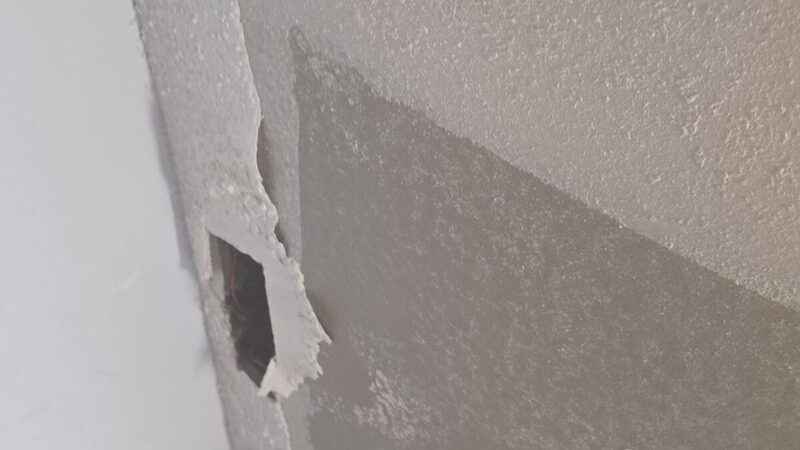
Wall assemblies connected to the garage are a hidden problem. Water travels behind baseboards and into the bottom plate cavity, and shared walls can carry moisture and contamination toward living areas. Removing the lower portion of affected drywall and insulation, often with a flood cut above the wicking line, lets crews inspect studs, plates and fasteners for corrosion and dry the cavity thoroughly. Our article on why restoration crews drill holes in walls explains the cavity-drying side of that work.
Do not run a garage freezer, garage door opener or any circuit that was submerged until a licensed electrician has checked it. Corroded equipment can look fine and still fail or become a shock or fire hazard.
How is saltwater flood cleanup in Miami Beach different from a rainwater loss?
Saltwater flood cleanup in Miami Beach differs because it adds a flushing and salt-verification phase that a rainwater loss does not need. The sequence is removal of contaminated materials, cleaning and antimicrobial treatment, fresh-water flushing of salvageable surfaces, controlled drying, and verification that moisture and salt residues are under control.
The workflow follows the principles of ANSI/IICRC S500. Standing water is extracted, unsalvageable porous materials are removed, and the affected structure is cleaned. Fresh-water flushing dissolves and removes chloride from salvageable hard surfaces and cavities, and the rinse water is extracted so that salt is carried out of the building instead of being driven deeper into the material.
Drying then relies on psychrometric control. In a high-humidity coastal climate, technicians use air movers and dehumidification matched to the room volume and the moisture load, document temperature, relative humidity and grains per pound, and track material moisture readings daily. Because residual salt keeps drawing moisture back, the goal is to bring the structure to its dry standard and then recheck, rather than assuming the job is finished because the visible surfaces feel dry. Our comparison of LGR and desiccant dehumidifiers covers the equipment choices that matter most in this climate.
Miami Beach adds its own practical wrinkles. Many properties are condos and multi-unit buildings with shared walls, shared mechanical systems and association requirements, and older slab-on-grade construction near the water means chloride exposure to concrete and embedded metal is a real concern. Restoration Doctor of South Florida dispatches 24/7 across Miami-Dade, Broward and Palm Beach counties, and we document each phase with photos, a line-item scope and daily moisture logs. For a Miami Beach-specific walkthrough, read our king tide saltwater flood cleanup guide.
The comparison below shows how the two types of loss diverge.
| Phase | Rainwater or clean-water loss | Saltwater tidal or surge loss |
|---|---|---|
| Water classification | Often Category 1 or 2 depending on source and time | Category 3 under ANSI/IICRC S500 |
| Porous materials | May be dried in place if clean and caught early | Generally removed: carpet, pad, drywall, insulation |
| Cleaning | Basic cleaning and sanitizing as needed | Antimicrobial treatment plus fresh-water flushing |
| Salt control | Not applicable | Chloride removal and verification needed |
| Moisture readings | Standard meter interpretation | Interpreted with caution because salt skews conductivity readings |
| Electrical and HVAC | Inspect if wetted | Evaluate or replace submerged components due to corrosion |
| Risk after drying | Low if dry standard is met | Salt can re-wet in humid air and keep corroding metal |
What should you do about corrosion after storm surge in Fort Lauderdale?
After storm surge in Fort Lauderdale, the best response is to stay safe, stop further spread, document everything and start professional flushing and drying as soon as it is safe, because corrosion and mold both begin quickly. Mold can begin growing within 24 to 48 hours in our climate, and salt-driven corrosion starts as soon as chlorides contact metal.
First, safety. Do not enter a flooded space with energized electrical equipment, avoid contact with the water, and shut off power at the main only if you can do so from a dry location. Floodwater should be presumed contaminated, so wear protective gear if you must enter and keep children and pets out.
Second, document. Photograph the waterline, damaged contents, electrical equipment, appliances and any visible corrosion before anything is moved. Note the date and time, and keep damaged items long enough for your carrier to review them if requested. A carrier-ready claim file with a line-item scope, photographs and moisture logs makes the later conversation with your insurer clearer.
Third, mitigate. Remove standing water, move salvageable contents to dry areas, and get dehumidification running as soon as the structure is safe. Rinse accessible metal surfaces with fresh water where it is safe to do so, since removing salt early slows corrosion. Avoid household bleach on metals and never mix cleaning chemicals.
Fourth, plan for follow-up. Corrosion after a surge event can show up weeks later as failing outlets, rusting door hardware, staining on concrete, or cracking around embedded steel. Ask for a re-inspection of electrical, HVAC and structural connections after drying is complete, and have a licensed electrician and, where concrete or structural elements are involved, a qualified engineer evaluate anything that looks questionable. If damp conditions linger, our mold remediation team follows ANSI/IICRC S520 practices. For the broader first-48-hours checklist, see our guide on what to do first after hurricane water damage.
- Keep out of floodwater and stay away from energized electrical equipment.
- Photograph the waterline, contents, equipment and corrosion before cleanup.
- Remove standing water and start dehumidification quickly.
- Rinse accessible metal with fresh water to lower chloride exposure.
- Have a licensed electrician check any submerged wiring, panels, outlets and appliances.
- Schedule a follow-up check for salt blooming, rust and elevated moisture after drying.
Is saltwater flood damage covered by insurance, and how should you document it?
Coverage depends on your policy, but in general standard homeowners insurance excludes flood, including storm surge and tidal flooding, while wind-driven rain entering through a storm-created opening may be treated differently. Flood damage is usually covered only under a separate flood policy, such as one through the National Flood Insurance Program or a private flood carrier, so read your declarations and exclusions carefully. Our article on flood versus wind-driven rain in Florida insurance explains where that line is usually drawn.
That distinction matters in South Florida because a single hurricane can cause both types of loss. Rain entering through a wind-damaged roof or window is a different cause of loss than seawater rising from the street, and the two may be handled under different policies. Documenting which water came from where, and when, helps keep the claim organized.
Restoration Doctor of South Florida works for you, not your insurance company. We bill the homeowner directly, and we hand you a carrier-ready claim file that includes an Xactimate scope, CompanyCam photo documentation and daily moisture logs. That file is yours to submit to your carrier, and it can support the conversation about covered and uncovered portions of the loss. We cannot read your policy or promise what a carrier will pay, so coverage questions go to your agent or carrier.
For documentation, keep a written timeline, save photos and videos of the waterline and affected systems, keep receipts for emergency mitigation, and retain damaged materials where practical until your adjuster has seen them. Ask your carrier about deadlines for reporting a loss and for submitting a proof of loss, because those timelines vary by policy and by the type of claim.
If you are unsure whether your loss is wind, rain or flood, call us before major demolition starts. A short assessment can separate the pathways and make sure the right evidence is captured. You can reach Restoration Doctor of South Florida at (786) 213-9489 or through our contact page for emergency dispatch.