King Tide Miami Schedule: The Calendar and What Floods When

BYSteve Jafari, General ManagerMIAMI-DADE, BROWARD & PALM BEACH
The king tide Miami schedule is a predictable tidal calendar: the highest tides of the year arrive around the new and full moons in the fall, with September through November the key stretch and October often the strongest. Because this flooding is driven by astronomy rather than weather, it can put water on streets and in low-lying properties on a sunny day, which makes it calendar-certain even in a quiet hurricane season. Tidal floodwater that enters a building is generally treated as Category 3 water under ANSI/IICRC S500, so wet porous materials are typically removed rather than dried in place. Check the official NOAA tide predictions for your area, prepare before each window, and call Restoration Doctor of South Florida at (786) 213-9489 if saltwater reaches the inside of your home.
Call (786) 213-9489What is the king tide Miami schedule, and when do the highest tides arrive?
The king tide Miami schedule is the published calendar of the year's highest predicted tides. They cluster around the new and full moons and reach their annual peak in the fall. In South Florida, the strongest windows typically fall in September, October, and November, with October the most dramatic stretch for much of Miami-Dade County.
King tide is a popular term rather than a formal scientific category. It describes perigean spring tides: the extra-high tides that occur when the sun, moon, and Earth line up at new or full moon and the moon is also near its closest point to Earth. That combination stacks gravitational pull, so high tide rises higher than usual. In South Florida, seasonal factors such as warmer, expanded water and autumn shifts in ocean currents push the peaks higher still.
What makes this different from hurricane flooding is predictability. Storm surge depends on a storm that may or may not form or approach. King tides are calculated well in advance. You do not need a named storm, a rain event, or a warning from the National Hurricane Center for water to come up through storm drains in Miami Beach, Brickell, and other low-lying neighborhoods. That is why we treat them as the most reliable flood risk on the South Florida calendar.
Each year the exact dates shift, because the lunar cycle does not line up with the calendar the same way twice. This article explains the pattern and how to find your exact dates. The dates themselves should always come from the official tide tables, not from a blog post written months earlier.
How do I find the exact king tide Miami Beach dates this year?
The most reliable way to find king tide Miami Beach dates is to pull the official tide predictions from NOAA for the nearest station, then look for the days when the predicted high tide is the highest of the month, usually within a day or two of a new or full moon. Local governments and universities in South Florida also publish annual king tide calendars that flag the likely flooding windows.
Start with the NOAA Tides and Currents predictions for a station near you, such as one covering Biscayne Bay or the Miami Beach and Virginia Key area. Look at the predicted high-tide height for each day from September through November. The days where those numbers jump above the surrounding days are your king tide days. Windows commonly last several days, and each day usually has two high tides, so the highest peak tends to arrive at a predictable time in the morning or evening.
Remember that a prediction is not a forecast of what will actually happen. Real water levels are the prediction plus whatever the weather adds. Sustained onshore wind, low barometric pressure, a tropical system offshore, or heavy rain falling at the same time can push actual levels above the tables. A strong onshore wind during a peak window can turn a manageable day into a street-flooding day.
A practical routine is to add each predicted peak window to your phone calendar once the new year's tables are published, set a reminder two days ahead, and check the marine forecast for wind direction and rainfall that morning. Because the calendar refreshes every year, treat last year's dates as useless for planning.
Why is October often the peak, and why does it matter in a quiet hurricane season?
October is often the peak because the seasonal rise in South Florida sea level, the autumn alignment of the moon's orbit, and the tide cycle tend to reinforce each other at that time of year. The result is that the highest water of the year usually arrives in the fall, whatever the hurricane season is doing.
This matters for planning. If seasonal outlooks call for a below-normal hurricane season, it is tempting to assume the risk of water damage is lower. It is not, because king tide flooding does not depend on storms. A season with few landfalls can still bring several multi-day windows when Miami streets, seawalls, and drainage systems are under pressure. When a risk is calendar-certain, it is the one you can plan for with confidence.
Sea level rise adds a second layer. Over time, the same predicted tide sits on a higher baseline, so a tide that once stayed in the bay now reaches the street. Low-lying parts of South Florida already see what is often called sunny-day flooding, where water appears on roads without rain. King tides have become a useful preview of how water behaves around a coastal property.
Finally, the timing overlaps with the tail of hurricane season, which runs through November 30. A king tide window that coincides with a distant tropical system or a heavy rain event can be worse than either alone, because stormwater has nowhere to go when the bay is already high. Treat early fall as the time to complete your preparation for both.
What floods first during a king tide in Miami, and what about Brickell?
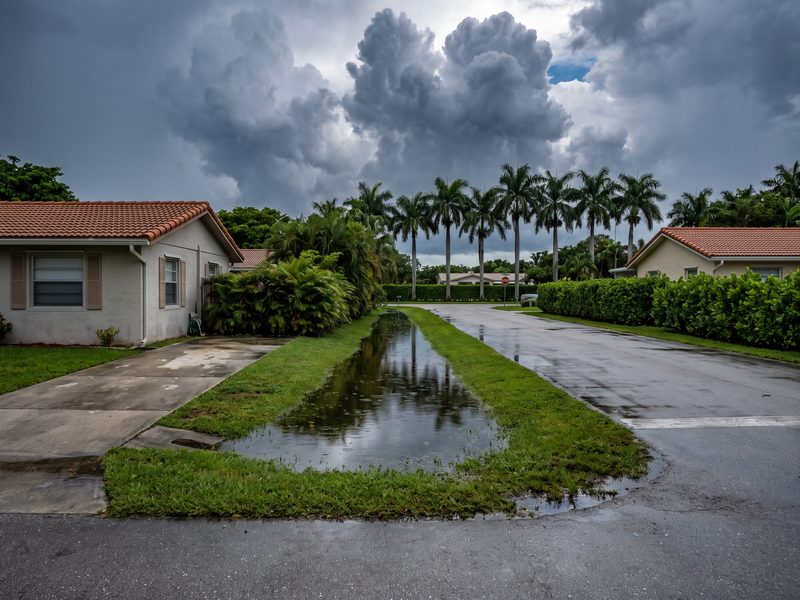
The first places to flood are the lowest-elevation streets and drainage points near the water, especially where storm drains connect directly to the bay or canals. High-tide flooding in Brickell typically shows up as water rising out of storm drains and pooling at low intersections, parking garage ramps, and street-level entrances, rather than as waves crossing a shoreline.
The mechanism is almost always the same. When the tide is higher than the outfall of the drainage system, water flows backward through the pipes and comes up through the grates. That is why flooding can appear a block or more from the water and can happen under a clear sky. It tends to recede as the tide falls, but it leaves salt residue behind and can repeat on the next high tide.
The table below summarizes the typical pattern. It describes how the flooding works in general, not a prediction for any particular street or date.
Properties with low-level parking garages, ground-floor lobbies, elevator pits, and mechanical rooms deserve extra attention. In a high-rise, the units may stay dry while the equipment that serves the whole building sits in a vulnerable spot. For more on that scenario, see our guide to condo parking garage flooding during king tides.
| Area type | How water arrives | What is most at risk |
|---|---|---|
| Barrier-island streets (Miami Beach) | Water rises through storm drains and low street sections; seawall overtopping in some spots | Ground-floor units, garages, vehicles, street-level retail |
| Brickell and downtown waterfront | Backflow through drains at low intersections and ramps | Low-level parking, lobbies, electrical and elevator equipment |
| Canal-front and bayfront homes (including Coral Gables) | Water over low seawalls and up canal-connected drains | Yards, driveways, garages, ground-level living areas, pool equipment |
| Inland low pockets | Stormwater that cannot drain because the system is tide-locked | Garages, first-floor flooring, air handlers placed low |
Does king tide flooding hit Coral Gables?
Yes, king tide flooding in Coral Gables is real, but it is concentrated in the waterfront and canal-connected neighborhoods rather than across the whole city. Properties on the bay, along canals, and in low-lying pockets near drainage connections are the most likely to see water during the peak windows.
Coral Gables has a lot of waterway frontage, including canals that connect to Biscayne Bay. When the bay is high, those canals rise with it, and water can spill over low seawalls, fill swales, and reach driveways and garages. Elevation can change within a few blocks, so two neighbors can have very different experiences on the same morning.
Homeowners in these areas should check details that are easy to overlook. Where is the lowest point of your yard, and does it drain toward the house? How high is your seawall cap compared with the predicted peaks? Is the air handler on the ground floor or in a garage closet? Are electrical panels, pool equipment, or a water heater at floor level? Those answers shape your actual risk better than a city-wide map.
Saltwater on lawns and landscaping is a smaller but real concern. Repeated brackish flooding can stress grass and plants, and it leaves salt on pavers, vehicles, and metal fixtures. Rinsing hard surfaces with fresh water after a flooding event limits corrosion, although it does not replace proper cleanup if water entered the structure.
Is king tide water dangerous, and what water category is it?
Yes. Floodwater that comes from outside, including tidal water that has moved through streets and drains, is generally treated as Category 3 water under the ANSI/IICRC S500 standard, meaning it should be considered grossly contaminated. Even though it originates in the bay, it picks up whatever it passes over: road runoff, fuel residue, bacteria, and sometimes sewage from stressed systems.
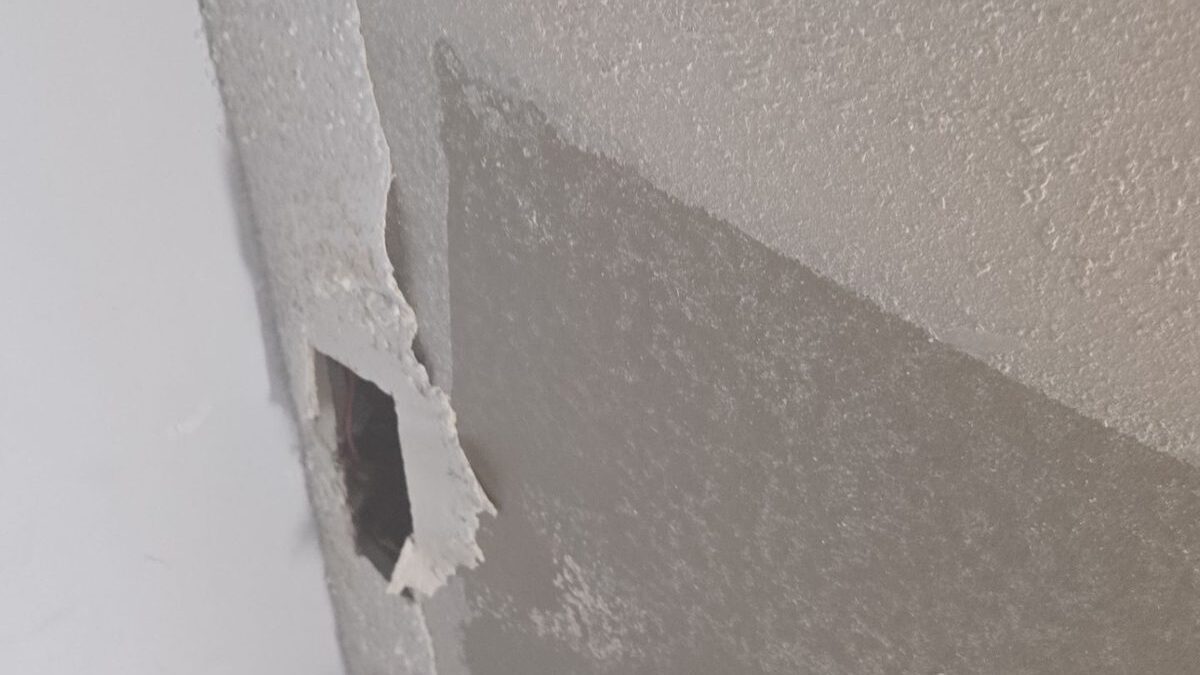
The classification is about what the water carries, not how it looks. King tide water can appear fairly clear on a sunny morning and still be contaminated. When it enters a structure, porous materials such as drywall, insulation, carpet, carpet pad, and some absorbent wood products generally cannot be reliably cleaned and are typically removed under Category 3 protocols. Hard, non-porous surfaces can often be cleaned and disinfected.
Saltwater creates its own problems. Salt is hygroscopic, which means it attracts moisture from the air. In South Florida's humid climate, salt residue left in materials can keep them damp and slow drying. Salt also corrodes metal components, wiring, and HVAC parts. That is why saltwater intrusion deserves a professional assessment even when the visible water was shallow and short-lived.
There is also a biological clock. Mold can begin growing within roughly 24 to 48 hours in wet, warm conditions, and South Florida's humid air does the rest if flooded materials stay in place. Fast removal of wet porous materials and structural drying to documented targets is what keeps a flooded room from becoming a mold project. Mold assessment and remediation practice is covered by the ANSI/IICRC S520 standard.
How should I prepare my Miami home before a king tide window?
The best preparation is a short checklist completed before the first peak window in September, then a quick version repeated before each later window. The goal is to keep water out of vulnerable areas, move valuables up, and know your plan if water gets in.
Most of these steps are inexpensive and take an afternoon. The ones with the largest payoff are clearing drainage, relocating items from the floor, and documenting the condition of your property before any water arrives.
Documentation matters more than most people expect. Dated photos or video of each room, your garage, and your equipment make a later claim conversation easier. If water does enter, daily moisture readings, photos, and a line-item scope are part of the claim file we hand to homeowners, so the paperwork builds itself as the work happens.
- Look up the NOAA tide predictions for the year and add each peak window to your calendar with a two-day reminder.
- Clear leaves and debris from yard drains, gutters, and swales so surface water has a path out.
- Move vehicles from low garages and low street parking before the peak high tide, not after the water appears.
- Raise stored items, electronics, files, and keepsakes off the floor in garages and ground-floor rooms.
- Check the height and condition of your seawall, flood barriers, and door thresholds, and seal obvious gaps.
- Identify the location of your main electrical panel, water shutoff, and air handler, and know how to cut power safely to a flooded area if needed.
- Take dated photos or video of your property so you have a before-condition record.
- Save a restoration contact in your phone: Restoration Doctor of South Florida at (786) 213-9489, available 24/7.
What should I do if king tide water gets inside my home?
If tidal water enters your home, stay out of standing water near electrical outlets or equipment, turn off power to the affected area only if you can do so safely, and call a licensed restoration company right away. Fast action decides whether the damage stays limited to flooring and lower walls or spreads into the structure.
First, safety. Do not walk through water if anything electrical is submerged or if you are not sure the circuits are off. Avoid skin contact with the water, wear boots and gloves if you must enter, and keep children and pets out. Do not use household vacuums to remove water.
Second, document before you move anything. Take photos of the water line, damaged contents, and affected rooms. Then remove only what you can safely lift and keep dry, such as valuables, papers, and small electronics.
Third, call for professional help. Our emergency dispatch runs 24/7 across Miami-Dade, Broward, and Palm Beach counties. For Category 3 floodwater, the usual sequence under ANSI/IICRC S500 is water extraction, removal of contaminated porous materials, cleaning and antimicrobial treatment of remaining surfaces, and structural drying with controlled dehumidification and air movement. Moisture readings are logged daily so that drying is verified, not assumed.
Restoration Doctor works for you, not your insurance company. We bill the homeowner directly and hand you a carrier-ready claim file with an Xactimate scope, CompanyCam photo documentation, and daily moisture logs, so you can submit it to your carrier on your own terms. If you are unsure where to begin, our team can walk you through what to do first.
Does insurance cover king tide flooding in South Florida?
Usually not under a standard homeowners policy. Rising water from the bay or a tide-driven overflow is generally considered flood, and flood is typically excluded from standard homeowners coverage. It is covered only by a separate flood policy, such as one through the National Flood Insurance Program or a private flood carrier. Read your own policy language, because terms vary.
This distinction between wind-driven rain and flood matters throughout South Florida. Water that comes in through a storm-damaged roof or window is typically evaluated under the homeowners policy, while water that rises from the ground, a canal, or the bay is flood. A single event can involve both, which is why a clear record of what water came from where is valuable. Our article on flood versus wind-driven rain in Florida insurance goes deeper.
Flood policies often have a waiting period before coverage begins, generally 30 days for new NFIP policies with limited exceptions, so buying coverage after you see a king tide forecast may be too late for that window. If you live near the water in Miami, Brickell, Miami Beach, or Coral Gables, ask your agent whether your property is in a flood zone and whether a flood policy makes sense for you.
Whatever your coverage, documentation helps. We work for the homeowner, not your insurance company. What we provide is the paperwork carriers usually ask for: an Xactimate scope, photos, and daily moisture logs, so your claim conversation starts with facts.