Condensation and Mold Around Impact Windows and Sliding Doors

BYSteve Jafari, General ManagerMIAMI-DADE, BROWARD & PALM BEACH
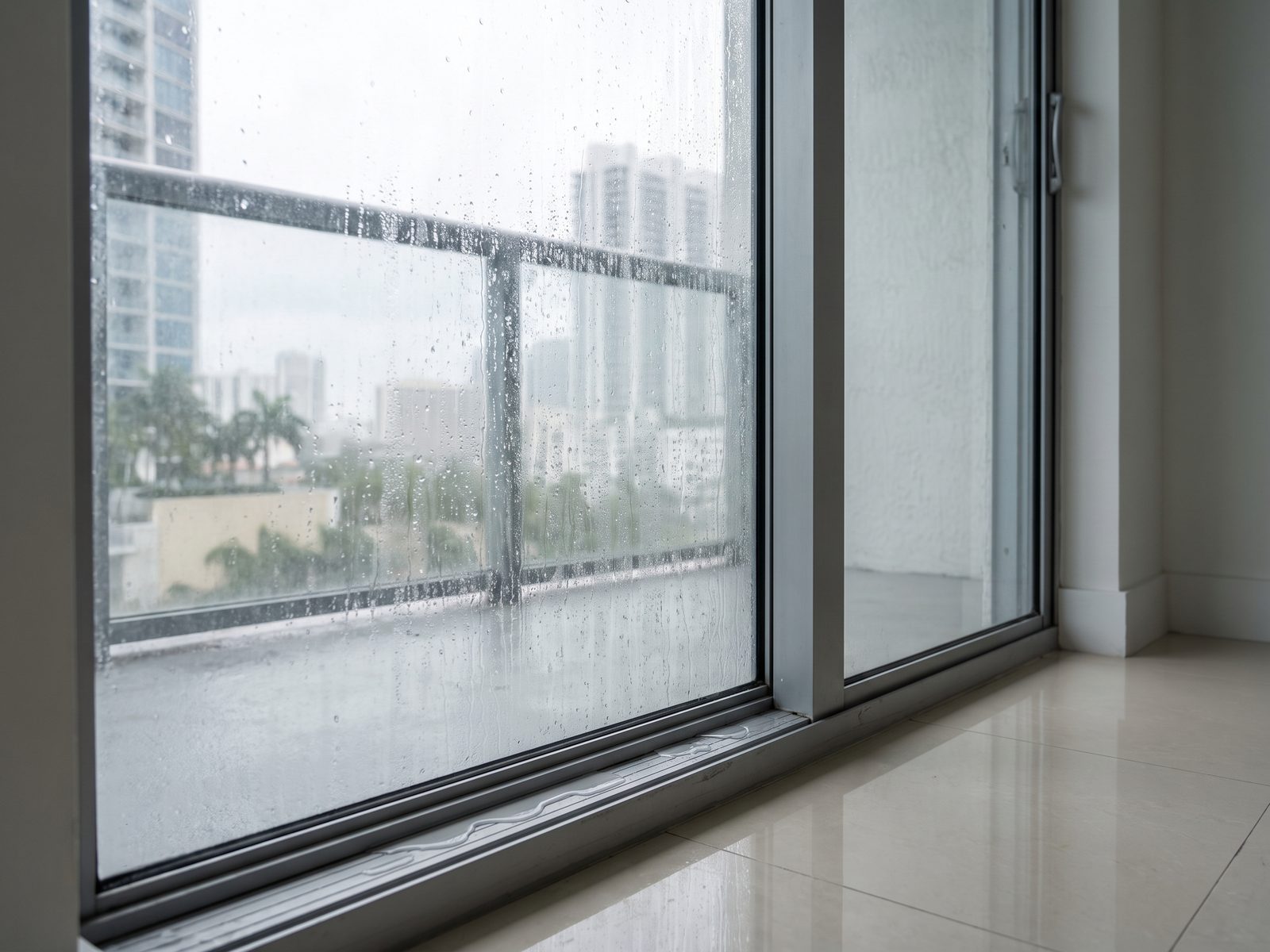
Water on the inside of an impact window is usually condensation on a cold interior surface, not a leak, and the fix is indoor humidity and air movement rather than glazing work. A failed glass seal and a genuine frame leak look similar but behave differently, and in a condominium they can belong to different parties, which is why the diagnosis has to come first.
Call (786) 213-9489Why are my impact windows sweating on the inside?
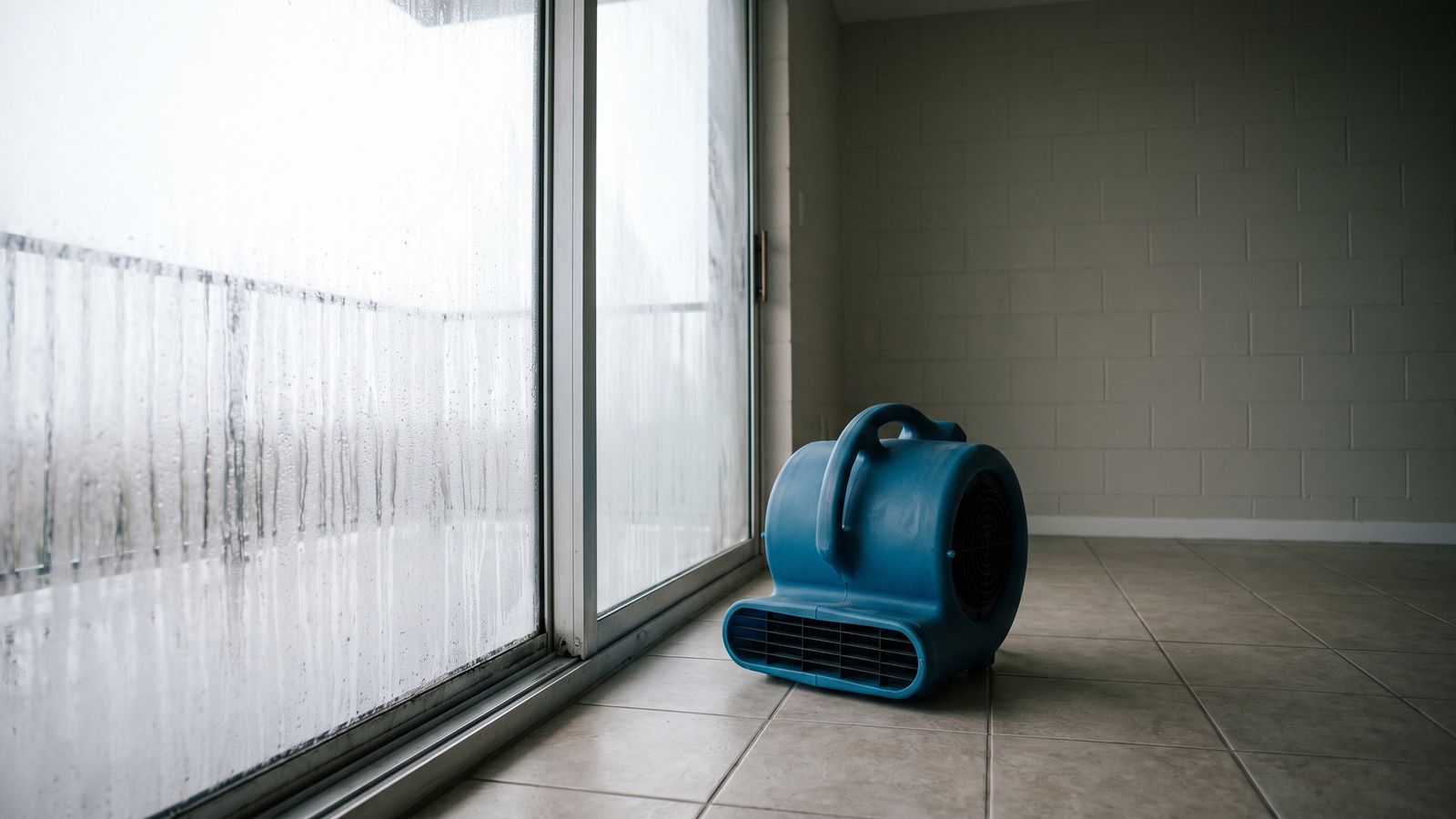
Condensation on impact windows happens because the interior face of the glass or the metal frame has dropped below the dew point of the air in the room. Moisture in that air turns back into liquid on the coldest surface it can find. The window is not leaking. The water on the sill came out of your own indoor air.
That makes this a humidity problem with a glass symptom. Two numbers decide it: the dew point of the indoor air, and the surface temperature of the sill and frame. When the second falls below the first, water appears, and no amount of caulking changes that.
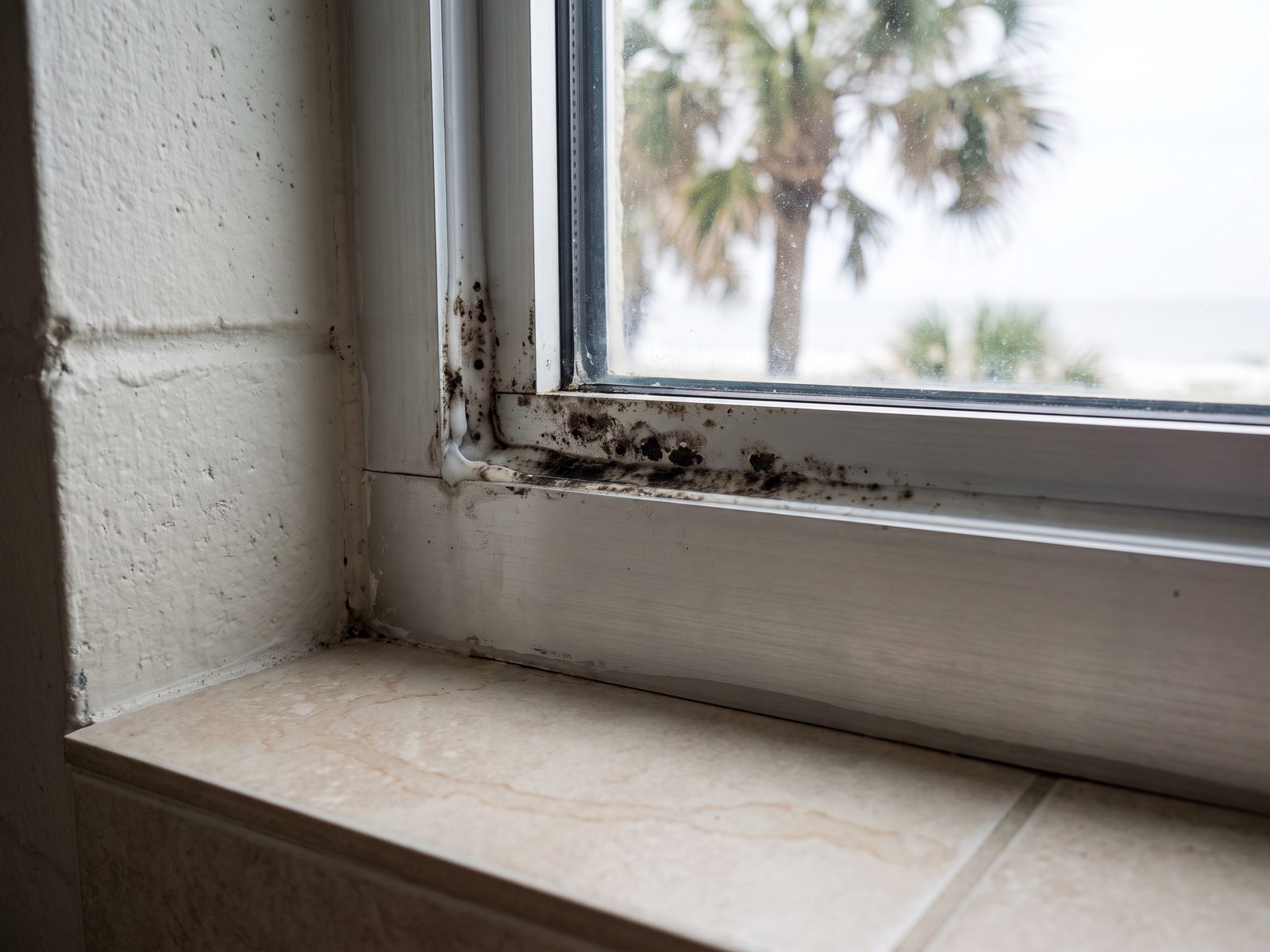
In a Brickell or Aventura high-rise the usual recipe is an aggressively cooled unit, a slider facing a warm humid day, and a supply register blowing across the glass. The coldest strip in the room is the aluminum sill track, so that is where water collects and sits. Give it enough repeated wetting and the sealant bead starts to darken.
- Dew point, not relative humidity, is the number that matters. Air at 78 degrees and 60% relative humidity has a dew point around 63 degrees, so any surface colder than that will wet.
- Metal frames and sill tracks conduct heat far better than glass, which is why the frame usually wets before the pane does.
Is condensation on the glass the same as a leak?
No, and the distinction decides who pays. Three different problems put water at the same window. Surface condensation forms on the room side of the glass and frame. A failed insulated glass seal fogs inside the sealed cavity between two panes, where you cannot wipe it. A genuine leak arrives from outside through the frame, the perimeter sealant or the surrounding wall.
Treating one as another wastes money. Homeowners re-caulk perfectly good windows to stop condensation, which does nothing and can trap moisture in the joint. Others run a dehumidifier for weeks against a frame that is admitting wind-driven rain.
| What it is | Where the water shows up | Timing | What fixes it |
|---|---|---|---|
| Surface condensation | Room side of the glass, frame and sill track. Wipes away with a cloth. | Humid days and cool nights, worse with the cooling running hard. | Lower indoor humidity, move air across the glass, raise the surface temperature. |
| Failed insulated glass seal | Between the two panes. You cannot wipe it off either face. | Fog that comes and goes with sun, often with a permanent mineral outline. | Replacement of the glass unit. Dehumidifying will not clear it. |
| Frame, sealant or wall leak | Frame perimeter, corners, the wall below the sill, sometimes the unit below. | Tied to rain and wind direction. Dry spells stop it. | Water testing to find the entry point, then repair, then drying the wall. |
How do I tell a failed insulated glass seal from surface condensation?
Wipe it. That single test settles most cases. Surface condensation comes off on a cloth and returns within the hour if nothing has changed. Moisture inside a failed insulated glass unit sits in the sealed cavity between the panes, so a cloth on either face changes nothing.
The second test is pattern. Surface condensation starts low, at the coldest edge, and climbs as the room gets more humid. A failed seal fogs across the middle of the pane and leaves a mineral film that never clears.
- Wipes clean and returns: surface condensation.
- Will not wipe from either side: the seal on that glass unit has failed.
- Cloudy film still there after a dry week: a long-standing seal failure.
How do I tell either one from a real frame or sealant leak?
A leak follows the weather. Condensation follows the thermostat. The path below is the one we use on a service call, and you can run the first four steps yourself.
- Step 1. Log when it happens. Water only during or just after rain, especially rain driven from one direction, points at a leak. Water on clear humid days points at condensation.
- Step 2. Try the wipe test. If the moisture is between the panes and will not wipe from either face, stop here. That is a failed glass unit.
- Step 3. Find where it starts. Condensation begins at the coldest point, normally the bottom of the frame or the sill track, and works up. A leak usually starts at a corner or the head of the frame and runs down.
- Step 4. Check the rest of the room. If three windows and a slider are wet on the same morning, that is a room-wide dew point problem rather than one bad opening.
- Step 5. Compare surface temperature to dew point. An infrared thermometer on the sill against a hygrometer reading of the room air is the objective version of step 1.
- Step 6. Read the wall below and beside the frame. A moisture meter separates a wet surface from a wet assembly. Surface condensation leaves the wall dry. A leak does not.
- Step 7. If steps 5 and 6 disagree with the weather log, water test the opening. A controlled spray from outside, worked upward one zone at a time, finds the entry point. In a condominium that involves the association.
Why do impact windows do this more than the windows they replaced?
Because impact glass changed the thermal behavior of the opening. A laminated impact unit is thicker and heavier than the single-pane aluminum window it replaced, and the assembly is far tighter. The old window leaked air around the sash, and that leakage kept the frame closer to room temperature while it bled conditioned air outside.
Seal the opening properly and two things happen. The room holds its cold air better, so the glass and frame run colder. Indoor humidity climbs for a different reason: the new glass cuts the heat coming through the opening, so the cooling system has less work to do, runs shorter cycles, and pulls less moisture out of the air while it does. Colder surfaces plus damper air is what puts water on a sill.
None of that means the new windows are defective. They are performing, and the old ones were not. The building lost the accidental ventilation it depended on, and nobody replaced it with a deliberate way to manage indoor moisture. That is why complaints arrive a season or two after a window project, in a unit that never had the problem before.
Why does a South Florida winter make it worse, not better?
Winter here is not dry. It is mild and often very humid, and the swing between a warm afternoon and a cool night is wider than it is in August. Outdoor dew points stay elevated through December and January, while overnight surface temperatures on a north facing slider fall further than they do in summer.
The cooling schedule adds to it. In mild weather the system runs in short cycles or barely runs at all, so it stops removing moisture. A unit that is not running is not dehumidifying, and indoor humidity drifts upward even though the thermostat reads comfortable. People call the room cool and clammy, and they are right.
- Short cooling cycles in mild weather remove far less moisture than long summer cycles do.
- Overnight lows push sill and frame surfaces further below the indoor dew point than summer nights can.
Who is responsible in a condo, the unit owner or the association?
It depends on the declaration, and there is no universal answer. Many Florida condominium declarations treat the windows and exterior doors as common elements or limited common elements, which affects who is responsible for maintaining them, and different documents draw that line in different places. Who insures what is a separate question, and the statute has more to say about it than the declaration does. Read your own declaration before accepting anyone's verbal rule.
The diagnosis has to come first because the three problems usually sit on different sides of that line. Indoor humidity is the occupant's to manage. A failed glass unit is a component question, and the document decides who replaces it. Water entering through the building envelope is much more often an association matter, because the exterior face typically is theirs.
Florida's condominium statute, Chapter 718, frames how maintenance and insurance responsibility are divided between an association and a unit owner, and the declaration fills in the detail. If your situation stays unclear, speak with a licensed public adjuster or an attorney rather than guess. A restoration company can document the condition and the cause. It cannot decide your governing documents for you.
Document before you argue. Photograph the wet area with the date visible, log the weather on the days it happens, and note which openings were affected. That record supports a maintenance request, and it supports a claim if one becomes necessary.
What fixes surface condensation for good?
You fix it by changing one of the two numbers. Either you lower the dew point of the indoor air, or you raise the surface temperature of the glass and frame. Nothing applied to the outside of the building affects condensation forming on the inside.
Start with the air, because that is where the cheapest wins are. Units that sweat their windows are usually running indoor relative humidity in the 60s, and pulling it down into the 40s and low 50s removes the problem on all but the coldest surfaces. The EPA's guidance for discouraging mold is to keep indoor relative humidity below 60 percent, and ideally between 30 and 50 percent.
- Run the cooling so that it actually dehumidifies. Long, moderate cycles remove more moisture than short cold blasts, and many thermostats have a dry mode that holds humidity.
- Add a standalone dehumidifier in the room that sweats, sized for the space and drained to a fixture. In a closed-up unit this is often the whole fix.
- Move air across the glass. A ceiling fan on low, and not blocking the slider with heavy drapes, keeps the surface from stagnating.
- Redirect any supply register aimed at the glass. Cooling the pane on purpose guarantees it stays wet.
- Run the bath and kitchen exhaust fans for the full job, not only while you are in the room. Showers and cooking are the largest moisture sources in most units.
- Keep the sill track drains clear. Standing water in the track cannot evaporate, and it feeds growth at the corners.
- For an opening that keeps wetting despite this, ask about a thermally improved frame. That is glazing work, and it belongs last.
When does the sealant mold become a remediation job?
Growth on a sealant bead starts as a cleaning problem and becomes a remediation problem when it stops being limited to the sealant. A small amount of dark growth on the bead can usually be cleaned by the occupant once the wetting has stopped. The EPA's homeowner guidance frames the threshold by size, suggesting that a moldy area larger than roughly ten square feet is worth handling as a larger job.
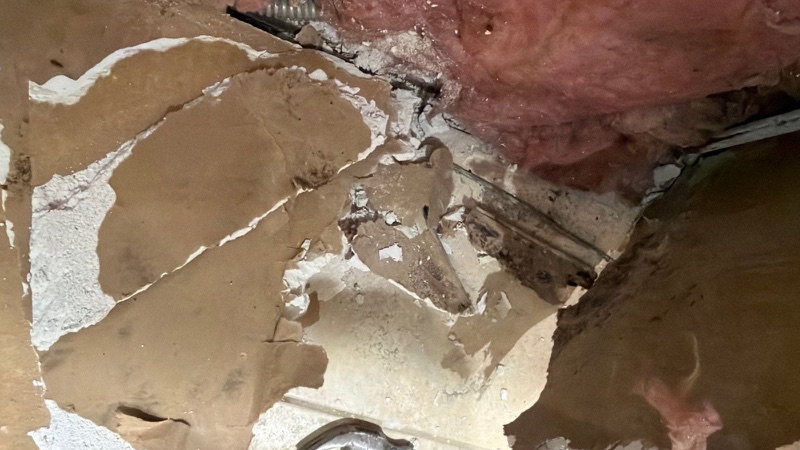
The signals that move it past cleaning are about what sits behind the bead. Drywall under the sill that reads wet on a meter. A musty odor that returns after the surface has been cleaned. Paint that blisters, or staining that continues around a corner into the wall. Each of those says the moisture went somewhere, and the assembly has to be opened and dried.
There is one thing not to do, and it is the most common mistake we see. Do not caulk over growth. A fresh bead laid across a dark one seals moisture into the joint and comes back worse in a season. Clean or cut out the old sealant first, dry the joint, then reseal.
Florida regulates mold assessment and mold remediation as separate licensed activities. Florida Statutes section 468.8419 restricts a mold assessor from remediating a structure the assessor assessed within the previous twelve months, and it restricts a remediator from assessing a structure it remediated in that window. The statute also writes in an exception for certain licensed contractors. If one company offers to both diagnose and remediate the same growth, it is fair to ask which license it is working under and to read the statute yourself before you sign.
People ask about billing in the same breath. We bill you, the homeowner, and hand you a carrier-ready claim file, which is the document set that matters if the cause turns out to be a leak.
The same physics drives growth in any room that stays humid by design, which is why a bathroom behaves like a window sill with a door on it. Our sister site restorationdoctors.com covers that version of the problem, and the reasoning transfers to a sweating slider.
- Clean it yourself when the growth is confined to the sealant, the surrounding wall reads dry, and it does not return once humidity is controlled.
- Call for an assessment when the drywall below or beside the frame reads wet, when the odor survives cleaning, or when the area passes the EPA's ten square foot threshold.
- Treat it as a water loss rather than a mold job when the trigger is rain. The wall has to be dried first.
Where can I read the standards and the rules for myself?
The guidance behind everything above is public and free to read. These are the sources worth your time before you accept a quote for glazing work, remediation or drying.