The 50% Rule: Substantial Damage and Rebuilding to Code in South Florida

BYSteve Jafari, General ManagerMIAMI-DADE, BROWARD & PALM BEACH
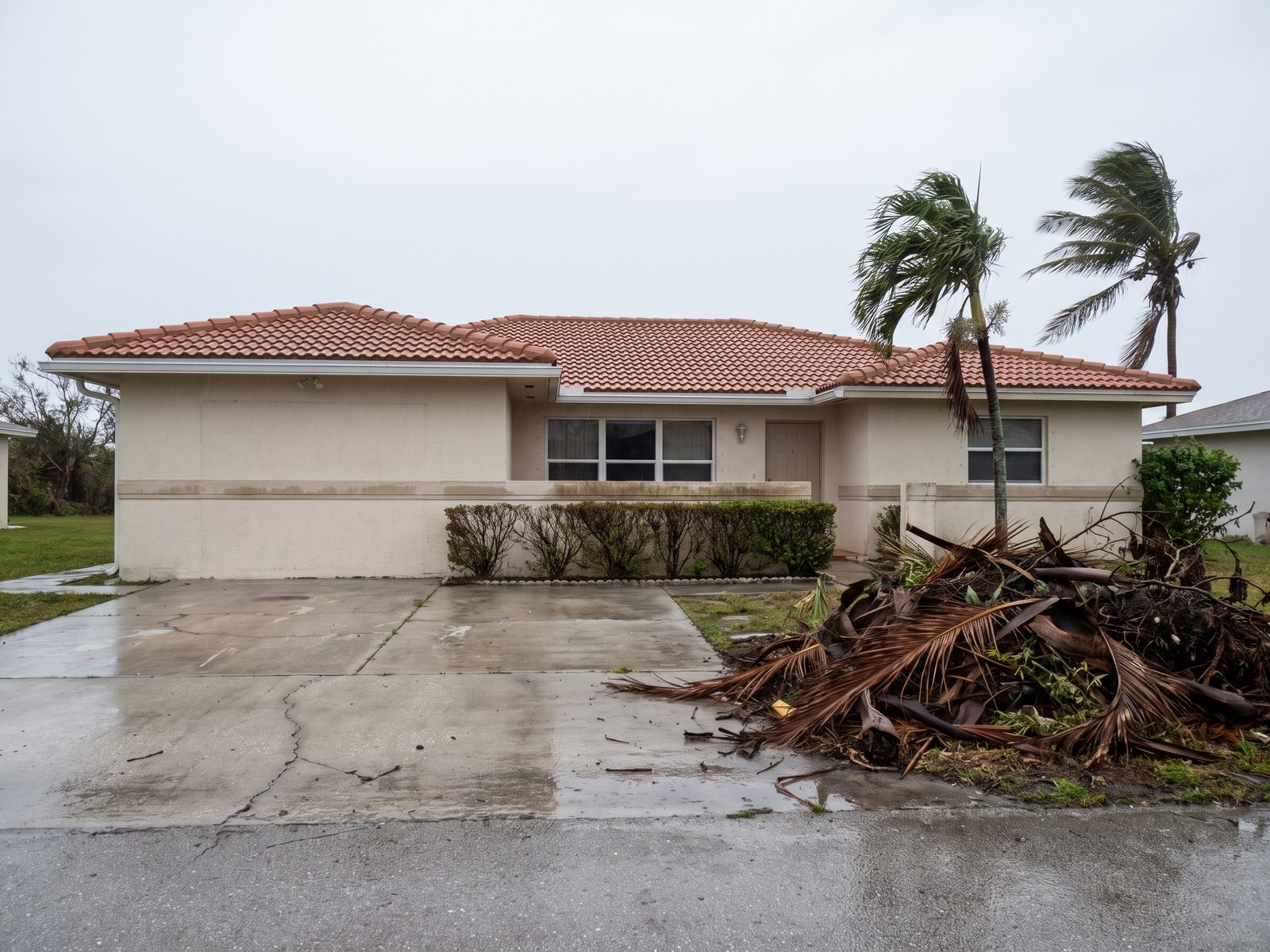
A local floodplain administrator, not your carrier and not your contractor, decides whether a flood-damaged building is substantially damaged, and FEMA sets that line at repair costs equal to or above 50 percent of the building's pre-loss market value. Once that letter is issued the whole structure has to meet current flood code, which along the South Florida coast usually means elevation.
Call (786) 213-9489What is the FEMA 50 percent rule, and who applies it?
The 50 percent rule is a floodplain regulation, not an insurance rule, and it is applied by your city or county floodplain administrator. FEMA defines substantial damage as damage of any origin where the cost of restoring a building to its before-damaged condition would equal or exceed 50 percent of the market value of the building before the damage occurred. That one comparison decides whether a ground-level South Florida home gets repaired the way it stood or has to be brought into compliance with current flood code first.
Notice who is missing. Your carrier does not make the call, and neither does your contractor, your adjuster or your lender. Communities in the National Flood Insurance Program agree to enforce a local floodplain ordinance, and only the office that enforces it can issue a determination.
The same math runs on voluntary work. A remodel that reaches the threshold is called substantial improvement and carries the same obligation, which is why a kitchen project combined with storm repairs deserves a conversation with the permit counter first.
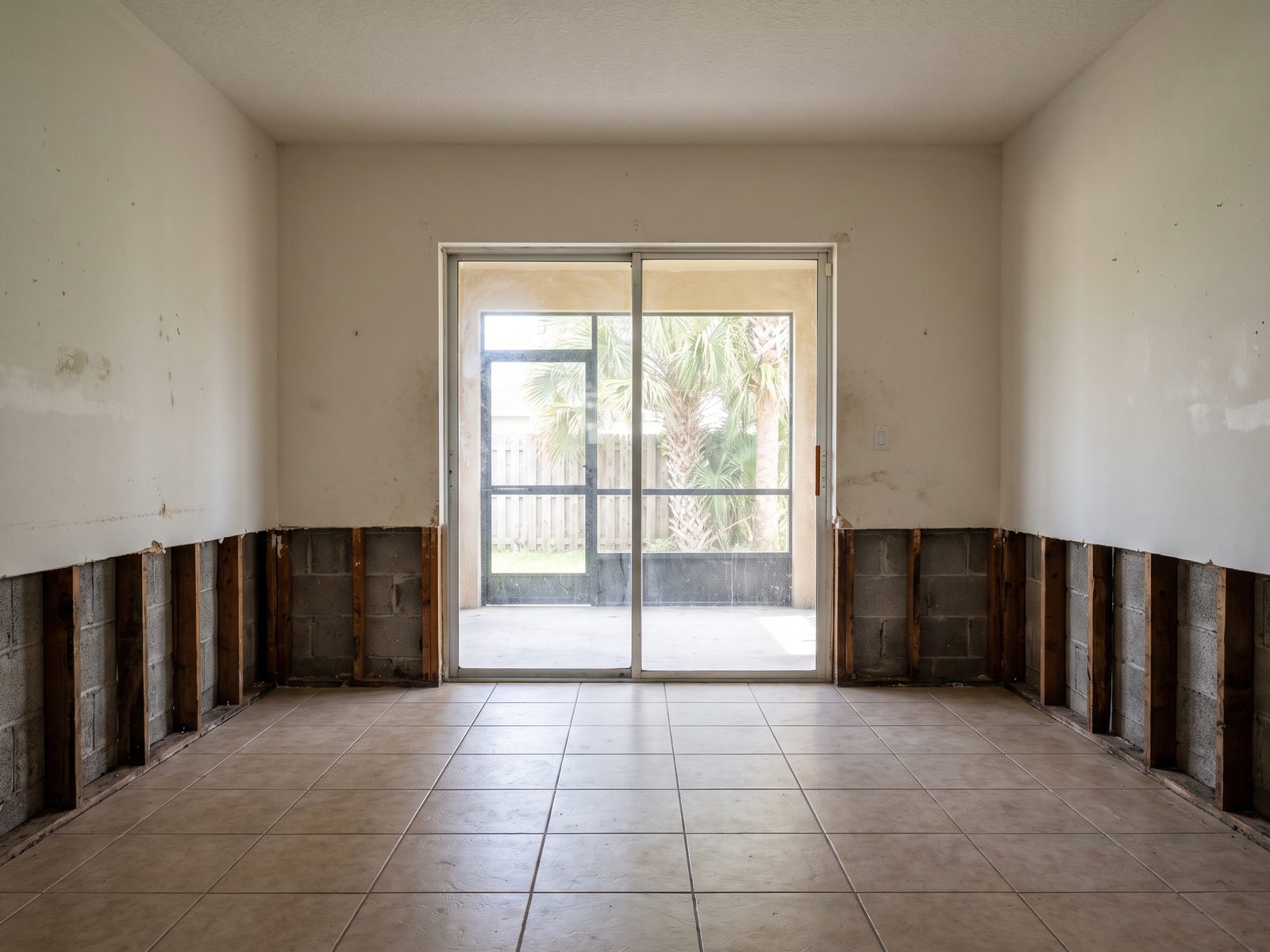
The rule bites harder here than it does inland. Homes sit on slab at low elevation, the finished floor of an older block house often sits below the current base flood elevation, and a few inches of standing water reaches everything expensive at once.
- The determination is about the building, not the claim.
- The floodplain administrator issues it, working from the estimates you submit.
- Damage of any origin counts, not only flood water.
- Substantial improvement is the same math applied to voluntary work.
What triggers a substantial damage determination after a flood?
Two things trigger it. The first is a permit application for repairs on a building inside a mapped special flood hazard area. The second is a post-event damage sweep, where county and municipal inspectors walk flooded neighborhoods after a declared event and tag structures for review before anyone has pulled a permit.
Everything starts with the mapped zone. The flood zone, the base flood elevation for the property and the elevation certificate are the three documents that shape the rest of the process. Our sister site restorationdoctordc.com has a walkthrough on reading a FEMA flood map, and the method transfers directly to a Florida parcel.
Work through the sequence below before you sign a repair contract.
- Step 1. Is the structure inside a mapped special flood hazard area? Pull the flood map for the parcel. If it sits outside, the compliance path below generally does not attach.
- Step 2. Is the damage above cosmetic? If the finishes dry in place and no permit is needed, there is usually nothing to determine.
- Step 3. Ask the floodplain office how it wants the estimate presented before anyone writes one. Most want a full line-item repair estimate for the structure, kept separate from contents.
- Step 4. Does that estimate approach half the structure value? If it is anywhere close, assume a determination is coming.
- Step 5. If a letter is issued, ask in writing what compliance requires for your zone and elevation, and what the reconsideration path looks like.
- Step 6. Decide the rebuild path with a licensed design professional and the permit office together, not with a contractor alone.
How is the repair cost calculated, and what counts toward it?
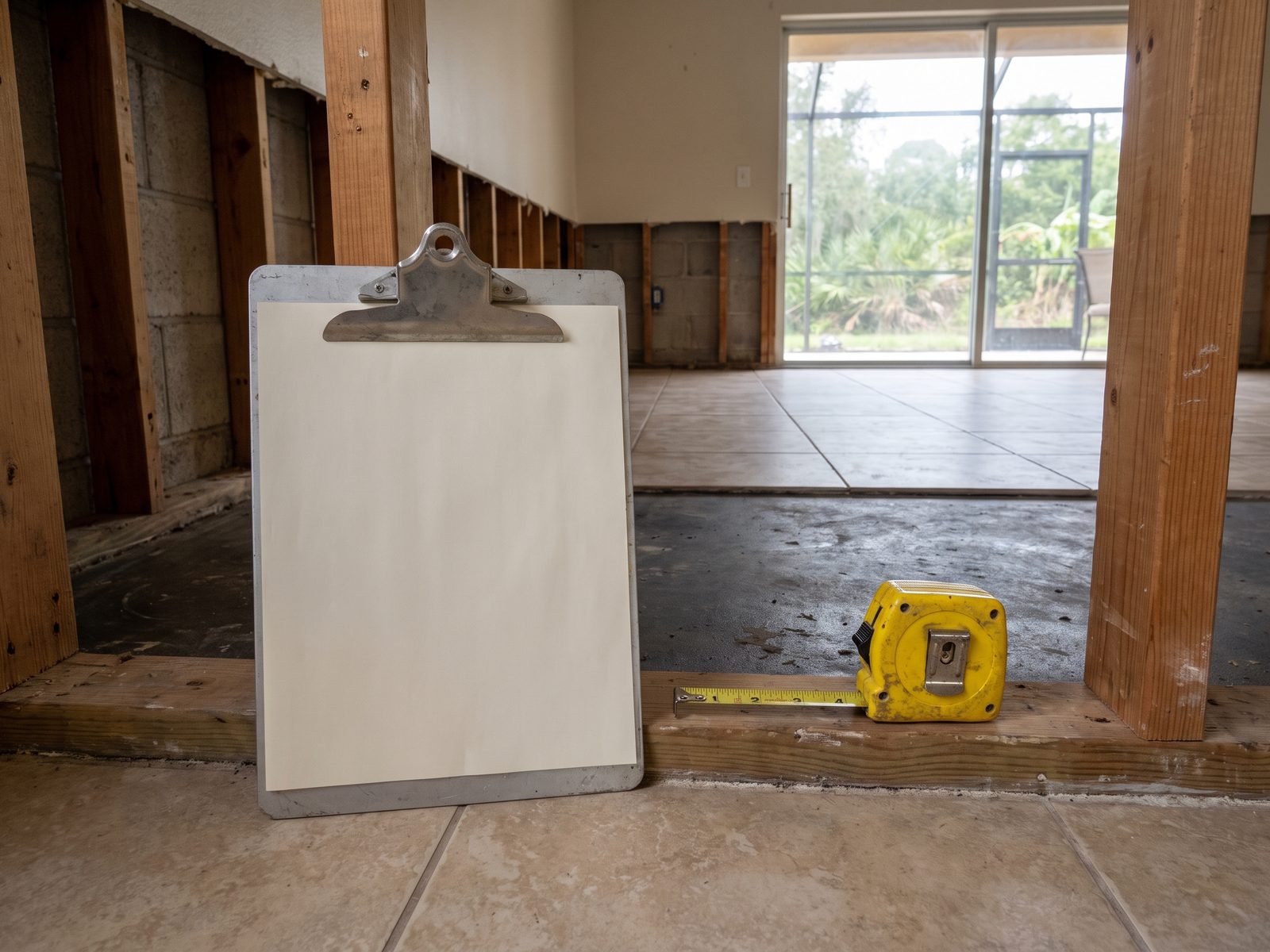
The number is the full cost to restore the structure to its before-damaged condition, priced at what the work costs in the local market. It is not what your insurance pays. Owners who measure against the settlement usually undercount, because a settlement can be cut by depreciation and policy limits while the repair cost is not.
Sweat equity does not help either. Ordinances commonly require donated, discounted and owner-performed labor to be valued at what the work would cost at market rate, which is why the threshold is hard to engineer away. Confirm how your own floodplain office treats it.
Phasing the work is not a reliable way around it either. Some ordinances look back over a defined period and add repeated permits on one structure together, so ask the floodplain office whether yours does before you split a repair into stages.
What lands inside the calculation varies by ordinance, so treat the table as the shape of the question rather than the answer for your address.
| Item | Usually counted | Why it lands there |
|---|---|---|
| Structural repairs and framing | Yes | Core restoration of the building itself. |
| Drywall, doors, trim, cabinets | Yes | Permanently installed building components, not contents. |
| Flooring and attached finishes | Yes | Part of restoring the structure. |
| Mechanical, electrical, plumbing | Yes | Building systems serving the structure. |
| Owner or volunteer labor | Yes, at market rate | Valued at what the work would cost, so free labor cannot lower the ratio. |
| Emergency mitigation and drying | Often excluded, ask first | Many ordinances treat stabilization separately from permanent repair. |
| Furniture and personal property | No | Contents are not part of the structure. |
What is the pre-loss market value it is measured against?
Market value here means the value of the structure alone, immediately before the damage, with the land taken out. That distinction does more work in South Florida than almost anywhere. On a waterfront parcel in Miami-Dade, Broward or Palm Beach County most of the worth is dirt, and the aging block house on top of it carries a small share of the total. A repair bill that feels modest can still clear half of a modest structure value.
Floodplain offices accept several ways to establish that figure, and the options are written into the local ordinance. Common ones include the improvement value on the county property appraiser record, an independent appraisal by a licensed appraiser, actual cash value from a qualified source, or replacement cost with depreciation applied.
If the automatic number looks low, that is the lever an owner actually has. The appraiser record is a mass-appraisal product rather than a site inspection, and it will not know about a re-roof, an impact-window package or a mechanical upgrade made after the last data refresh. An appraisal that captures those improvements raises the denominator.
Get that appraisal early if you are going to get one. Once the letter is on the record, an owner argues uphill.
- Structure only. Land value never enters the calculation.
- The property appraiser improvement value is a starting point, not the only accepted source.
- An independent appraisal that documents unrecorded upgrades can change the denominator.
- Which methods are accepted is set by your local ordinance, so ask before you pay for one.
Who issues the determination letter, and can it be appealed?
The floodplain administrator issues it, usually inside the building or permitting department of the city if the property is incorporated and of the county if it is not. Miami-Dade, Broward and Palm Beach counties each administer their own floodplain ordinance, and so do most municipalities inside them. Two flooded slab houses on the same street can sit under different offices.
The letter is a real regulatory document. It says whether the structure was found substantially damaged, and if it was, that it cannot be repaired back to its prior condition without meeting current flood provisions. Permits turn on it, and lenders and future buyers may read it later.
Determinations are reviewable. The mechanism differs by community and may be called a reconsideration, an appeal to a board of adjustment, or a request for review by the building official. New evidence travels better than new argument. A corrected estimate, a structural appraisal the office has not seen, or a scope double-counted between mitigation and repair are what move a number.
Ask for the process in writing and note every deadline the office gives you. Windows are short in practice and they are set locally. If the determination is contested or the money is large, this is the point where a licensed public adjuster or a construction attorney earns the fee.
What does bringing the building into compliance actually require?
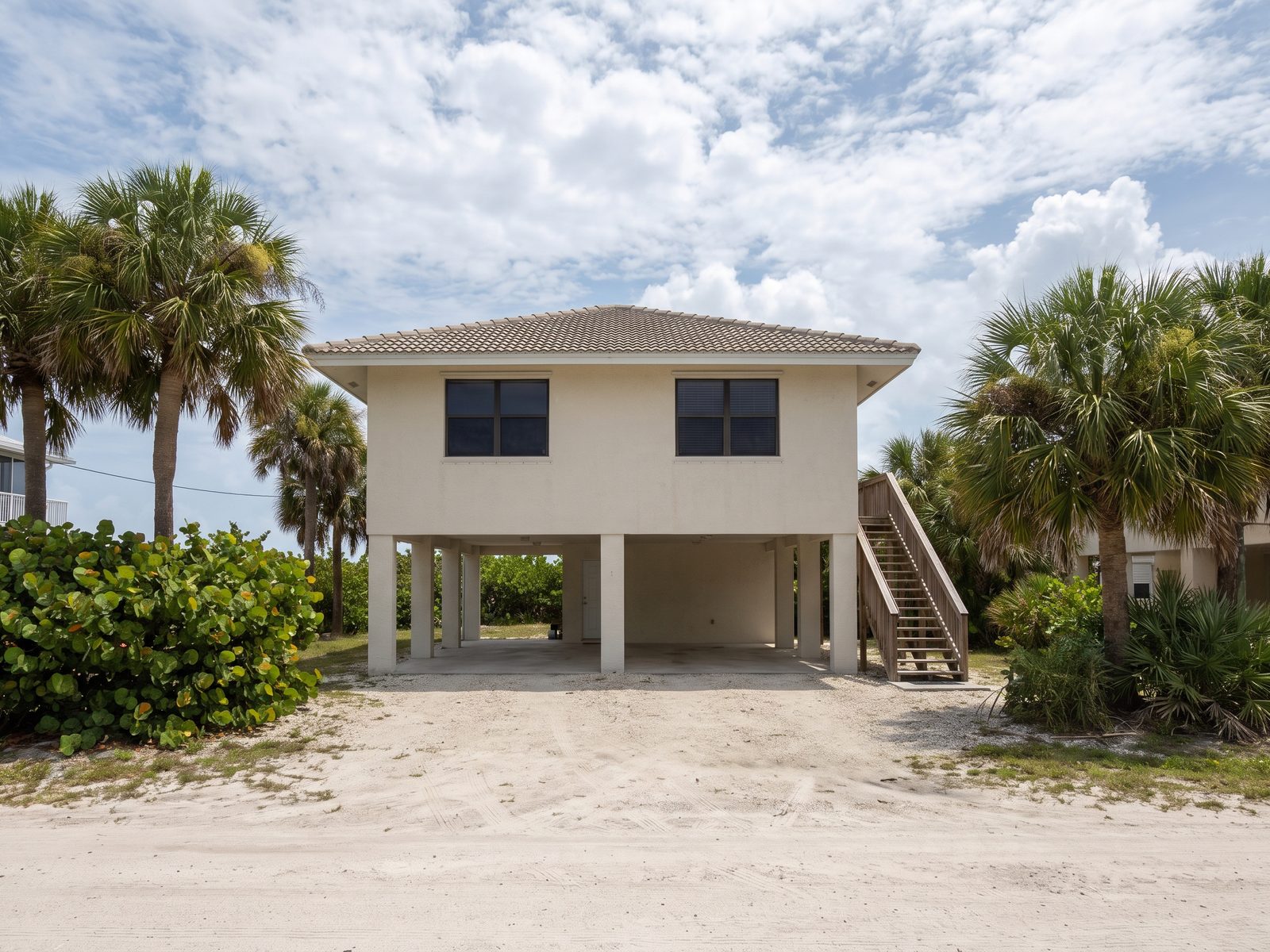
Compliance means the whole structure has to meet the flood provisions that apply today, not the ones in force when it was built. For a home in a special flood hazard area that generally means raising the lowest floor to or above the base flood elevation, plus any freeboard the local ordinance adds on top. FEMA explains that elevation concept, and your elevation certificate is where the existing number lives.
Elevation is the headline requirement and rarely the only one. Depending on the zone and the ordinance, an owner may also face flood openings in enclosure walls below the elevated floor, equipment raised above the required level, and flood-damage-resistant materials below it. Coastal high-hazard zones add a foundation designed for wave action.
Leaving the building non-compliant has a tail. If a community formally declares a structure to be in violation of its floodplain ordinance and submits that declaration, federal rule denies new and renewal flood insurance on it, which follows the building to the next owner. The rule is 44 CFR 73.3. FEMA sets out how the program and local floodplain management fit together.
None of this is work we perform. Restoration Doctor dries and stabilizes buildings. Elevation, structural design and code compliance belong to a licensed Florida design professional and a contractor who builds to it.
- Lowest floor at or above the base flood elevation, plus local freeboard.
- Flood openings in any enclosure below the elevated floor.
- Building equipment raised above the required level.
- Flood-damage-resistant materials below that level.
Why must the mitigation scope and the reconstruction scope be separated?
Because the floodplain office reads whatever you hand it. If emergency work and permanent repair arrive as one undifferentiated total, that total is what gets compared to the structure value, and a number that was never meant to be in the test can push a building over the line.
The two scopes are different animals. Mitigation stops the loss from growing: water removal, removal of wet non-salvageable materials, structural drying to a documented dry standard, and cleaning. The IICRC S500 standard for professional water damage restoration governs how that work is scoped and verified, and you can read the standard's own page directly. Reconstruction is what puts the building back, and the ordinance is aimed at reconstruction.
So separate the paperwork from day one. Mitigation on its own line-item estimate with its own photo set and daily moisture logs. Reconstruction on a separate estimate. Contents on a third document, because personal property is not in the calculation at all.
That is the part of this we own. Restoration Doctor bills you, the homeowner, and hands you a carrier-ready claim file with line-item scope, photo documentation and daily drying records, so the mitigation side reaches the permit counter already separated.
- Mitigation estimate: extraction, controlled demolition, drying, cleaning, with moisture logs attached.
- Reconstruction estimate: permanent repair of the structure, priced at market rate.
- Contents inventory: personal property, kept off both of the above.
- One combined total is the easiest way to inflate your own ratio.
How does Increased Cost of Compliance coverage fit in?
Increased Cost of Compliance is a coverage inside a standard National Flood Insurance Program policy, and it exists for this situation. FEMA describes it as coverage for expenses an owner must incur above the cost of repairing the physical damage, in order to comply with the mitigation requirements of state or local floodplain ordinances. FEMA's definition of Increased Cost of Compliance sits in its glossary.
The acceptable measures are elevating the structure, dry floodproofing where it is permitted, relocating it, demolishing it, or a combination. Note what is absent. It does not pay for the ordinary repair of flood damage.
Eligibility is determined by your NFIP insurer, not by us and not by the permit office, and it normally rests on a written determination or an equivalent finding. Limits and filing steps are set by the policy and the program. Read your policy, then ask the flood adjuster about the compliance coverage as a question separate from building coverage. FEMA's flood insurance overview has more detail.
One more wrinkle catches people every season. Flood coverage and homeowners coverage answer to different causes of loss, and wind-driven rain entering during a storm is not the same claim as rising water reaching the same house.
What decisions does the owner still control after a determination?
More than it feels like on the day the letter arrives. The determination fixes one fact, that the building has to come into compliance. It does not pick the path, and the paths differ in cost, timeline and outcome.
Elevating an existing block structure on a slab is a real option here and a specialized one, and what it costs depends on the structure, the required height and the foundation design. Demolition and rebuild to current code is the other common answer, and on a low-value structure sitting on high-value land it is often cheaper. Selling as it stands, with the determination disclosed, is a third. Some owners also check whether a county or state mitigation program has a grant cycle open.
Price at least two of those before committing to any of them.
- Keep the loss documented from hour one, whatever path you choose later.
- Ask the floodplain office for its requirements in writing, not over the counter.
- Price elevation and rebuild-to-code side by side before deciding.
- Ask your NFIP adjuster about compliance coverage as its own question.
- Bring in a licensed public adjuster or attorney if the determination is contested.
Where can you check all of this yourself?
- FEMA, Substantial Damage
- FEMA, Substantial Improvement
- FEMA, Base Flood Elevation
- FEMA, Increased Cost of Compliance
- FEMA, Floodplain Management
- FEMA, Flood Maps
- FEMA, Flood Insurance
- ANSI/IICRC S500 Standard for Professional Water Damage Restoration
- IICRC, standards index
- 44 CFR 73.3, Denial of flood insurance coverage