
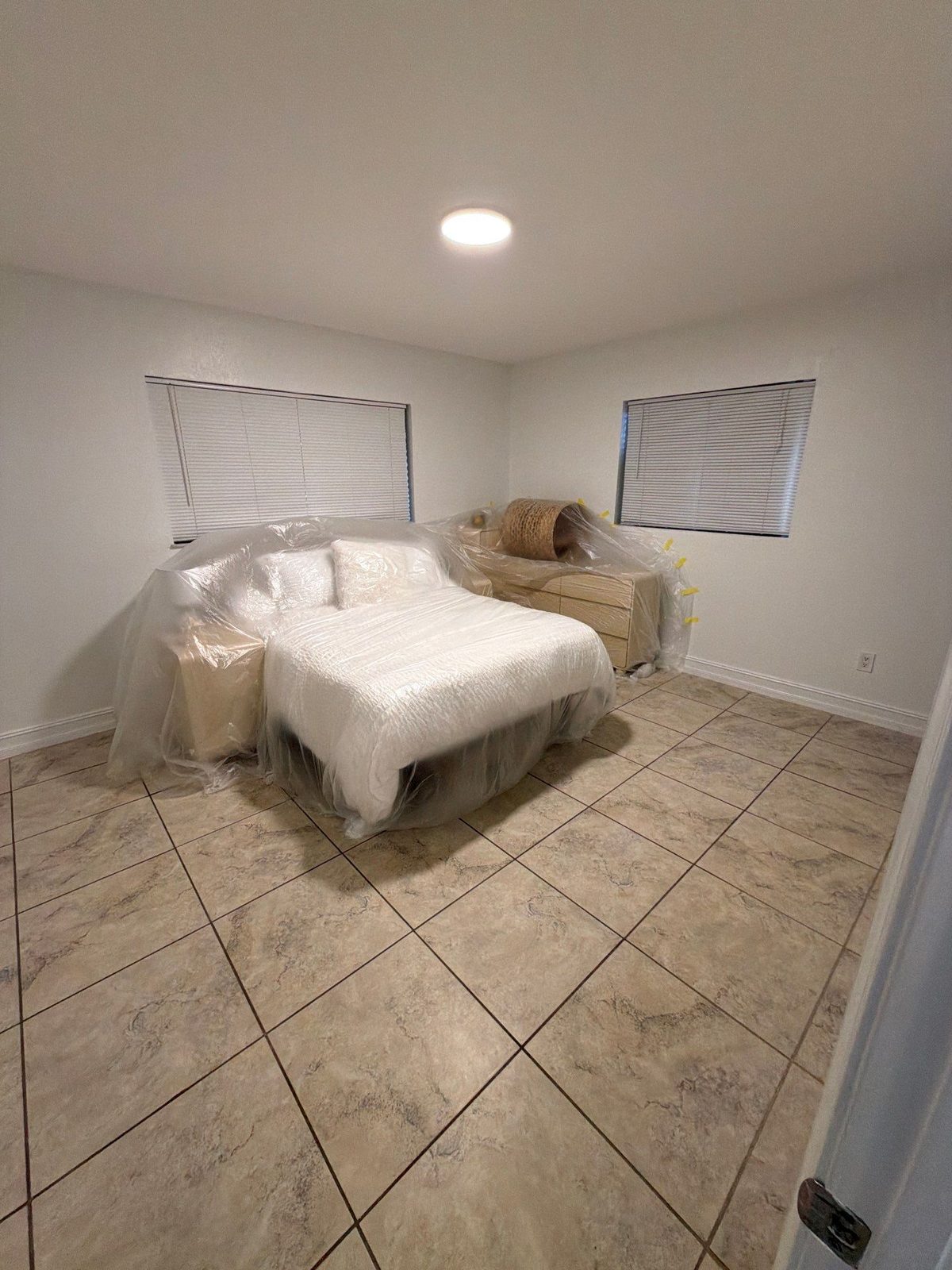
Water Damage Restoration in Boca Raton, FL
Water damage restoration Boca Raton calls for tends to start behind a gate. More than almost any city in South Florida, Boca's housing is organized into master-planned, gated, and country-club communities — and when a supply line fails inside one of them at 2 a.m., the responding contractor needs to handle guard-gate access, HOA notification, and community rules while the extraction truck is still rolling. Restoration Doctor of South Florida works Boca Raton around the clock at (786) 213-9489, and coordinating with gatehouses, associations, and property managers is a normal part of our first hour on any job here.
The city's dominant housing era is the 1980s and 1990s — the decades that built out west Boca and the country-club corridor — and that era's signature construction is concrete block and stucco under a barrel-tile roof. It is durable, hurricane-minded construction with a specific set of water problems: aging tile-roof underlayment, original polybutylene or early CPVC-era plumbing in the older tracts, and long single-story slab footprints where a leak spreads wide before it is found.
We operate as the South Florida office of a multi-state Restoration Doctor organization headquartered in Vienna, Virginia, with the Miami office at 1200 Brickell Ave, Suite 1950 #1007, Miami, FL 33131. Here is what water does in Boca Raton and how we answer it.
How water damage behaves in Boca Raton
Tile roofs age from the layer you cannot see
Boca's barrel-tile roofs are built as a system: the tile sheds most of the water, and the underlayment beneath it is the actual waterproof layer. That underlayment has a service life of roughly two to three decades — which means large swaths of Boca's 1980s-90s stock have been through, or are due for, re-roofing. When aged underlayment fails under intact-looking tile, storm rain enters the attic quietly, soaks insulation, and appears indoors as ceiling stains far from the actual breach. We trace these losses with thermal imaging from the interior, dry the attic and ceiling assemblies, and document the intrusion point for the roofer and the carrier.
Storm season sharpens the issue. Wind-lifted tile and driven rain during named storms produce combined wind-and-water losses, and in Florida's claims environment the distinction between wind-created openings and other intrusion paths matters. We photograph and log every path we find, from first walkthrough onward, so the file reflects evidence rather than recollection.
The plumbing of the 1980s buildout
A meaningful share of homes plumbed in Boca's boom decades carry polybutylene supply piping or first-generation fittings from that era — materials with a documented failure history that insurers know well. When a poly line lets go inside a slab-built house, water runs the length of the home under tile before anyone sees it surface at a baseboard. Add original water heaters tucked into garages and interior closets, and the standard Boca loss is a wide, shallow one: modest visible water, extensive hidden wicking into wall bases and cabinetry.
Our answer is instrumentation first: full moisture mapping of the slab and wall bases per the IICRC S500 standard, extraction, and monitored structural drying with daily logged readings until verified dry targets are met. Where moisture has dwelt long enough to establish growth — common when a leak ran during an owner's summer absence — remediation proceeds under IICRC S520 with containment and controlled removal.
Canals, community lakes, and the seasonal-resident factor
Boca is not canal-laced the way Fort Lauderdale is, but sections of the city — east-side streets off the Intracoastal, and communities threaded with drainage canals and man-made lakes in the west — carry genuine surface-water exposure when tropical rain overwhelms the drainage network. Water entering at grade from a canal or lake overflow is contaminated water and is extracted, treated, and dried accordingly, and it typically implicates flood coverage rather than the standard homeowner policy. Separate flood policies, commonly through the NFIP, are how Florida generally handles rising water; policies vary and we make no coverage guarantees.
The other Boca-specific variable is occupancy. A large seasonal population means leaks that run unattended for weeks in closed, air-conditioned-or-not homes and condos. We routinely coordinate remote authorization, gate access, and association notification for out-of-state owners, and we document exhaustively precisely because the owner is often reviewing everything from a thousand miles away.
Boca Raton homes and how they fail
Drive west from the Intracoastal and you move through Boca's housing history in order: older east-side neighborhoods and Old Floresta near downtown, then the 1980s-90s buildout — Boca del Mar, Loggers' Run, Mission Bay, and the gated country-club communities like Boca West, Broken Sound, and Woodfield — and finally newer construction toward the county line. The 1980s-90s CBS-and-tile-roof house is the city's workhorse: block walls, stucco, slab-on-grade, tile or marble floors, and interiors that have often been renovated once or twice since original construction.
The country-club world adds a second stock: attached villas and low- and mid-rise condos inside communities such as Boca West and Century Village, much of it dating to the 1970s and 1980s. These units share walls, roofs, and often plumbing infrastructure, so one failed water heater in a villa quad or one roof leak over a condo building becomes a multi-unit event with an association in the middle. We document per unit and coordinate with community management as a matter of routine.
Boca Raton neighborhoods we serve
Real Palm Beach County communities — and the water losses we most often see in each.
Gated country-club communities of 1980s-90s homes and villas where association coordination is part of every loss.
Large 1980s buildout of CBS homes and townhomes — polybutylene-era plumbing still in service in unrenovated units.
Family neighborhoods threaded with drainage canals and lakes that back up in extreme rain.
Older east-side homes closer to the Intracoastal with mixed-era construction and grade-level exposure.
1970s-80s condo stock where roof leaks and riser failures become multi-unit, association-managed events.
Full restoration services in Boca Raton
One operation covers every category — from emergency mitigation to full reconstruction.
Water Damage Restoration
Extraction, structural drying, and moisture verification for supply-line failures, drain-stack leaks, and unit-to-unit water migration in South Florida buildings.
Storm & Hurricane Damage Restoration
Emergency board-up, tarping, storm-water extraction, and post-hurricane structural drying for homes and buildings across Miami-Dade, Broward, and Palm Beach.
Mold Remediation
S520-based mold remediation: containment, HEPA-filtered removal, moisture-source correction, and post-remediation verification for South Florida homes and condos.
Sewage Cleanup
Category 3 water mitigation: sewage extraction, contaminated material removal, disinfection, and structural drying for backups and drain failures.
Fire & Smoke Damage Restoration
Structure securing, soot and smoke residue removal, odor treatment, and combined fire-and-water mitigation for South Florida properties.
Contents Restoration & Pack-Out
Full-chain contents handling: barcode-tracked inventory, pack-out, restoration cleaning, climate-controlled storage, and organized pack-back.
What Boca Raton homeowners look for
In Boca's gated communities, contractors live or die by what neighbors and community managers say at the clubhouse — a referral economy we are happy to be judged in. Our verified customer reviews for the Restoration Doctor operation live on an independent hub, RestorationDoctorsReviews.com, tied to the genuine Google aggregate rather than numbers typed onto a sales page.
Look us up there, ask your community manager for references, and call (786) 213-9489 when water shows up on your side of the gate.
Frequently asked
Active water, mold, fire, or sewage event?
Connect directly with the Restoration Doctor team for your region. Crews are on standby 24/7 with documented response protocols.