What a Brickell or Aventura Condo Requires Before Restoration Equipment

BYSteve Jafari, General ManagerMIAMI-DADE, BROWARD & PALM BEACH
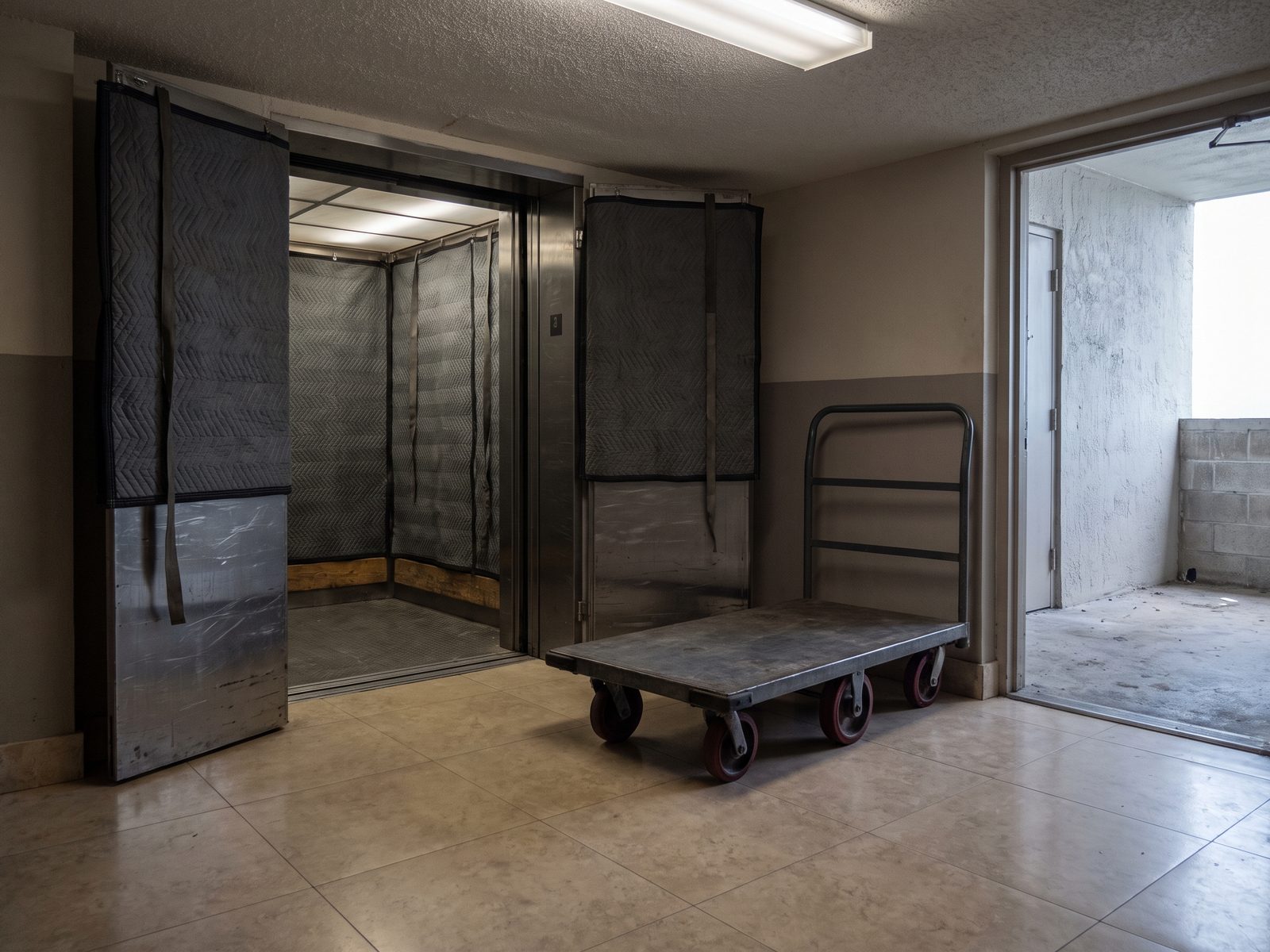
In most South Florida towers the first air mover waits on building paperwork rather than on the contractor: a certificate of insurance naming the association, a vendor registration, an elevator reservation with protection pads, and permitted work hours. Boards and owners who keep a pre-approved vendor packet on file turn that delay from days into hours, which matters because humidity does not observe quiet hours.
Call (786) 213-9489What does a Miami condominium require before a restoration crew can start?
A Miami condo building almost always wants the same short list before a restoration crew can start work. A certificate of insurance naming the association, a completed vendor registration, a reserved service elevator with pads hung, and work booked inside permitted hours. None of those items describes the water. They describe the building's vendor control regime, and it runs the same way whether the supply line let go at noon or the riser backed up at two in the morning.
That is why two identical losses dry on two different clocks. In a Pinecrest house the crew pulls up, extracts, sets equipment and leaves. In a tower the crew parks at the loading dock while a management office confirms paperwork, and the wet carpet waits with them. The building is protecting shared property and its own liability position.
Treat the checklist below as a standing file rather than an emergency scramble. Everything on it can be collected on a quiet Tuesday. Almost none of it can be collected at midnight.
- 1. Certificate of insurance. Liability and workers compensation from the contractor's agent, naming the association exactly as the building spells it.
- 2. Vendor registration. A short form in the management office, sometimes with a background check or a badge per technician.
- 3. Licensing evidence. Current state licensure and any local registration the building keeps on file.
- 4. Elevator reservation. A named window on the service elevator, with protection pads installed before the first load moves.
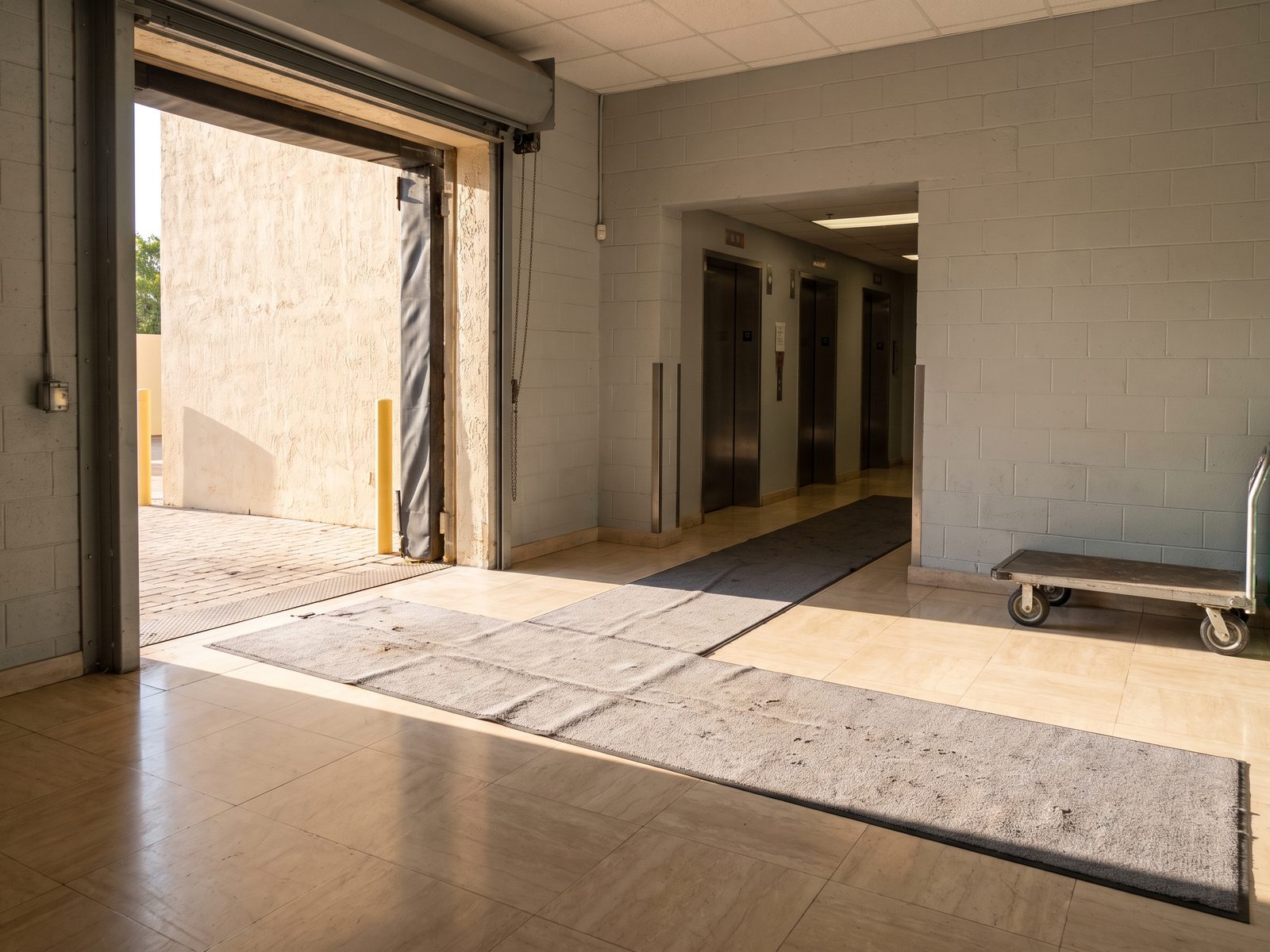
- 5. Common area protection. Runners, corner guards and a defined path from the loading dock to the unit door.
- 6. Permitted work hours. The building's written hours for disruptive work, plus any exception language for emergencies.
- 7. Unit access authorization. Written permission from the owner or the owner's agent, and a chain for entering a neighboring unit.
- 8. A contact of record. One person who can answer after hours and authorize access without calling a meeting.
What is a certificate of insurance naming the association, and why does it stall jobs?
A certificate of insurance is a one page summary issued by the contractor's insurance agent showing what coverage is in force. Most buildings want the association listed so the certificate is tied to that specific property rather than floating loose. Some also want the management company listed, and some want language that only the agent can add. That last part is where the delay lives.
The contractor does not write the certificate. The agent does. If the request arrives at 9pm on a Sunday, nobody is issuing anything until the agency opens, and the crew cannot move equipment past the lobby in the meantime. A restoration company that already works in a building usually has the certificate on file and can start immediately.
Requirements vary widely from building to building, so nothing here is a universal standard. Coverage types and limits are set by each association's own documents. Ask your manager for the building's written vendor insurance requirement and give it to the contractor as written rather than from memory. A correctly specified certificate turns around quickly. A vague request bounces twice.
How does elevator reservation and protection work in a high-rise?
Most towers run one service elevator, and it is the only sanctioned way to move a dehumidifier, an air scrubber or a pallet of bagged contents. It is shared with movers, deliveries and every other trade in the building. That single cab is the real bottleneck on a high floor loss, not the size of the crew.
Reservation means a named window. Protection means quilted pads hung on the cab walls and often a floor covering laid down, installed by building staff or checked by them before anything loads. Some buildings require a staff member to key the cab into independent service and ride with the crew, which ties the job to that person's shift.
Two consequences follow. Equipment arrives in waves rather than all at once, so a crew prioritizes extraction and containment on the first trip. A demolition or contents removal day has to be booked against the same cab, which is why a manager who blocks a morning window usually gets the unit back faster.
- Ask the front desk to hold the service elevator for a defined arrival window rather than an open ended request.
- Confirm who hangs the pads and whether that person is on shift when the crew arrives.
- Tell the contractor the cab's interior dimensions and door width so oversized equipment gets planned around, not discovered at the dock.
What are permitted work hours, and what happens to emergency work outside them?
Almost every association sets written hours for work that makes noise, moves equipment or occupies common areas. Weekday daytime is the usual window, with a shorter Saturday and nothing on Sunday or holidays. Those hours are written for renovations. A water loss does not read them.
Good buildings carve out an emergency exception, and it is usually narrower than people expect. It commonly covers stopping the water, extracting and setting containment, while cutting and cabinetry removal wait for the next permitted window. Air movers and dehumidifiers are quiet enough that most buildings let them run around the clock once they are in place.
A building's access rules are the building's to set. A restoration company can ask, document the urgency and explain what happens to a wet ceiling assembly over a weekend. It cannot overrule a manager or a board. What it can do is arrive with the packet already approved, so the only conversation at 2am is about the elevator.
If your governing documents are silent on emergencies, raise it with the board and the association's attorney. Whether the fix is a rule the board can adopt or an amendment the unit owners have to approve depends on your own documents. Language authorizing mitigation outside normal hours, with notice to the manager, removes a common source of overnight delay in a tower.
| Type of work | Typical building posture | What to ask the manager for |
|---|---|---|
| Water extraction and containment | Usually allowed outside posted hours as emergency mitigation | Written after-hours clearance and a service elevator window |
| Setting air movers and dehumidifiers | Usually allowed, and usually allowed to run continuously afterward | Confirmation that equipment may run overnight and on weekends |
| Selective demolition, cutting, drilling | Held to posted work hours in most buildings | The next permitted window booked in advance, in writing |
| Contents pack out and disposal | Held to posted hours and tied to the service elevator and dock | A loading dock slot and the building's disposal route |
Who authorizes access when the owner is out of state?
Seasonal ownership is the normal case in South Florida, and the person who finds a leak is frequently not the person who can approve work. Three questions decide how fast anything happens. Who holds a key, who may authorize entry, and who may sign for the work.
Those are not the same authority. A building may hold an emergency key and still have no standing to authorize repairs inside a unit. A tenant may be able to let a crew in, yet have no authority to commit the owner to a scope of work. A property manager for the unit often has both.
The cleanest arrangement is a written standing authorization on file with the association and the unit's own manager, naming who may approve emergency mitigation and up to what point. Everything beyond that waits for the owner. If water crossed into a neighboring unit, expect a separate authorization chain there.
Our sister site restorationdoctordc.com sets out what a District condo board asks for, and the authorization chain it describes maps closely onto a South Florida association.
- Keep an emergency contact card with the management office listing the owner, the owner's local agent and a backup, each with a phone number and an email address.
- Say in writing who may approve mitigation work in the owner's absence, and name a limit beyond which the owner must be reached.
- Give the building written permission to enter for water intrusion, so nobody spends an hour deciding whether they may open the door.
What paperwork should a board keep on file before a loss?
A board cannot stop pipes from failing. It can control how long the building takes to say yes. The file that does that work is small, and it serves every unit in the tower rather than the one that happened to flood.
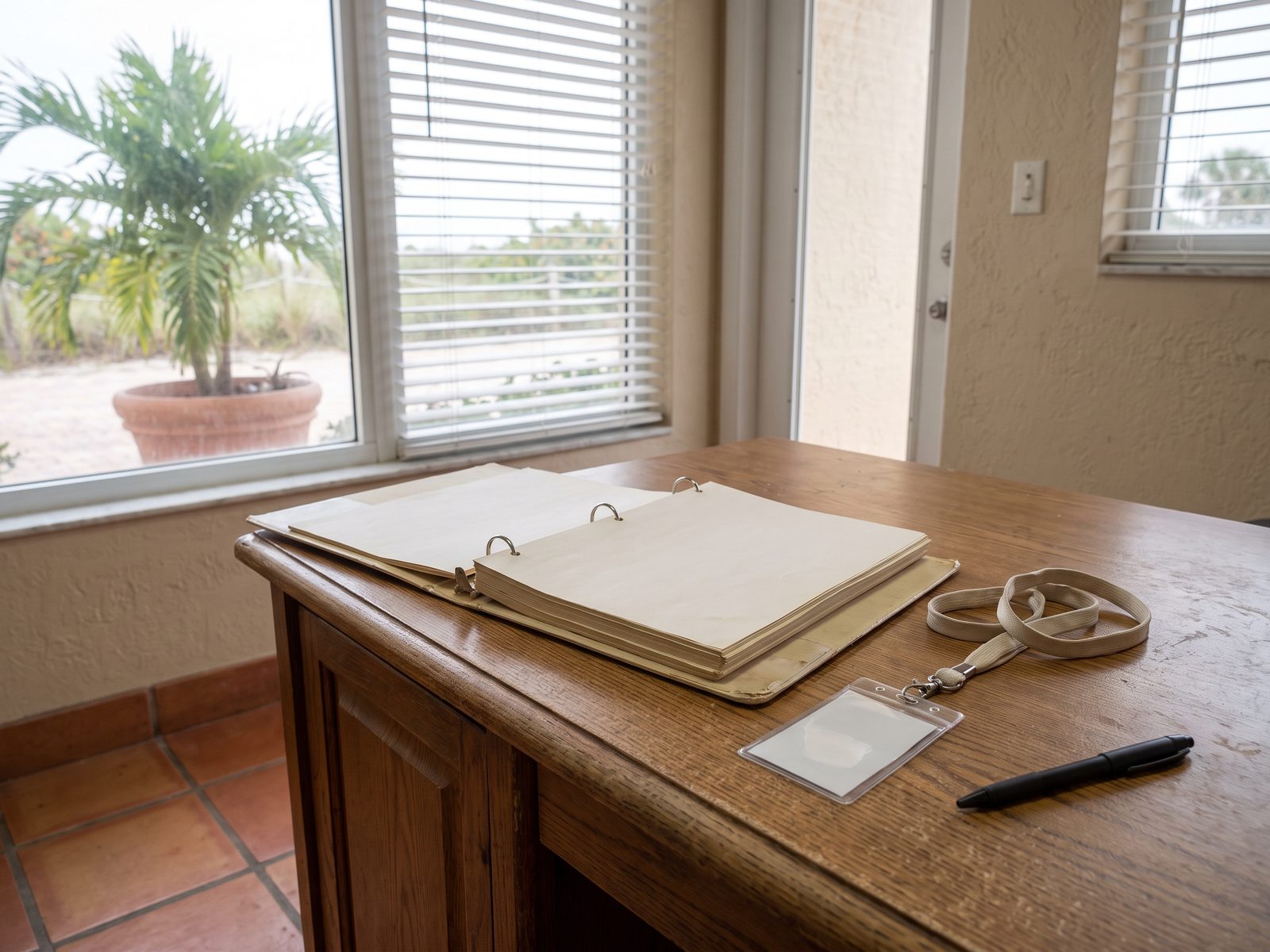
Keep it as one folder in the management office, reviewed each year when insurance renews, so that at 2am the manager on call is confirming a decision rather than making one.
Property managers who run multiple buildings often run the same playbook across all of them. Our sister site restorationdoctors.com walks through a property manager's first 24 hours, which is the operational companion to the pre-clearance file described here.
- Two or three pre-approved restoration vendors with current certificates of insurance and licensing on file, refreshed at renewal.
- The building's written vendor insurance requirement, in the exact wording an agent needs, ready to email.
- Service elevator specifications: cab dimensions, door width, weight limit, pad storage, and who is authorized to hang them.
- A dock and route map from the loading area to each elevator bank, including any low clearance, ramp or gate code.
- Shutoff locations for the building's risers and for individual units, with photographs, because a description is useless at speed.
How does the service-entrance route change the equipment plan?
The route from the truck to the unit door decides what equipment can realistically be used. Extraction units are heavy. Desiccant equipment is heavier still and sometimes cannot come up at all, which pushes a crew toward more refrigerant dehumidifiers on the floor. Hose runs have length limits, and a dock three levels below grade can put a truck mounted extractor out of reach.
The route matters for a second reason. Everything the crew carries passes through common elements the association owns, and a scuffed corridor wall or a dented cab door becomes an association problem first and a vendor problem second. Protection is the reason buildings allow the work at all.
Power is the quiet constraint. Drying a large unit can ask for more circuits than a condo panel has spare. Ask early whether the building permits a temporary tie in and who supervises it.
What does the delay actually cost in drying terms?
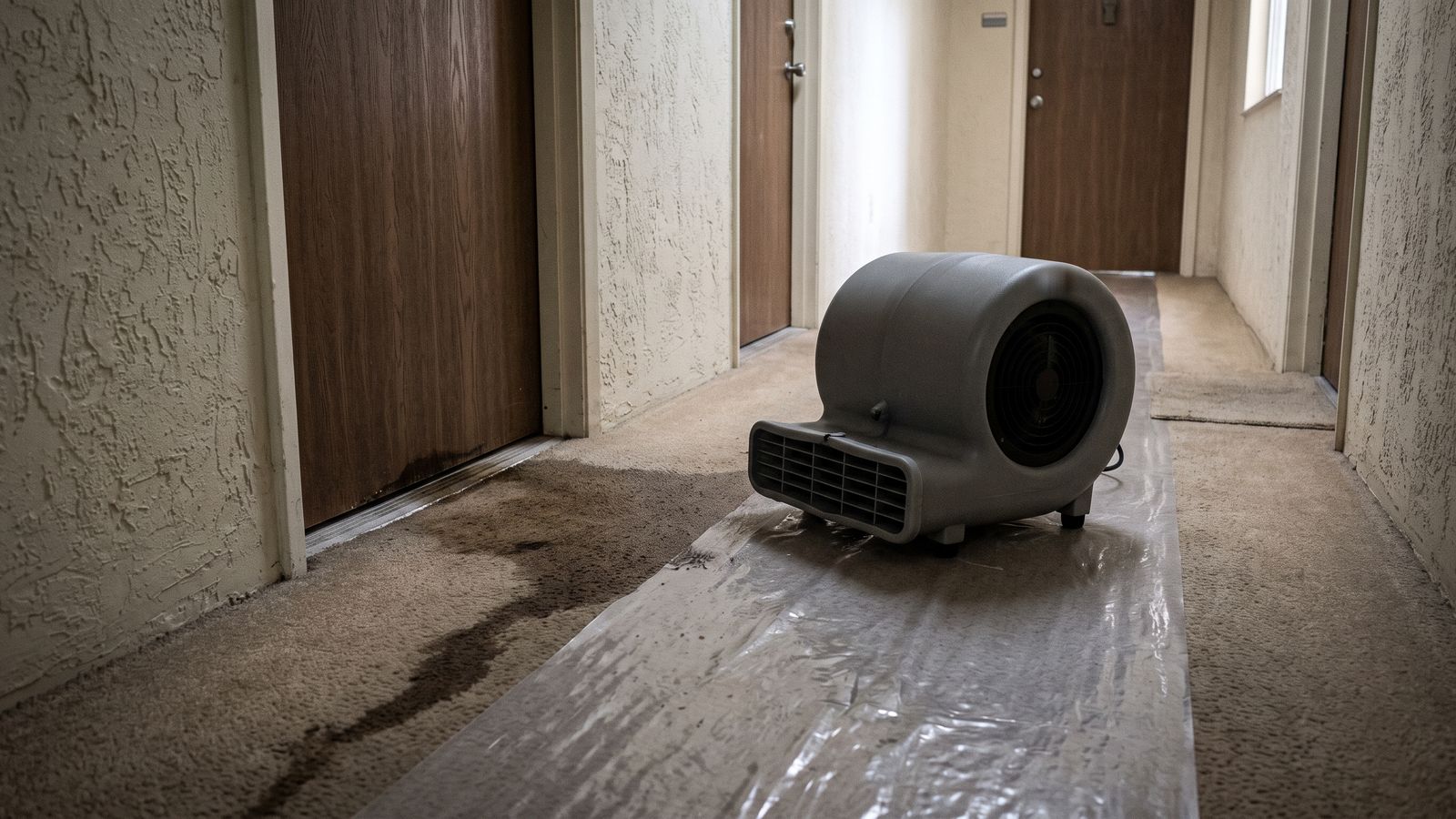
Wet building materials do not pause while paperwork clears. The EPA's household mold guidance tells homeowners to dry water-damaged areas and items within 24 to 48 hours to prevent mold growth, and South Florida supplies the warm humid air that makes that window unforgiving. Outdoor air here stays warm and humid for most of the year, so an open unit with the cooling off gains moisture instead of losing it.
The difference between starting in hours and starting the next afternoon is usually the difference between drying materials in place and removing them. Carpet pad, the paper face of drywall and the back of a base cabinet all pass a point where cleaning and drying stop being the right call. The IICRC S500 standard for professional water damage restoration frames this as category and class. The longer water sits, the further it migrates into assemblies, and the more the job changes.
It is an argument for removing the paperwork from the critical path.
How can an owner or board pre-clear a vendor today?
Pre-clearance is a single afternoon of work and it does not commit anybody to hiring anyone. It means the building already holds a current insurance certificate, a vendor registration and licensing evidence for a contractor it would accept, so the only call at midnight is the one that dispatches a crew.
Owners can do a smaller version of the same thing on their own. Ask the management office for the vendor requirement sheet, hand it to a restoration company you would call, and let them file it. Then keep your own access authorization current. Between those two steps, most of the delay in a tower disappears.
Review the file when the association renews its insurance. Certificates expire and management companies change. A packet that was perfect two years ago has to be rebuilt at the worst possible moment.
- Request the building's written vendor requirements from the management office and email them to the contractor rather than paraphrasing them.
- Have the contractor's insurance agent issue the certificate with the association and management company named exactly as the building spells them.
- File current state licensing and any local registration alongside the certificate.
- Book a walk through of the service entrance, dock, elevator and shutoff locations so the route is known before it is needed.
- Write the after hours access protocol on one page and give copies to the front desk and the board.
Where can I read the rules and standards for myself?
Most of what governs this sits in your own association documents, which no outside source can substitute for. The public material below explains the framework those documents operate inside, and it is worth reading before a board writes an emergency access policy or an owner signs anything.
For questions about who owes what after a loss, or about a denied claim, speak to a licensed public adjuster or an attorney. This article describes how building access works, not how your policy or your declaration applies to your unit.
- IICRC standards library, including ANSI/IICRC S500, for water damage restoration.
- ANSI/IICRC S500, Standard for Professional Water Damage Restoration.
- EPA's Brief Guide to Mold, Moisture and Your Home.
- Florida Statutes Chapter 718, the condominium act.
- Florida Statutes section 718.111 on association powers, covering insurance obligations.
- Florida Statutes section 718.1265 on emergency powers, which apply when a state of emergency has been declared.
- Florida Statutes section 468.8419 on mold remediation, the separation from mold assessment.
- A property manager's first 24 hours, on our sister site.
- What a District condo board asks for, on our sister site.