LGR vs Desiccant Dehumidifiers: Which One a Crew Brings to a South Florida Job

BYSteve Jafari, General ManagerMIAMI-DADE, BROWARD & PALM BEACH
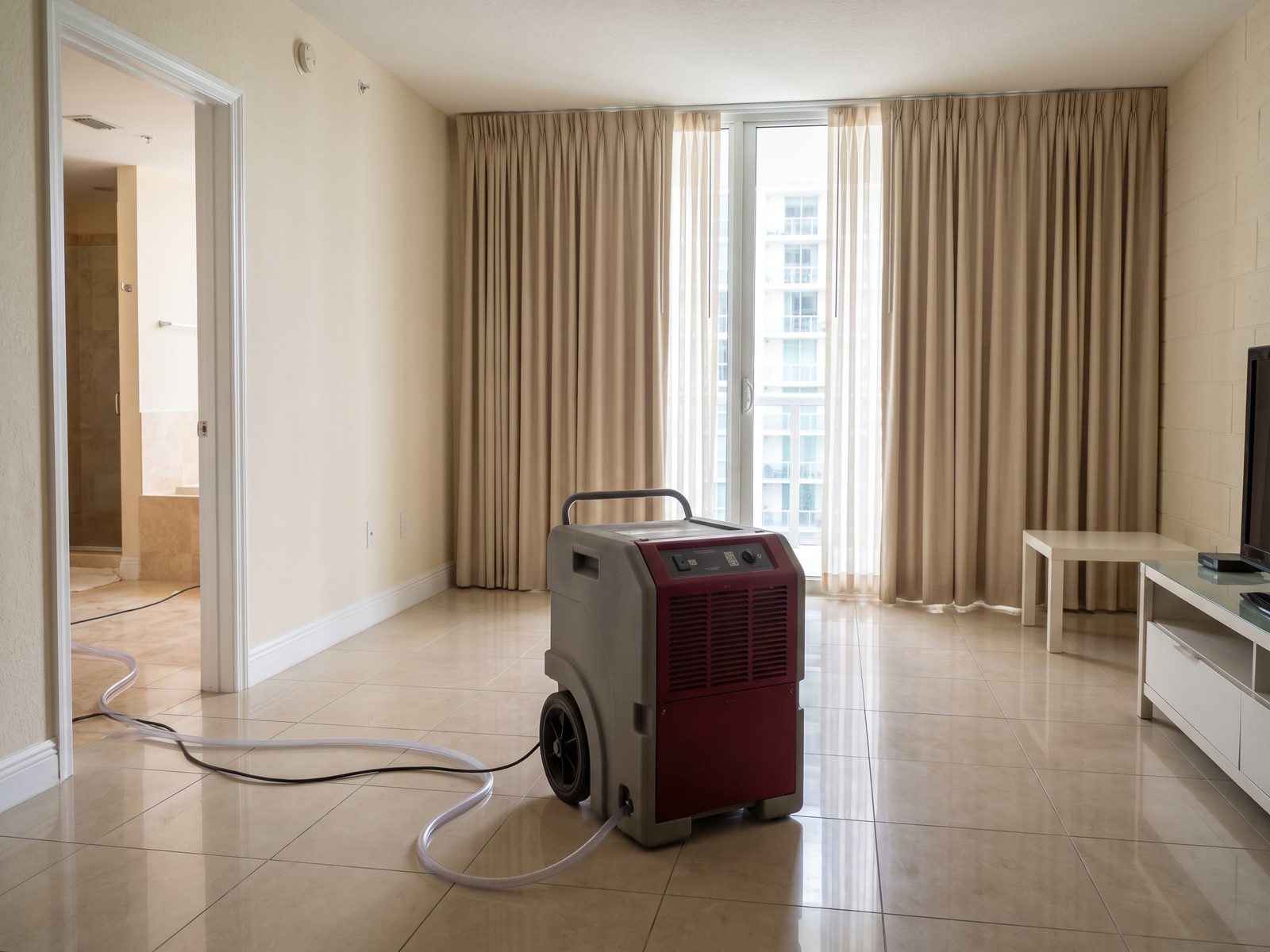
An LGR dehumidifier pulls water out of warm, humid air efficiently, which makes it the default on almost every South Florida job. A desiccant earns its place when the air is already cool or already dry, or when dense materials need a deeper drive, and the variable that decides between them here is containment rather than temperature.
Call (786) 213-9489What is the difference between an LGR and a desiccant dehumidifier?
The short answer on LGR vs desiccant dehumidifier selection is that an LGR chills air until water condenses out of it, while a desiccant passes air over a moisture-absorbing wheel instead. That difference in method is why one machine owns warm wet air and the other owns cold or very dry air. LGR stands for low grain refrigerant, and the low grain half of the name is the whole claim: the machine keeps pulling moisture after the easy water is gone. A desiccant has no compressor doing that work, so its output does not fall away as air gets colder and drier.
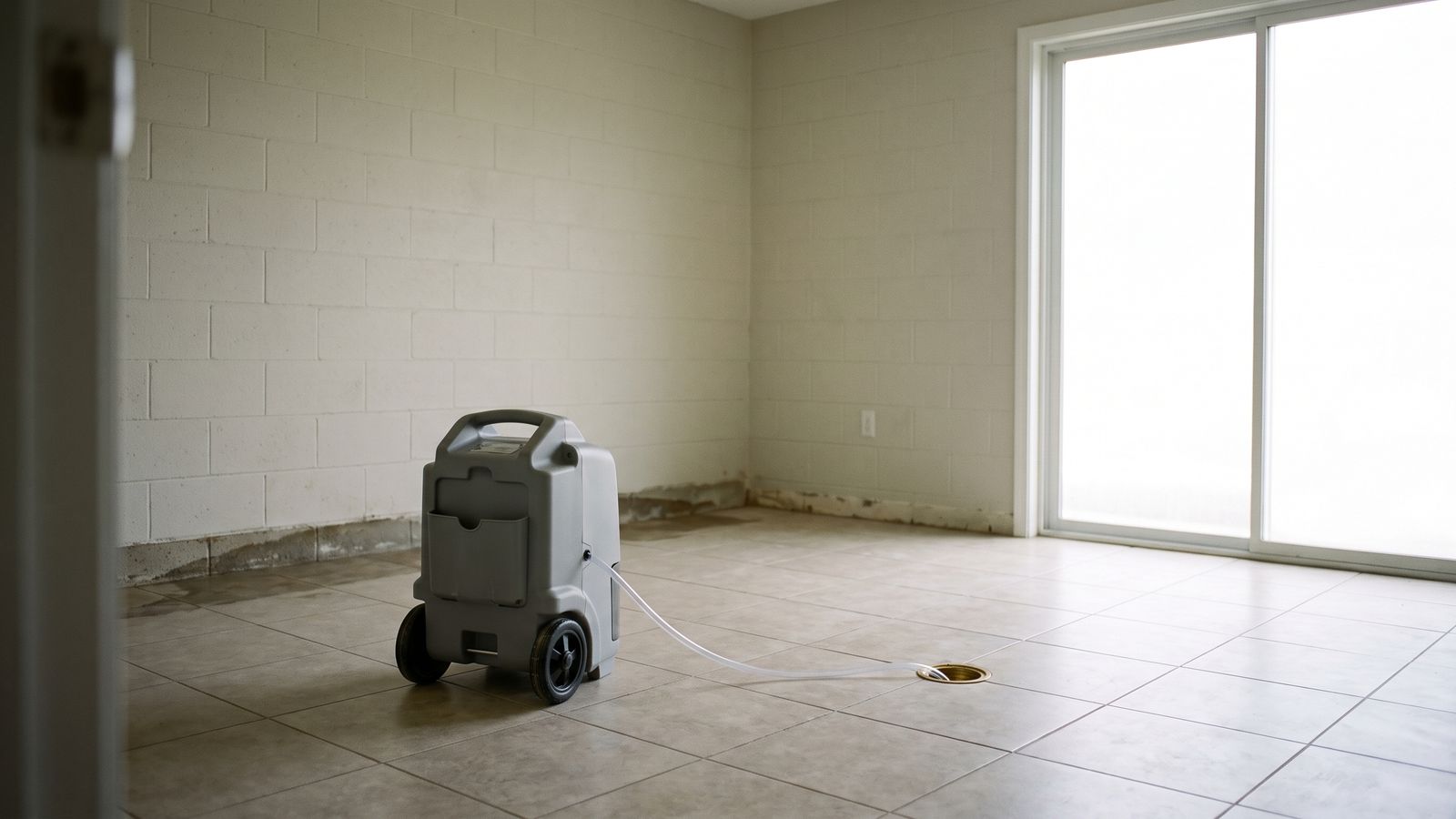
Both machines arrive on a truck looking like gray boxes with a hose. Homeowners tend to assume the larger one is the stronger one. On a drying plan the size of the box matters far less than the condition of the air it will be fighting, and in this part of the country that air is rarely cold.
A crew picks the machine from three inputs: the temperature and humidity inside the drying chamber, the target the materials have to reach, and whether the space can actually be closed. Get those three right and the choice tends to make itself.
| Factor | LGR (low grain refrigerant) | Desiccant |
|---|---|---|
| How it removes water | Chills air below its dew point so moisture condenses on a cold coil | Passes air over a rotating silica-style wheel that adsorbs moisture |
| Best air to work with | Warm and humid, which is most of South Florida most of the year | Cool air, or air already dried past what a coil can reach |
| Air it sends back out | Slightly warmer and noticeably drier than the air it took in | Hot and very dry |
| Deep drying of dense materials | Good, and enough for most residential losses | Stronger, because it drives the air drier than a coil can |
| Typical South Florida use | The default on residential and light commercial water losses | Specialty work: hardwood, plaster, large commercial floors, low targets |
How does a refrigerant dehumidifier actually remove water?
Air carries water as vapor. Cool that air enough and the vapor stops staying vapor, condensing on the coldest surface it can find. A refrigerant dehumidifier makes that cold surface on purpose, pulls room air across it, collects the condensate and sends drier air back out. The hose running to a bathroom drain is carrying that water away.
A standard refrigerant unit stops being useful once the air it is drawing gets close to the coil temperature, because there is no longer enough of a gap to force condensation. An LGR adds a step. It pre-cools incoming air with the cold air it has just produced, so the air reaching the main coil is already near condensing. That is the low grain part of the name, and it is what keeps the machine productive after a room stops looking wet.
The air leaving an LGR is warmer than the air that went in, because the heat the compressor removed has to go somewhere and it goes back into the room. On a closed job that is useful. Warmer air holds more vapor, which helps pull moisture out of materials and into the air where the machine can catch it. On an open job it is wasted work.
What is grain depression, and why does it decide the machine?
Grain depression is the difference between the moisture in the air going into a dehumidifier and the moisture in the air coming out of it. Restoration crews measure airborne moisture in grains per pound, which is how much water each pound of air is actually carrying, because relative humidity on its own hides what is really happening. Two rooms can both read the same relative humidity and hold very different amounts of water if their temperatures are different.
A machine with a wide grain depression is doing real work. A machine with a narrow one is running a fan and a compressor for very little return. When a technician reads intake and outlet air and finds those two numbers close together, the machine is either saturated, undersized for the load, or fighting outside air that keeps refilling the room behind it.
This is why grain depression, rather than tank size or a headline pints rating, is the number a crew watches every day. The IICRC S500 standard for professional water damage restoration is built around controlling the drying environment rather than counting days, which means the room, the materials and the equipment are judged together. Grain depression is how you tell whether that system is moving moisture out of the building or simply stirring it around inside.
- Relative humidity only tells you how close the air is to saturation at its current temperature. Grains per pound tells you how much water the air is actually holding, and that water is what has to leave the building.
- A wide grain depression means the machine is winning.
- A depression that was never wide means the wrong machine, too few machines, or a chamber that is not closed.
When does a desiccant outperform an LGR?
A desiccant wins when the target is unusually low. Because it strips moisture chemically rather than by condensation, it can drive the air far drier than a coil can, and dry air is what pulls water back out of dense materials. Hardwood, plaster, mortar beds under terrazzo or tile, and thick concrete topping all release moisture slowly. They respond to a steep difference in vapor pressure more than they respond to airflow.
It also wins in cold air, which matters more in a walk-in cooler or an unconditioned warehouse than in a living room. Refrigerant machines lose capacity as the air they are drawing gets colder, because the gap between that air and the coil keeps shrinking. A desiccant wheel does not carry that limit, so it stays productive where an LGR falls off.
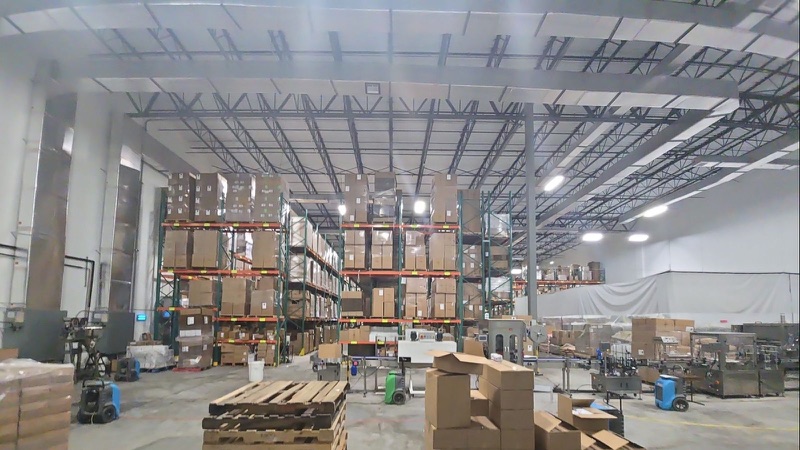
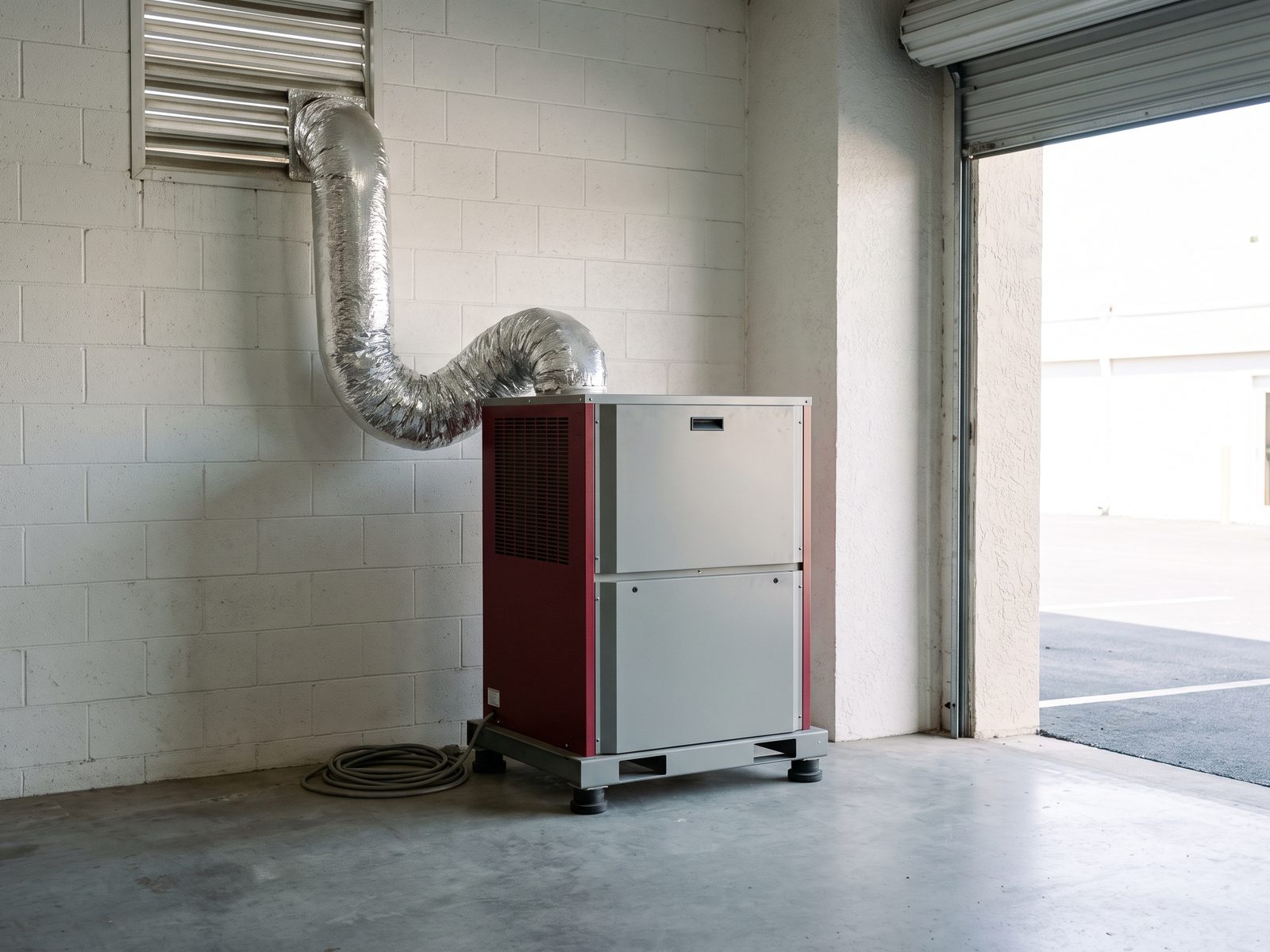
The trade is energy, heat and complication. Desiccants run hot, draw more power and almost always need ducting so the reactivation exhaust ends up somewhere sensible. On a two-bedroom apartment the extra capability rarely pays for the extra staging. On a large commercial floor with a hard deadline, or on a wood floor an owner wants saved rather than replaced, it often does.
- Hardwood and engineered plank that need a slow, deep pull instead of more fan noise.
- Plaster, thick concrete and dense mortar beds that hold water well past the visible cleanup.
- Large commercial spaces where a very low target humidity is the actual goal.
- Jobs where exhaust can be ducted outdoors or into a space that can absorb the heat.
Why does South Florida change the usual answer?
In most of the country the LGR versus desiccant argument turns on temperature, because refrigerant machines struggle in cold air. Miami-Dade, Broward and Palm Beach rarely hand a crew cold air to struggle with. Indoor temperatures on a loss here sit in the band where an LGR is at its most efficient, so the usual reason to reach for a desiccant simply does not come up.
What does come up is supply. Outdoor air here stays loaded with moisture all year, and it does not take a season off. Every door opening, every gap around a sliding track, every pressure difference between a hallway and a unit brings more vapor inside. The question here is less about which machine is stronger and more about how much wet air the machine is being asked to process.
Block construction adds a second wrinkle. Concrete block and stucco hold moisture inside the material and give it back slowly for days after the visible water is gone. That favors equipment that can hold a low target for a long stretch, not equipment that hits a number once and coasts.
How does an open corridor or a leaky high-rise unit affect the choice?
A drying chamber is only a chamber if it is closed. In a Brickell tower the corridor is often pressurized and warm, the trash chute breathes, and a unit door is the only thing between conditioned interior air and a hallway that behaves a lot like outdoor air. Prop that door for a day of foot traffic and the dehumidifier is quietly drying the building instead of the apartment.
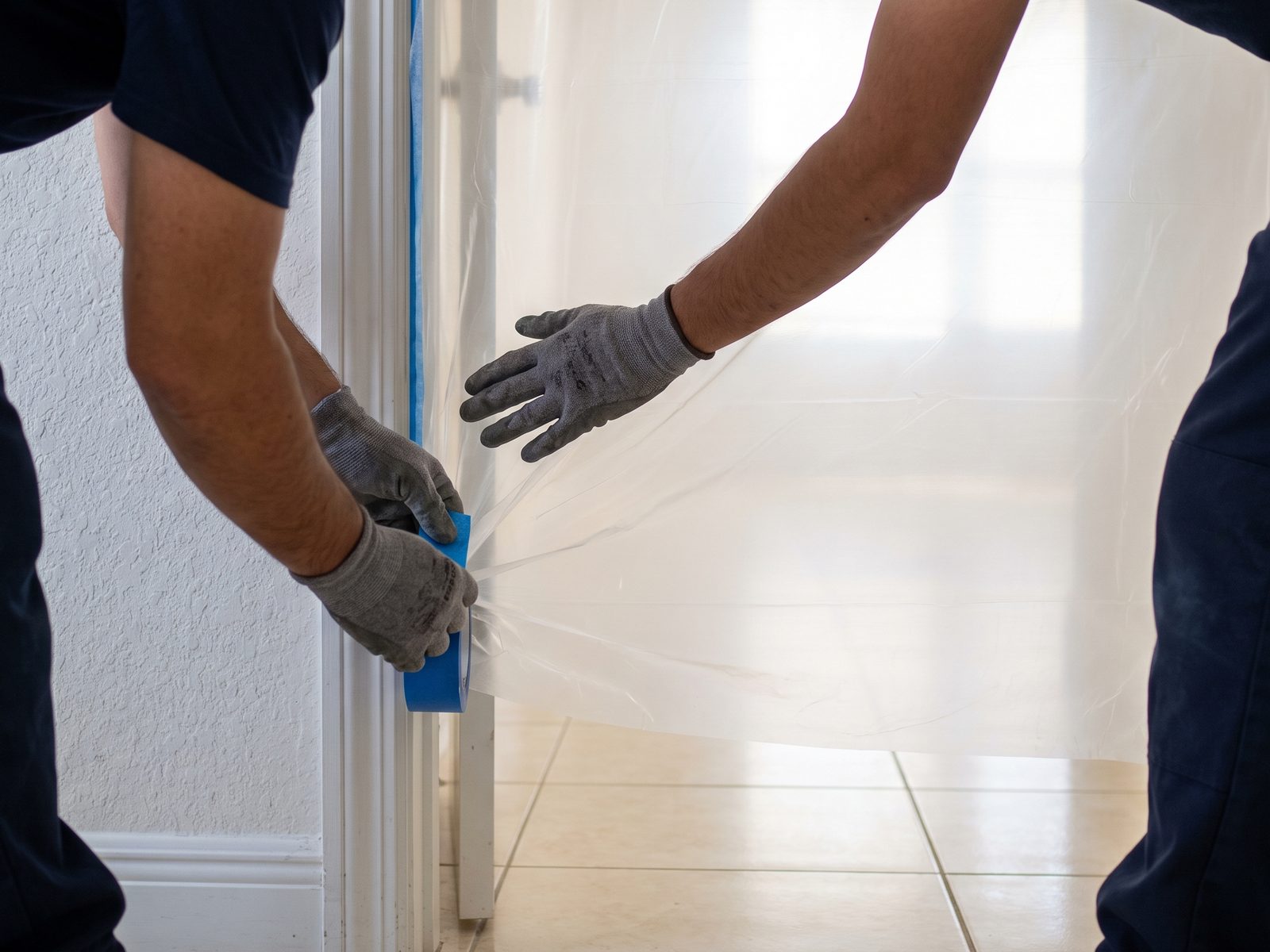
That single fact outranks the machine choice. A properly sized LGR in a sealed room beats an oversized desiccant in a room with an open door, every time. So before a crew argues about equipment it closes the chamber: sheeting taped across openings, weighted at the floor, with a zipper where people need to pass through.
High-rise work then stacks building rules on top of the physics. Many condominium associations restrict elevator use and set quiet hours for equipment, which limits how much gear can realistically be staged and how long it can run. That is another argument for machines that fit through a door on a hand truck and run on an ordinary circuit.
How many dehumidifiers does a room need?
The honest answer is that it depends on the moisture load, not the floor area. A crew estimates how much water sits in the structure, works out how much of it has to leave per day to meet the deadline, then matches equipment to that number. Two identical rooms can need different equipment counts when one has saturated hardwood and the other has tile over slab.
Dehumidifiers also do not work alone. Air movers push a thin, fast layer of air across wet surfaces so moisture leaves the material and enters the room air, and the dehumidifier then takes that moisture out of the room. Skip the air movers and the dehumidifier has very little new water to catch. Our sister site explains how air movers and dehumidifiers pair up on a drying plan, and that pairing logic holds in any climate.
What changes the count locally is leakage and material density. A sealed condominium bedroom with drywall and tile may need a single machine. A ground floor unit with block walls, a wood floor and a door opening onto a humid breezeway may need several, plus containment and a plan for the air the building keeps sending back in.
- Load first: how much water sits in the structure.
- Airflow second: air movers to move moisture from the material into the air.
- Capture third: enough dehumidification to hold the chamber at its target.
Can a store-bought dehumidifier dry a water loss?
A consumer dehumidifier is built to hold a comfortable humidity in a room that is already dry. It is not sized for structural drying, where the job is removing a known volume of water from inside building materials on a schedule. The difference is not about brand quality. It comes down to capacity, grain depression and how long the unit can run at full output.
The practical gaps show up quickly. A household unit fills a bucket that somebody has to empty, and it shuts off when that bucket is full, usually overnight. Its coil is not built to keep condensing once the air dries out, so it slows exactly when the deep moisture in wood and plaster is finally coming out. It also has no way to log intake and outlet conditions, so nobody can later prove the room reached a dry standard.
None of that makes the machine useless. Once a professional dry-out is finished and verified, a consumer unit is a reasonable way to hold a closet, a pantry or a laundry room at a sane humidity through a wet month. Using one as the primary response to a water loss is what produces the second call weeks later, about a smell.
How does the crew know the dehumidifier is working?
By measuring, on a schedule, and writing it down. A daily monitoring visit reads temperature and relative humidity at the dehumidifier intake and outlet, the same readings in each affected room, a comparison reading from unaffected air, and moisture content in the materials themselves. Those numbers either trend toward the goal or they do not, and the second case is a signal to change something that day.
The warning signs are simple to read. A shrinking grain depression while materials are still wet points at an open chamber or a saturated machine. Room humidity that climbs overnight points at leakage or equipment that shut itself down. Materials stuck at the same reading for two visits in a row point at moisture trapped behind a finish, which is when drilling, pulling a base or lifting a section of floor gets discussed.
Documentation matters beyond the drying itself. If the loss becomes a claim, the daily log is the evidence that mitigation started promptly and reached a defensible dry standard. That log does not stay with us. We bill you, the homeowner, and hand you a carrier-ready claim file, so every reading is written for someone else to audit later. If the coverage questions get complicated, a licensed public adjuster or an attorney is the right person to ask.
Standards and public guidance worth reading before the crew arrives:
- Ambient readings at the dehumidifier intake and outlet on every visit.
- Material moisture content by room, tracked against a written dry goal.
- Equipment start times and run hours, which is what a carrier asks for first.
- IICRC standards, including ANSI/IICRC S500 for water damage restoration and S520 for mold remediation
- EPA, A Brief Guide to Mold, Moisture and Your Home