
File the Claim or Pay Out of Pocket? Running the Numbers on a Florida Water Loss

BYSteve Jafari, General ManagerMIAMI-DADE, BROWARD & PALM BEACH
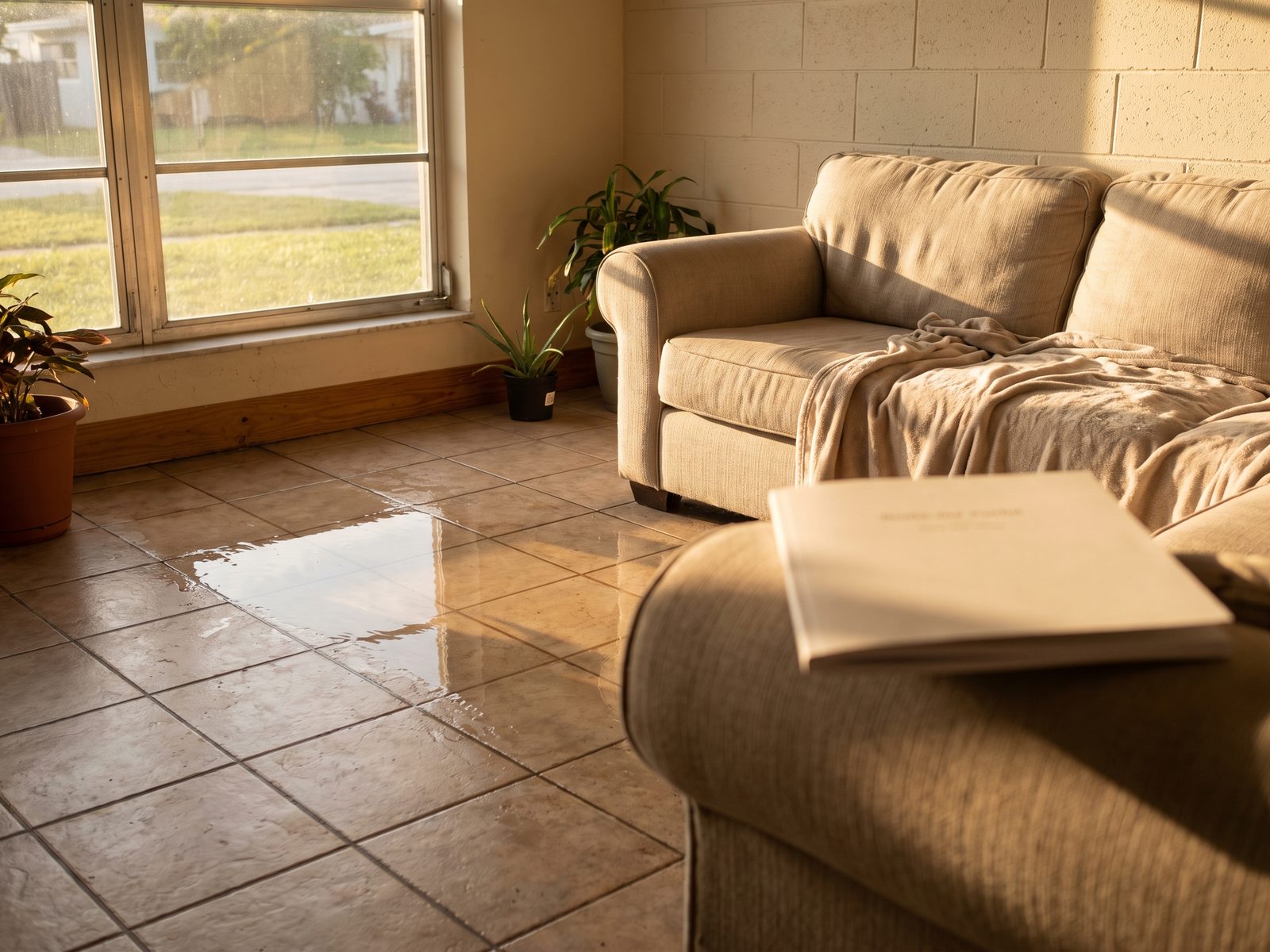
Filing is arithmetic: compare the likely mitigation and repair cost against your deductible, your policy's water sublimit and the renewal risk a claim carries in the Florida market. Start documentation and drying immediately either way, because the evidence you need to file well and the work you need to stop the damage are the same thing.
Call (786) 213-9489Should I file a water damage claim in Florida or pay out of pocket?
File a water damage claim when the likely cost of mitigation and repair clearly exceeds your deductible and fits inside what your policy allows for water losses. Pay out of pocket when the work is small enough that the deductible swallows most of it, and a claim on your record would cost you more at renewal than the carrier would ever pay. The honest answer is arithmetic, not advice.
In Florida the deductible on the page is often two deductibles, one flat and one set as a percentage of your dwelling coverage. Many policies also cap water damage from plumbing well below the dwelling limit. And the renewal market in this state is tight, so filing is not a free question.
We are a restoration contractor, not your agent and not a public adjuster. So we lay out the four numbers, show where each is printed, and give you a tree to work with your declarations page open. If the numbers land close, call a licensed public adjuster or an attorney before you call the carrier.
What four numbers do I need before I can decide?
Every version of this question resolves into the same four figures. Three are printed on documents you already have. The fourth is a judgment call about your own risk tolerance in this market. Collect all four before you call anyone, because the first-notice-of-loss line does not wait while you look things up.
- The estimate. What competent mitigation and repair will actually cost, in writing, from a contractor who has put a moisture meter on the wet materials.
- The deductible that applies to this loss. Not the one you remember. The flat all-other-perils figure and the percentage hurricane figure are different numbers.
- The water sublimit. Many Florida policies cap water damage from plumbing or appliance failures well below the dwelling limit. That cap is the ceiling on what filing can recover.
- The renewal risk. Your own read on what one more claim does to your ability to stay with this carrier at a price you can pay.
| Step | What it tells you |
|---|---|
| 1. Is water still spreading, or is anything still wet after a day? | Start mitigation now and decide the claim after. Drying has a clock; the filing decision does not. |
| 2. Is the written estimate clearly below your deductible? | Paying privately usually nets out ahead here. Build the file anyway in case hidden damage surfaces. |
| 3. Does the estimate exceed your deductible by less than about a third? | The recovery is usually thin relative to what the claim costs you at renewal, and the loss stays visible to the next underwriter who pulls your history. |
| 4. Is the estimate well above your deductible? | Filing is on the table. Go to step 5 before assuming the carrier covers the gap. |
| 5. Does the policy cap water damage at a sublimit? | Subtract the deductible from the sublimit. That difference is the realistic ceiling on recovery. |
| 6. Could the cause be excluded, such as long-term seepage? | A homeowners claim may not respond. Check flood coverage and the exclusion language first. |
| 7. Could there be damage you cannot see yet? | Do not close the door. Preserve the option to report within the policy and statutory deadline. |
How do I find my deductible and my water damage sublimit?
Both live on the declarations page, the summary at the front of your policy packet that lists your coverages, your limits and every deductible. If you cannot find the paper copy, the carrier portal usually has a current one and your agent can send it. Ask for the full policy form and the endorsements too, because the sublimit is often not on the declarations page.
Read the endorsements slowly. A water damage limitation endorsement is the one that sets the cap. It usually separates sudden discharge from repeated or continuous seepage, and often excludes the second outright. That distinction decides more Florida water claims than the dollar limit does.
- Declarations page: all-other-perils deductible, hurricane deductible percentage, dwelling limit, contents limit.
- Endorsement list: any form whose title mentions water damage, mold, fungi or limited water coverage.
- Policy form body: the exclusions section, where constant or repeated seepage is usually carved out.
- Mold sublimit: often a separate and much smaller cap once water damage becomes a microbial problem.
- Your agent: ask in writing what limit applies to a supply line failure and what applies after a named storm.
How is a hurricane deductible different from an all-other-perils deductible?
This is where Florida arithmetic stops resembling anyone else's. Most policies here carry two deductibles. The all-other-perils deductible is a flat amount and covers ordinary losses, including the supply line that let go on a Tuesday. The hurricane deductible is usually a percentage of your dwelling limit, so it scales with what the home is insured for. State law also requires insurers to offer a flat hurricane deductible option on many personal lines residential policies, so read the figure on your own declarations page rather than assuming a percentage.
The trigger matters as much as the size, and the window is not a carrier decision. Florida Statutes section 627.4025 ties the hurricane deductible to a storm the National Hurricane Center has declared a hurricane. The window starts when a hurricane warning is issued for any part of Florida and ends 72 hours after the last watch or warning for the state is lifted. Damage outside that window falls to the all-other-perils deductible.
On a Florida homeowners policy the deductible also resets on a schedule set by state law, not by the carrier. Florida Statutes section 627.701 applies the hurricane deductible on an annual basis to covered hurricane losses in the same calendar year. A second storm in the same year draws on what is left of it. A homeowner planning around the wrong number finds the gap after the tear-out.
| All other perils | Hurricane | |
|---|---|---|
| How it is expressed | A flat dollar amount | Usually a percentage of your dwelling limit, though state law requires a flat option to be offered on many policies |
| What triggers it | Most covered causes, including sudden plumbing failures | A hurricane as your policy defines it, within a stated window |
| How it scales | Fixed, whatever the home is insured for | Rises as the dwelling limit rises |
| How often it applies | Each loss occurrence | Once per calendar year under Florida Statutes section 627.701, not once per storm; a later hurricane the same year draws on the remainder |
| Why it changes the decision | The break-even is predictable and modest | The break-even can be high enough that mid-size losses never reach it |
Does filing one water claim really affect renewal in Florida?
It can, and pretending otherwise would be dishonest. Carriers buy loss-history reports when they underwrite a home, and a paid water claim stays visible to the next underwriter who pulls the report. In a soft market that fact is close to harmless. In the market Florida homeowners have been living through, a water loss on the record can turn a routine renewal into a non-renewal notice.
We will not put a number on that risk, and you should be skeptical of anyone who does. The percentages that circulate online are rarely sourced. Your own agent knows what your carrier has been doing at renewal with claims like yours. Beyond that, the Florida Office of Insurance Regulation publishes carrier filings, which is where the question gets answered with data rather than anecdote. Ask the narrow question before you file: if I report a loss of roughly this size, what happens at renewal? You cannot unfile.
What does a mitigation-only claim look like versus a full repair claim?
Water losses split into two phases that are priced and adjusted very differently. Mitigation is the emergency work: extraction, controlled demolition of unsalvageable material, antimicrobial where warranted, and structural drying to a documented dry standard. Reconstruction is everything that puts the house back, meaning drywall, paint, trim, cabinetry and flooring. On a block wall with tile over slab, those two numbers can be far apart.
That split creates a real option. A mitigation-only claim reports the loss, gets the emergency work covered or partly covered, and leaves reconstruction to you. It still counts as a claim on your history. The advantage is speed and a smaller adjustment, not invisibility.
- Mitigation scope: extraction, moisture mapping, controlled demolition, containment, air movers and dehumidifiers, daily monitoring to a dry standard.
- Reconstruction scope: drywall, texture and paint, baseboard and trim, cabinets, flooring, and any tile the tear-out required.
- Mitigation adjusts fast because the work is done and documented with readings. Reconstruction is a slower line-item negotiation.
- A mitigation-only claim can usually be supplemented later, subject to your policy terms and the statutory deadline.
When is paying out of pocket clearly the better call?
There is a band where the answer is not close. When the written estimate lands under your deductible, filing recovers nothing and still puts a claim on your record. When it lands slightly above, most homeowners here decide the recovery is not worth the renewal exposure.
- The estimate is below your deductible, or close enough that the net recovery would not cover one premium increase.
- The cause looks like slow seepage rather than sudden discharge, which many Florida policies exclude outright.
- You have filed recently and your agent has already warned you about appetite at renewal.
- The loss is confined to one room and a competent crew can dry it without opening walls.
When is not filing a mistake you cannot undo?
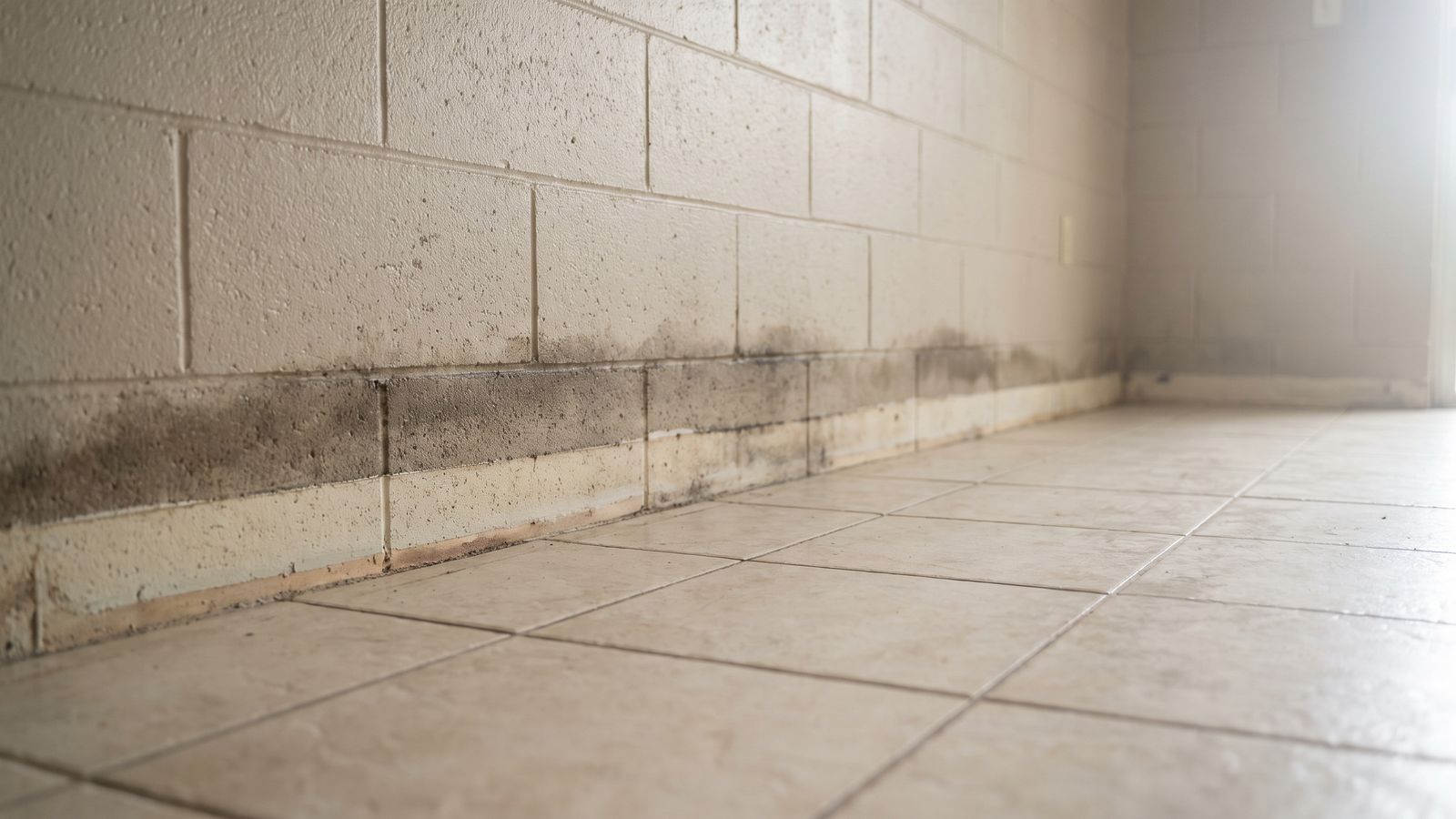
The dangerous version of this decision is the quiet one. A homeowner mops up, tells nobody, and finds the real damage months later behind a cabinet or inside a wall. Water tracks under tile and along the bottom plate. In a South Florida house with block walls and furring strips, the wet material is the strip and the drywall on it, not the block, and none of that is visible from the room.
There is also a hard deadline. Florida Statutes section 627.70132, as published by the Florida Senate, provides that a claim or reopened claim is barred unless notice reached the insurer within one year after the date of loss. A supplemental claim is barred after eighteen months. Your policy almost certainly requires prompt notice well before that, so treat the statute as a backstop, not a schedule.
The other clock is biological. The EPA tells homeowners to dry water-damaged areas and items within 24-48 hours to prevent mold growth, and says materials dried inside that window will in most cases not grow mold. Outdoor humidity here runs high year-round, so the window is not generous. A loss you neither file nor dry becomes a mold problem, and mold usually carries a much smaller sublimit.
Can I start mitigation before I decide whether to file?
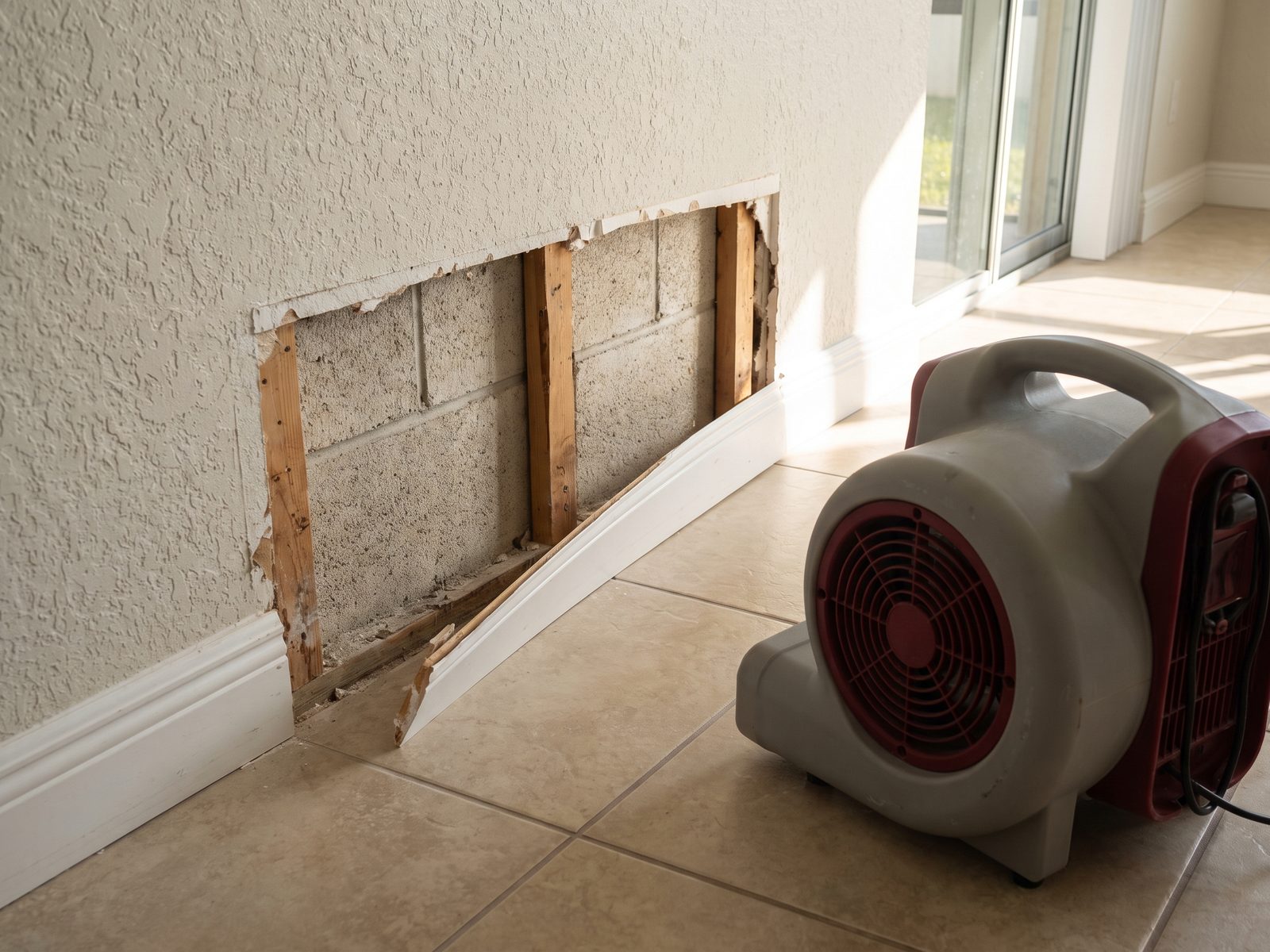
Yes, and in most cases you should. Nearly every homeowners policy obligates you to protect the property from further damage after a loss, so emergency drying is not an act that commits you to filing. Extracting water and setting drying equipment preserves the structure and preserves your options. Delay does the opposite.
The billing side is simpler than people expect. We bill you, the homeowner, and hand you a carrier-ready claim file: a line-item scope, moisture readings on a documented schedule, thermal images where they add something, and a photo log tied to each area. If you file, you hand that to the adjuster. If you do not, you keep a record that the loss was handled correctly. We work for you, not the insurance company.
Cost is usually the first thing homeowners want pinned down. Our sister site restorationdoctors.com walks through what a mitigation job costs before you decide whether to claim it.
What should I document either way?
The documentation that supports a good claim is the same documentation that protects you when you decide not to file. It is one body of evidence with two uses. Build it in the first hours, before anything is torn out, because the state of the property at discovery cannot be reconstructed later.
Restoration work here is measured against the IICRC S500 Standard for Professional Water Damage Restoration, which sets out how a loss is categorized and what counts as a documented dry standard. Ask any contractor how they establish that standard and how often they record readings. A firm that cannot answer is a firm whose invoice an adjuster will struggle to justify.
- Photograph and video the source and entry path before touching anything, including the failed component.
- Photograph every affected room from the doorway and then close up, with something in frame for scale.
- Keep the failed part. Bag the cracked supply line or split hose, label it with the date, store it.
- Write the timeline in plain language: when you noticed water, when it was stopped, when the crew arrived.
- Keep every receipt, including the trivial ones: fans you bought, a hotel night, replacement towels.
- Ask for daily moisture readings and the final dry standard verification in writing, not a summary invoice.
| Source | Link |
|---|---|
| Florida Statutes 627.70132, notice of property insurance claim (Florida Senate) | Florida Statutes 627.70132, notice of claim |
| Florida Statutes 627.701, deductibles, including the hurricane deductible (Florida Senate) | Florida Statutes 627.701, deductibles |
| Florida Statutes 627.4025, residential coverage and hurricane coverage defined (Florida Senate) | Florida Statutes 627.4025, residential coverage |
| EPA, A Brief Guide to Mold, Moisture and Your Home | EPA's Brief Guide to Mold and Moisture |
| IICRC standards index, including ANSI/IICRC S500 Standard for Professional Water Damage Restoration | IICRC standards index |


