Category 1, 2, and 3 Water Damage Explained

BYSteve Jafari, General ManagerMIAMI-DADE & BROWARD
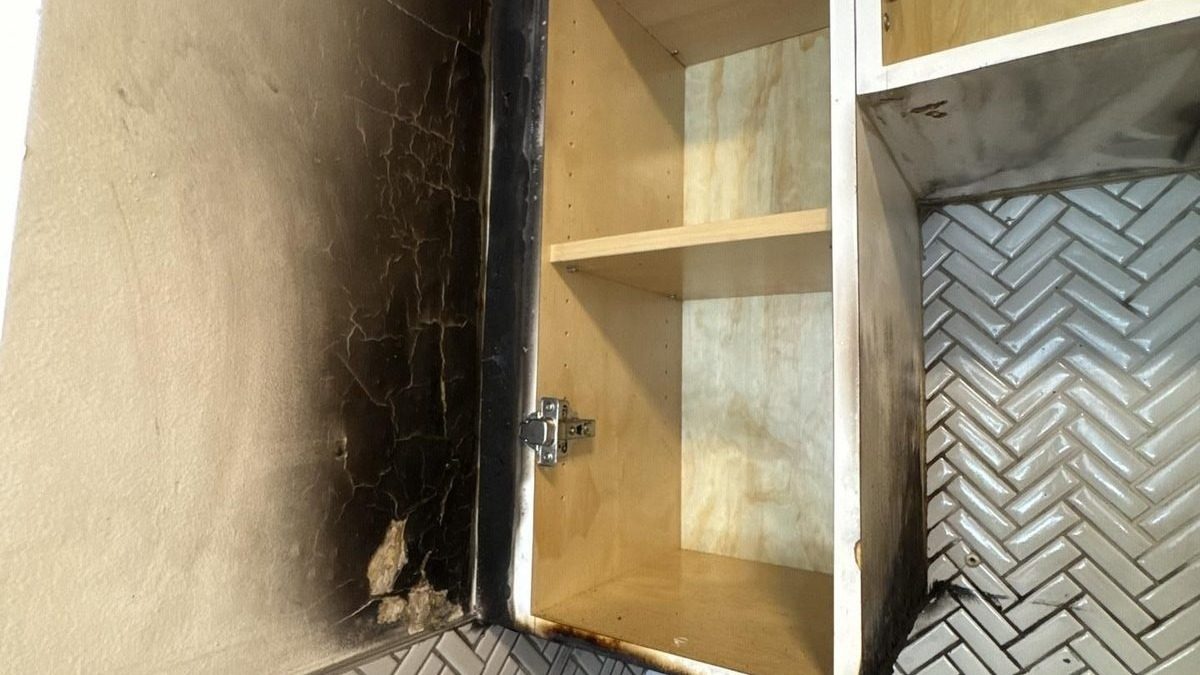
The three categories of water damage are Category 1 (clean water from a sanitary source), Category 2 (gray water carrying significant contamination), and Category 3 (black water that is grossly contaminated, including sewage and ground flood water). The category determines what can be dried and saved versus what must be removed, and in South Florida's heat and humidity clean water can degrade into a worse category and begin supporting mold growth within 24 to 48 hours.
Call (786) 213-9489What are the three categories of water damage?
The three categories of water damage are Category 1 (clean water), Category 2 (gray water), and Category 3 (black water). These categories come from the ANSI/IICRC S500 Standard for Professional Water Damage Restoration — the benchmark professional restorers follow — and they describe the level of contamination in the water, not how much water there is or how much damage you can see.
Category is the single most important thing to establish on day one, because it decides nearly everything that follows: whether soaked drywall and carpet can be dried in place or must be torn out, what personal belongings can be saved, what protective equipment and antimicrobial treatment are required, and how aggressively the structure must be cleaned before it is restored. Two homes can have the exact same amount of water on the floor and need completely different responses because one is clean supply-line water and the other is backed-up sewage.
It is also important to understand that category and 'class' are two different measurements. Category describes how contaminated the water is. Class (1 through 4) describes how much material is wet and how hard the structure will be to dry. This article focuses on the categories — clean versus gray versus black water — because that is what most homeowners are trying to understand after a loss.
What is Category 1 (clean) water damage?
Category 1 water damage is water that originates from a clean, sanitary source and poses no substantial risk from dermal, ingestion, or inhalation exposure. Think of a broken copper or PEX supply line, an overflowing bathtub with nothing added to the water, a failed water heater connection, melting ice from a refrigerator line, or rainwater that has not contacted contaminants. At the moment it escapes, this water is essentially sanitary.
Because Category 1 water is clean at the source, it offers the best chance of drying materials in place and saving them. Carpet, pad, baseboards, and even drywall can often be dried and restored rather than demolished — provided the response is fast. The critical word is fast, because Category 1 does not stay Category 1 forever.
The biggest mistake homeowners make with clean water is assuming it is harmless and waiting a day or two to act. Clean water that sits in warm, humid conditions, soaks into dirty materials, or spreads into contaminated areas stops being Category 1 very quickly. In South Florida, where indoor conditions rarely stay cool and dry, that window is short.
- Broken or leaking copper or PEX supply lines
- Overflowing sinks or tubs with no soaps or contaminants added
- Failed water heater or water line fittings
- Melting ice from an appliance line and clean rainwater that has not contacted contaminants
- Toilet tank water (the clean tank, not the bowl)
What is Category 2 (gray) water damage?
Category 2 water damage — gray water — is water that contains significant contamination and has the potential to cause discomfort or sickness if contacted or consumed. It carries chemical, biological, or physical contaminants, but it is not yet grossly contaminated the way Category 3 is.
Common gray water sources include discharge from washing machines and dishwashers, overflow from a toilet bowl containing urine but no feces, water from a broken aquarium or punctured waterbed, and — very common in South Florida — backed-up air-conditioning condensate that has sat in a dirty drain pan or line. Clean water that has sat long enough to begin supporting microbial growth is also reclassified as Category 2.
Gray water changes the restoration plan meaningfully. Porous materials that soaked up gray water — carpet pad, some drywall, insulation — often cannot be reliably decontaminated and are removed rather than dried. Semi-porous and non-porous surfaces may be cleaned, disinfected, and dried if the contamination is addressed promptly. Technicians use antimicrobial treatment and appropriate protective equipment, because gray water is not something you want to handle with bare hands.
Like clean water, gray water degrades. If gray water sits untreated, the organic load and microbial activity keep increasing, and it can cross into Category 3. Time and temperature are working against you the entire time it sits.
- Washing machine and dishwasher discharge or overflow
- Toilet overflow containing urine but no feces
- Aquarium and waterbed water
- AC condensate drain backups and overflowing drain pans
- Clean water that has begun to stagnate or support microbial growth
What is Category 3 (black) water damage?
Category 3 water damage — black water — is grossly contaminated water that can contain pathogenic, toxigenic, or otherwise harmful agents: bacteria, viruses, fungi, sewage, pesticides, heavy metals, or toxic organic matter. Contact with Category 3 water, or even the aerosols around it, can cause serious illness. This is the most dangerous category, and it is handled under strict protocols.
Category 3 sources include sewage backups, toilet overflow containing feces, rising water from canals or storm surge, and any flood water that enters from the ground outside. In South Florida, storm-related ground flooding is treated as Category 3 because that water has traveled across streets, lawns, and landscaping, picking up contaminants before it reaches your home. Even wind-driven rain through a damaged roof, which may start cleaner, picks up dust, insulation, and debris on its way through the structure and is handled cautiously.
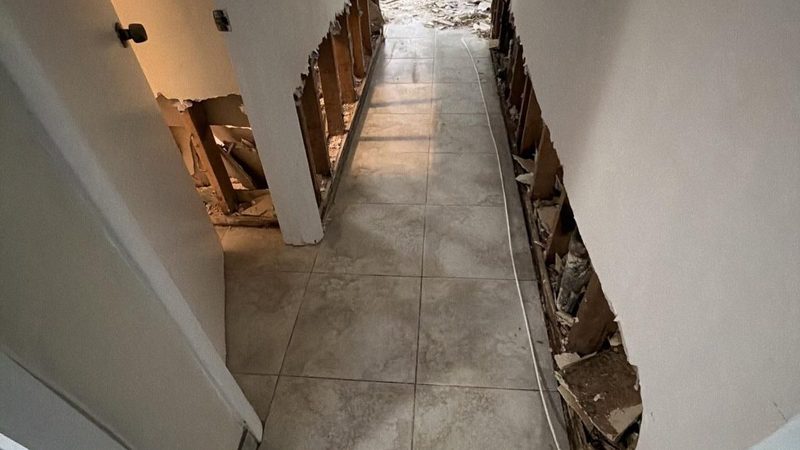
With black water, the guiding principle is removal over restoration. Porous materials that absorbed Category 3 water — carpet, pad, soaked drywall, insulation, particleboard — are removed and discarded because they cannot be reliably sanitized. The structure is then cleaned, disinfected, dried, and verified before any rebuilding begins. Technicians wear full personal protective equipment, contain the work area to prevent cross-contamination, and follow biohazard handling procedures. This is not a mop-and-bucket job, and it is not safe to tackle without proper training and equipment. Our sewage cleanup team follows Category 3 biohazard protocols for exactly these situations.
- Sewage backups and toilet overflow containing feces
- Rising water from canals, rivers, or storm surge
- Ground-source flood water from hurricanes or heavy rain
- Any water that has been standing long enough to become grossly contaminated
- Water carrying pesticides, chemicals, or other toxic materials
How does clean water turn into gray or black water?
Clean water degrades into gray and then black water through a combination of time, temperature, contact with contaminated materials, and microbial growth. A category is not permanent — it is a snapshot of how contaminated the water is right now, and that contamination level almost always gets worse the longer water sits untreated.
The IICRC S500 standard explicitly recognizes this deterioration. Category 1 water that remains in place, contacts soiled surfaces or building materials, or stagnates in warm conditions can be reclassified upward. In practical terms, a 'clean' leak you ignore over a weekend may legitimately be a Category 2 or even Category 3 loss by the time someone looks at it — which changes what can be saved and raises the complexity of the cleanup.
South Florida accelerates this process. With outdoor humidity routinely between 60% and 80% and warm indoor temperatures year-round, the environment is ideal for bacterial and fungal growth. Mold can begin colonizing wet materials within 24 to 48 hours. Water that passes through an attic, wall cavity, or subfloor also picks up dust, construction debris, and whatever else is hiding in those spaces — further pushing it toward a higher category.
This is the single most important reason to treat every water loss as time-sensitive, even one that looks clean. The faster clean water is extracted and the structure is dried, the more likely it stays Category 1 and the more of your home and belongings can be saved.
| Starting condition | What drives escalation | Likely result if ignored |
|---|---|---|
| Category 1 clean supply-line leak | Warm temperatures, humidity, contact with soiled materials | Can be reclassified to Category 2 within roughly 24-48 hours in warm, humid conditions |
| Category 2 gray water | Continued stagnation, rising microbial and organic load | Can be reclassified to Category 3 |
| Any wet porous material | Humidity of 60-80%, no active drying | Mold growth can begin within 24-48 hours |
Why do the categories of water damage matter for cleanup and insurance?
The categories of water damage matter because they dictate the entire scope of work — what gets dried, what gets removed, what protective measures are required — and because that scope is what your insurance claim is built around. Getting the category right, and documenting it, protects both your health and your claim.
A Category 1 loss may focus on extraction and in-place drying with daily monitoring. A Category 3 loss requires containment, removal and disposal of contaminated materials, biohazard-level cleaning, disinfection, and verification before rebuild. Those are very different projects, and an accurate category assessment is what justifies the work to an adjuster. Water damage restoration typically runs in the thousands, and where a job lands depends on how much water escaped, how far it spread, how much material must be removed, and how many days of drying are needed — which is why a real figure only comes after an on-site inspection. The category is one of the biggest drivers of all of those variables.
Insurance coverage can also hinge on the source behind the category. Sudden, accidental water damage — a burst pipe — is commonly covered, while gradual leaks and true flooding (rising ground water) are often excluded from a standard homeowners policy and fall under separate flood coverage. In South Florida this distinction is critical during storm season, because wind-driven rain and ground flooding are treated very differently by carriers. Documenting the source and category correctly matters for your claim.
This is where our documentation approach helps you. Restoration Doctor of South Florida bills the homeowner directly and hands you a carrier-ready claim file — an Xactimate line-item scope, CompanyCam photo documentation, and daily moisture logs. We work for you, not your insurance company, and that file gives you the evidence to support what the loss actually required.
How does South Florida's climate change the water category equation?
South Florida's climate shortens the timeline on every water loss and makes category escalation more likely. High ambient humidity, warm temperatures year-round, and frequent storm activity all push water toward higher contamination categories faster than in drier, cooler regions.
With outdoor humidity routinely 60% to 80%, drying a structure is harder and slower, and wet materials spend more time in the danger zone for microbial growth. That is why professional drying here relies on psychrometry — measuring temperature, relative humidity, and material moisture content — to control the indoor environment with dehumidifiers and air movers rather than opening windows, which would only pull more humid air inside.
Storm season adds the biggest category risk. Hurricane and tropical-storm ground flooding is treated as Category 3 because it is water that has traveled across contaminated surfaces. Wind-driven rain that enters through a damaged roof may start cleaner but quickly picks up debris and insulation on its way down. Understanding whether your damage came from a sudden indoor failure or from storm-driven water also matters for how your claim is handled — our storm damage restoration team deals with these distinctions constantly during South Florida's hurricane season.
What should you do when you discover water damage?
When you discover water damage, assume it is time-sensitive, protect your safety first, and get a professional assessment quickly — especially because the water category can change fast in South Florida's climate. The sooner the water is extracted and the structure is dried, the better your chances of keeping the loss in a lower, less destructive category.
If you suspect gray or black water — any sewage, toilet overflow with solids, or flood water — stay out of it and keep children and pets away. These sources carry real health risks and require protective equipment and biohazard protocols. Even with seemingly clean water, avoid using electrical devices in or near standing water.
Documentation helps your claim, so take photos and video before anything is moved or cleaned, if it is safe to do so. Then call a licensed, IICRC-aligned restoration company. Restoration Doctor of South Florida offers 24/7 emergency dispatch across Miami-Dade and Broward counties at (786) 213-9489, and our water damage restoration team will assess the category, contain the area, and begin extraction and controlled drying.
- Stop the water source if you can safely reach the shutoff
- Stay out of any water you suspect is gray or black and keep others away
- Avoid electrical hazards near standing water
- Photograph and video the damage before cleanup if it is safe
- Call for a 24/7 professional assessment — categories can escalate within 24-48 hours